
TL;DR

Get backup power and energy gear delivered free with Prime
- Fast, free delivery on millions of items
- Prime Video, Amazon Music and more included
- Member-only deals all year
Johnson Controls has announced the Frick HeatPAC, a packaged ammonia heat pump for food and beverage facilities that uses waste heat from refrigeration systems to produce hot water. The company says the modelled energy and cost savings depend on application conditions and energy-price assumptions; independent performance data were not provided in the source report.
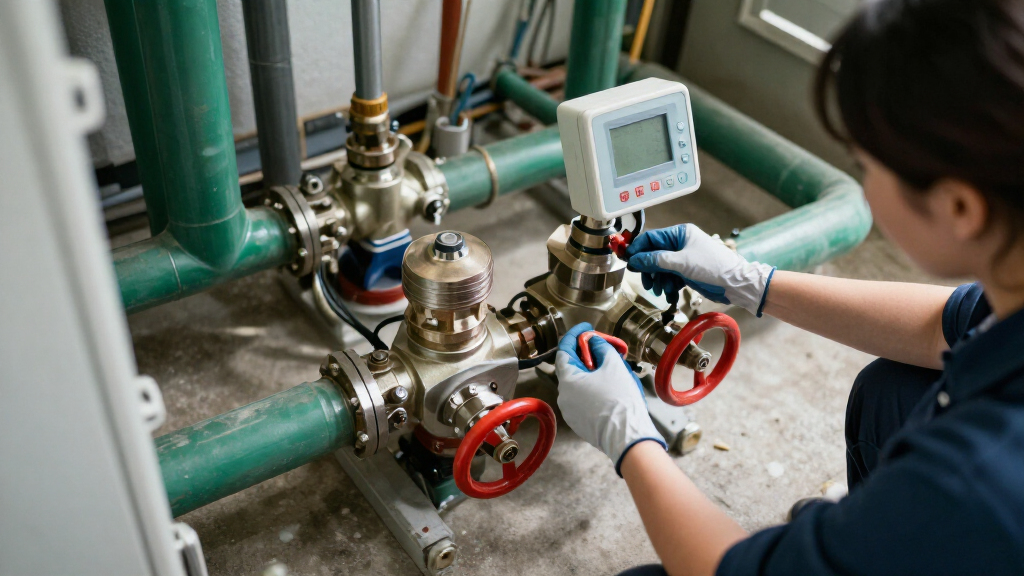
Johnson Controls has announced the Frick HeatPAC, a packaged reciprocating ammonia heat pump designed for food and beverage facilities. It recovers heat from existing ammonia refrigeration systems to supply 130°F to 190°F (54°C to 88°C) hot water for uses including pasteurisation, sanitation and space heating, linking a facility’s cooling and heating needs.
The HeatPAC has a stated heating capacity range of 200 kW to 2,000 kW. Johnson Controls describes it as pre-engineered, factory-assembled and pre-tested, an approach the company says can reduce system complexity, upfront investment and lead times by weeks compared with engineered-to-order industrial heat pumps. The report does not provide a price, delivery schedule or independently verified comparison of installation times.
The package is built around a Mark 5 Sabroe reciprocating compressor platform and includes a welded plate-and-shell condenser with an integrated desuperheater, two-stage oil separation and a crankcase ventilation system intended to protect against liquid slugging. A variable-frequency drive offers a standard 4:1 turndown, while the reported ammonia charge can be as low as 87 pounds (40 kilograms). A Frick Quantum HD controller with Unity architecture is designed to connect with different plant control systems.
Johnson Controls also points customers to its Frick Coolware selection software, which uses application inputs to estimate waste-heat needs, heat output and efficiency, and provide performance ratings for operating-cost estimates. As one modelled example, the company says a cheese producer needing 2,000 kW of 140°F (60°C) water could cut annual energy costs by up to 40% against natural gas boilers. That result is a projection based on the software’s entered energy prices and operating assumptions, not a reported outcome from an operating installation.
Turning Refrigeration Heat Into Process Supply
Many food and beverage plants use energy to remove heat in refrigeration while separately producing hot water for cleaning, processing or building heat. A heat pump that connects those demands could put some of the removed heat to productive use and reduce the need for a separate heat source. The practical value depends on how much suitable waste heat is available, the required water temperature, operating hours and local energy prices.
The launch also targets a procurement issue: industrial heat pumps are often engineered for individual sites. Johnson Controls says a standard package can simplify specification and shorten delivery lead times. If those advantages hold for a buyer’s application, they could make heat recovery easier to evaluate alongside a plant’s existing refrigeration equipment. The company has not supplied customer deployments or field results in the cited report, so actual savings and integration requirements remain site-specific.
Products Worth Considering

Coway Mighty AP-1512HH(W) Air Purifier, White

Hisense 85 U7 Mini-LED ULED 4K UHD Smart Google TV (85U7SG, 2026)

Samsung 75-Inch M80H Series Mini LED 4K Smart TV (2026)
As an affiliate, we earn on qualifying purchases.
A Packaged Addition to Frick Systems
HeatPAC is part of Johnson Controls’ Frick industrial refrigeration product line. The company presents it as a way to recover heat already generated by ammonia refrigeration rather than treating refrigeration and process heating as separate systems. The product is described as the first Frick product engineered around the Mark 5 Sabroe reciprocating compressor platform.
The stated temperature and capacity ranges indicate the applications the package is designed to serve, but do not establish that every plant can operate across the full range under its particular conditions. The source report gives no named installation, launch date beyond the announcement, pricing, warranty terms or detailed comparison methodology for the company’s efficiency claims.
Savings Depend on Site Conditions
The source report does not identify a customer site where HeatPAC is operating or provide measured performance data. Johnson Controls says the system can be up to seven times more energy efficient than a natural gas boiler for typical food and beverage applications, but the report does not specify the comparison method, operating conditions or definition of efficiency behind that figure. The separate projected cost reduction of up to 40% is based on a modelled cheese-production example and assumptions entered into Coolware.
It is also unclear when units will be available, what they will cost, how quickly a typical installation can be completed, or what modifications a facility may need to connect the heat pump to its refrigeration and hot-water systems. Buyers would need application-specific performance estimates and commercial details before judging project economics.
Site Assessments Will Test the Case
The next practical step for prospective buyers is to evaluate whether their refrigeration system has sufficient recoverable heat and whether the resulting hot water matches process demand. Johnson Controls’ Coolware can provide estimates from application parameters, according to the company, but project decisions will also depend on site engineering, equipment integration and local energy costs.
The source report does not announce a first customer installation or a date for commercial availability. Further information on delivery, pricing and measured operating performance would clarify how the package performs beyond the company’s specifications and modelled examples.
Key Questions
What is the Frick HeatPAC?
It is a packaged reciprocating ammonia heat pump from Johnson Controls, designed to recover waste heat from ammonia refrigeration systems and produce hot water for food and beverage facilities.
What temperatures and capacity does it provide?
Johnson Controls lists a capacity range of 200 kW to 2,000 kW and hot-water temperatures from 130°F to 190°F (54°C to 88°C). Actual performance depends on application conditions.
Are the reported energy and cost savings guaranteed?
No. The source report attributes the claims to Johnson Controls. Its example of up to 40% lower annual energy costs is a software-modelled projection based on entered energy prices and operating assumptions, not a verified result from an identified installation.
When will HeatPAC be available, and what will it cost?
The source report does not state a commercial availability date or price. It also does not give customer installation details or measured field results.
Source: coolingpost.com