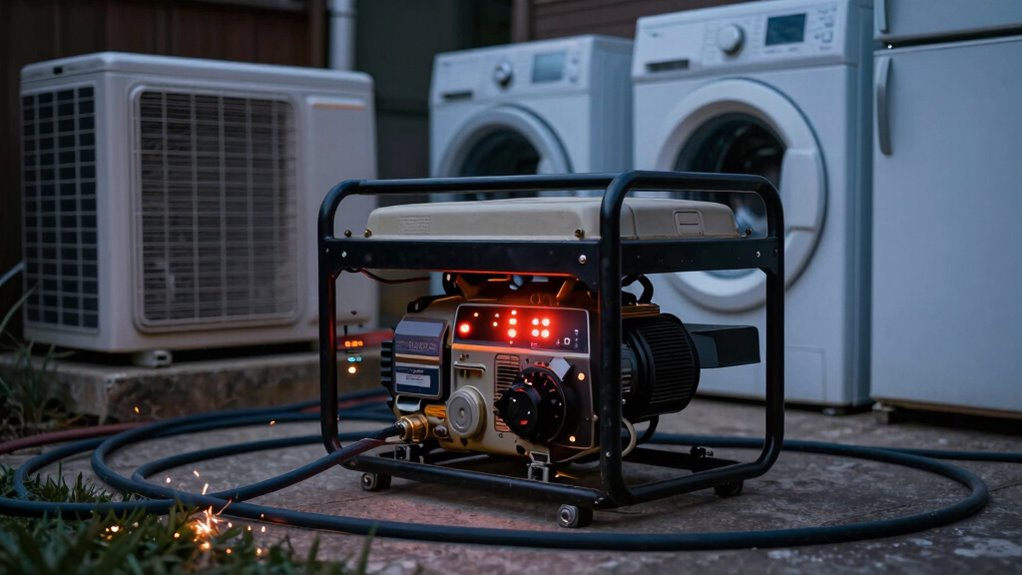

If your generator trips under heavy appliance loads, it’s usually because you’re exceeding its capacity, causing overloads that trigger safety shutoffs. Connecting high-power devices increases the workload and fuel consumption, putting strain on the unit’s components. Poor load management or outdated equipment can also contribute. Keeping an eye on these issues helps prevent trips, but understanding more about causes and solutions can help keep your generator running smoothly even under heavy demands.

Get backup power and energy gear delivered free with Prime
- Fast, free delivery on millions of items
- Prime Video, Amazon Music and more included
- Member-only deals all year
Key Takeaways
- Overloading the generator exceeds its capacity, triggering automatic shutdowns for safety.
- High-power appliances increase workload, causing the generator to strain and potentially trip.
- Poor fuel efficiency under heavy loads leads to overheating and component stress, resulting in trips.
- Uneven load distribution causes overloads on specific generator parts, prompting shutdowns.
- Lack of proper maintenance or upgrades reduces the generator’s ability to handle heavy appliance loads.
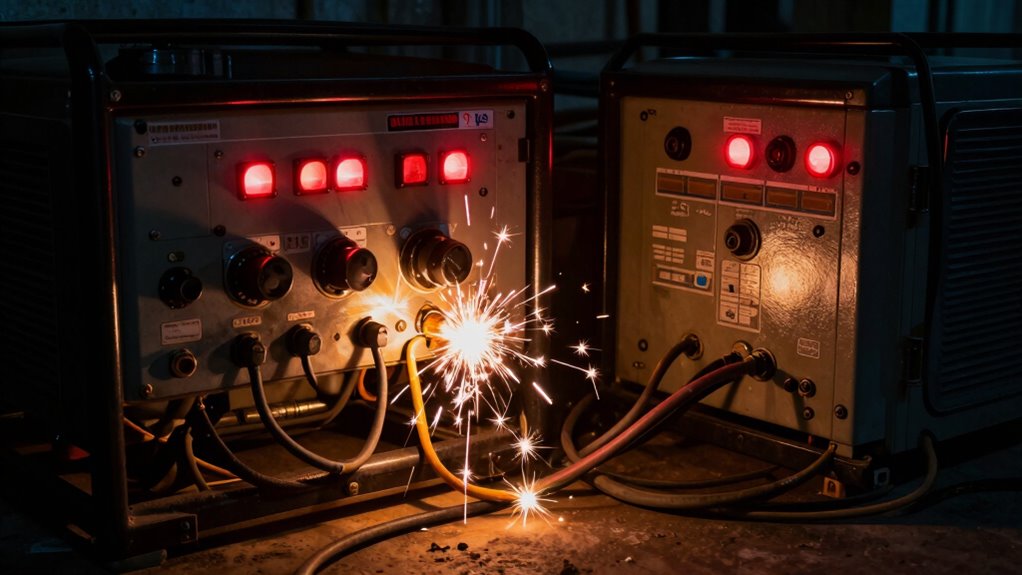
When you run multiple heavy appliances on a generator, it’s common to experience trips or shutdowns. This happens because your generator is being pushed beyond its capacity, causing it to shut down as a safety measure. One key factor that influences this is fuel efficiency. When you connect several high-power devices, the generator has to work harder, consuming more fuel to keep up with the load. If it’s not designed to handle such demand, it quickly becomes overwhelmed, leading to trips. Additionally, inefficient fuel use can cause the generator to run hotter and strain its components, increasing the chances of a shutdown. To improve fuel efficiency under heavy loads, you might consider upgrading to a generator with a higher wattage capacity or ensuring it’s well-maintained, with clean filters and proper oil levels. Proper generator maintenance can significantly enhance fuel efficiency and overall performance, helping to prevent trips and extend the lifespan of your unit. Regularly checking and monitoring fuel consumption can also alert you to potential overload issues before they cause shutdowns. Being aware of load management strategies can help you distribute power more evenly and avoid overloading your generator. Using load balancing techniques can further optimize the power distribution and reduce stress on the generator. This way, your generator can handle larger loads more smoothly, reducing the risk of trips and conserving fuel at the same time.
Noise levels also play a significant role when operating under heavy loads. As your generator works harder, it naturally produces more noise, which can be disruptive, especially in residential or quiet environments. High noise levels often indicate the generator is under stress, which correlates with increased chances of tripping. If your generator is noisy and shutting down frequently, it’s a sign that it’s struggling to cope with the load. To mitigate this, you could look for models with noise reduction features or install sound barriers around the unit. Maintaining your generator properly can also help keep noise levels down, as loose or worn parts tend to rattle and generate additional sound under strain. Proper maintenance practices can significantly impact the overall performance and longevity of your generator.
Understanding the balance between fuel efficiency and noise levels is crucial when managing heavy appliances. A well-chosen generator that matches your power needs can prevent trips, run more quietly, and operate more efficiently. If you consistently experience shutdowns, it might be time to reassess your setup—either by reducing the load, upgrading to a more powerful unit, or performing regular maintenance. Operating a generator within its optimal parameters not only prolongs its lifespan but also ensures you get reliable power without constant interruptions. Keeping an eye on fuel consumption and noise can help you identify early signs of overload and take corrective action before costly breakdowns occur. Ultimately, a properly matched, well-maintained generator will serve your needs better and provide steady power, even under heavy appliance loads.
Frequently Asked Questions
How Can I Prevent My Generator From Tripping During Peak Use?
To prevent your generator from tripping during peak use, make sure it’s properly sized for your appliances and avoid overloading. Regularly maintain it to improve fuel efficiency and reduce strain. Use appliances with lower starting currents, and consider installing a load management system to balance power demands. Additionally, choosing a generator with quieter operation can help minimize noise levels, making it more comfortable to run during high-demand periods.
What Maintenance Steps Can Reduce Generator Overload Issues?
Ever wonder how to keep your generator running smoothly under heavy loads? Start with a thorough maintenance checklist, guaranteeing filters, oil, and spark plugs are clean and functioning. Regular load testing helps identify capacity issues before overloads happen. By maintaining your generator properly and performing routine load tests, you can prevent overload problems, extend its lifespan, and ensure reliable power when you need it most.
Are There Specific Appliances That Cause More Generator Trips?
Yes, some appliances with high power demands, like refrigerators, air conditioners, and electric water heaters, are more likely to cause generator trips. These appliances draw significant current at startup, straining your generator. To prevent this, you should focus on proper load distribution, spreading out heavy appliances across different circuits, and ensuring your generator can handle the combined appliance power. This approach reduces overloads and keeps your generator running smoothly.
How Do I Determine My Generator’s Maximum Load Capacity?
To determine your generator’s maximum load capacity, start by checking the manufacturer’s specifications for voltage regulation and rated wattage. Add up the wattage of all appliances you plan to run simultaneously, ensuring it doesn’t exceed this limit. Keep in mind, operating near maximum load can reduce fuel efficiency and cause voltage fluctuations. Regularly monitor your generator’s performance to prevent overloads and maintain peak efficiency.
Can Upgrading My Generator Improve Its Load Handling?
Upgrading your generator can substantially boost its load handling, making it feel like a powerhouse! A new, higher-capacity model improves generator efficiency and enhances power surge management, preventing trips under heavy appliance loads. With better components and advanced technology, your upgraded generator can handle larger demands smoothly. This investment guarantees your appliances stay powered without interruptions, keeping your home running seamlessly even during peak usage.
Conclusion
As you watch the generator hum softly, suddenly strained under the weight of heavy appliances, you realize it’s like a breathless runner nearing exhaustion. The surge of power pushes it to its limit, causing the trip. With a gentle understanding, you adjust the load, allowing the engine to breathe again. This dance of balance reminds you that managing appliance demands keeps your generator running smoothly, like a steady heartbeat, ensuring your home stays powered and alive through any load.
Columbus Day / Indigenous Peoples' Day Picks
long weekend sales
As an affiliate, we earn on qualifying purchases.