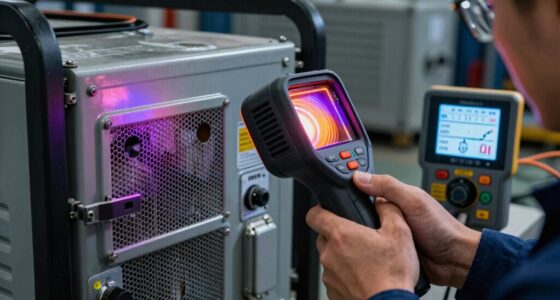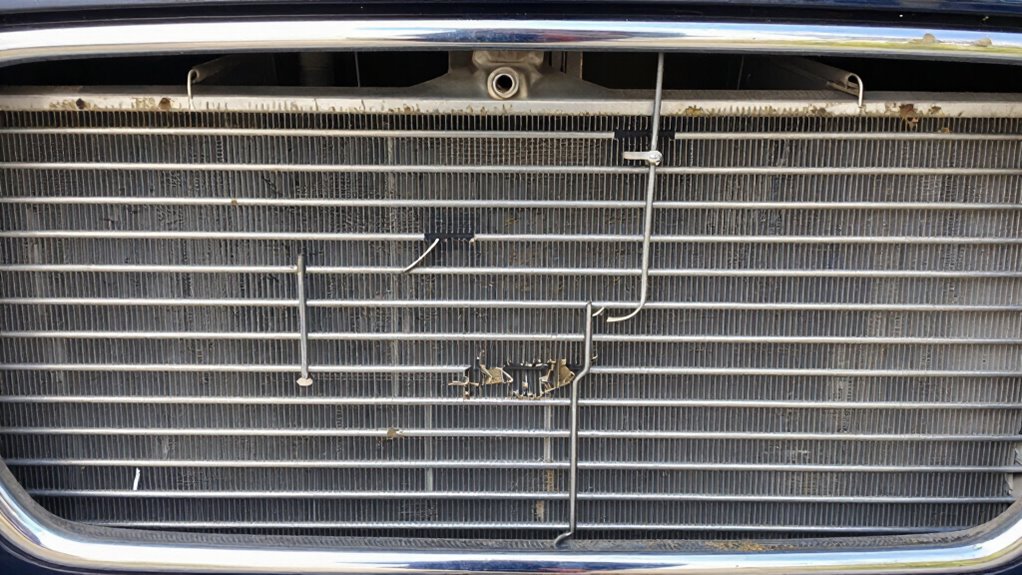

To check for a dirty radiator core, start by inspecting the exterior fins for dirt, debris, or grime, using water or compressed air to clean gently without damaging them. Feel the radiator hoses—if the upper hose is hot and the lower is cool, it could indicate internal clogging. Also, examine the coolant for rust, debris, or discoloration. If these steps reveal issues, there’s more to diagnose for peak cooling. Keep exploring to learn exactly how to keep your radiator in top shape.

Get backup power and energy gear delivered free with Prime
- Fast, free delivery on millions of items
- Prime Video, Amazon Music and more included
- Member-only deals all year
Key Takeaways
- Visually inspect radiator fins for dirt, grime, or debris buildup.
- Feel the upper and lower radiator hoses for temperature differences.
- Check for coolant leaks or signs of rust around the radiator area.
- Observe coolant color and clarity; dark or sludge-filled coolant indicates internal buildup.
- Conduct a flow test or professional inspection if internal clogging is suspected.
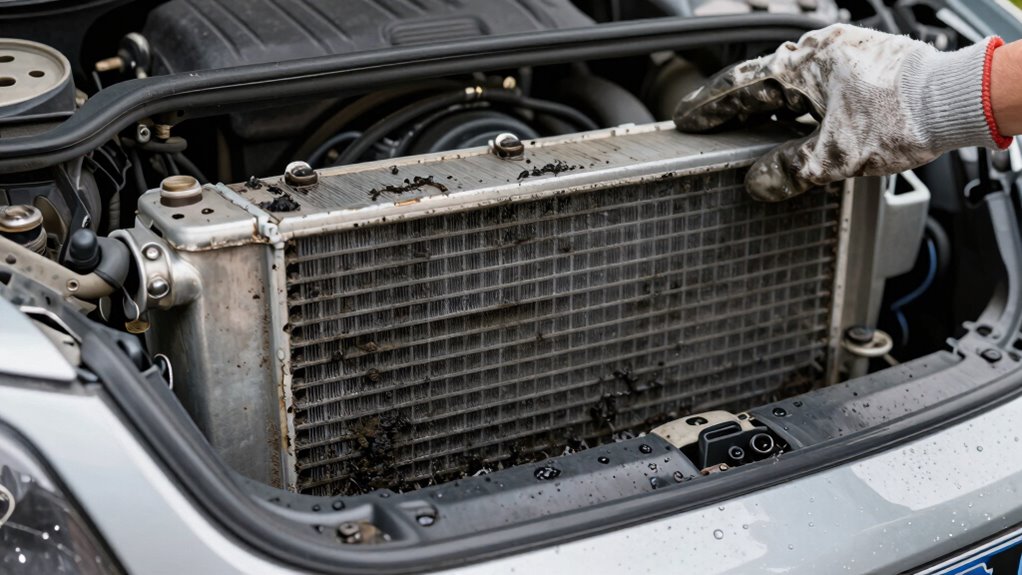
Have you noticed your vehicle overheating or the heater not working as well as it used to? These signs often point to issues with your radiator core, especially if it’s clogged or dirty. Over time, debris, dirt, and rust can accumulate inside the radiator, hindering its ability to cool the engine properly. To keep your engine running smoothly, it’s essential to check for a dirty radiator core regularly. Start by inspecting the area around the radiator for any signs of coolant leaks, which could indicate cracks or damage caused by buildup or corrosion. Coolant leaks not only reduce your cooling system’s efficiency but can also lead to overheating if left unchecked.
Next, consider whether your radiator has been flushed recently. Radiator flushing involves removing old coolant and flushing out any sludge, dirt, or mineral deposits that have accumulated inside. If you haven’t done this in a while, buildup inside the core may be impeding heat transfer, causing your engine to overheat. Flushing the radiator is a good maintenance step to restore proper cooling performance. When inspecting your radiator, look for external signs of dirt or grime on the fins. These fins are responsible for dissipating heat, and if they’re clogged with dirt or debris, airflow is restricted, reducing cooling efficiency. Carefully clean the exterior with a gentle stream of water or use compressed air to remove loose dirt, but avoid damaging the delicate fins.
To check the internal condition of your radiator core, start the engine and let it reach normal operating temperature. Carefully feel the upper and lower radiator hoses for heat. If the upper hose is hot but the lower hose remains cool, it could mean the radiator is clogged internally. This internal clog may be a sign that it’s time for a radiator flush or professional inspection. While doing this, keep an eye on the coolant level and condition. If the coolant appears rusty, dark, or contains debris, it’s a strong indication that internal buildup is present, and a radiator flush is overdue. Regularly inspecting the coolant’s condition can help you catch potential issues early before they cause serious damage. Additionally, understanding ethics in genetic testing can help you make informed decisions about vehicle maintenance and repairs, ensuring you choose trustworthy service providers. Regular inspections and maintenance can also help prevent internal corrosion, which can cause significant damage if left unaddressed. Moreover, paying attention to coolant quality can extend the lifespan of your radiator and prevent costly repairs down the line.
Ultimately, detecting a dirty radiator core isn’t just about visual inspection. Regular maintenance, including flushing and checking for coolant leaks, helps prevent overheating and engine damage. If you suspect your radiator is clogged or has internal buildup, don’t delay in having it professionally cleaned or replaced. Proper cooling system maintenance keeps your engine running efficiently and extends the life of your vehicle.
Frequently Asked Questions
Can a Dirty Radiator Core Cause Engine Overheating?
Yes, a dirty radiator core can cause engine overheating. When debris, rust, or corrosion build up, they block airflow and reduce coolant flow, leading to poor heat dissipation. This can result in coolant leakage or radiator corrosion, further impairing your cooling system. Regularly inspecting and cleaning your radiator helps prevent these issues, ensuring your engine stays within a safe temperature range and avoiding potential damage.
How Often Should I Inspect My Radiator Core?
You should inspect your radiator core during regular radiator maintenance, ideally every 6 to 12 months or whenever you notice signs of cooling system issues. Regular inspections help prevent overheating and guarantee your cooling system functions efficiently. During these checks, look for dirt, debris, or corrosion that can clog the core. Staying proactive keeps your engine running smoothly and extends the lifespan of your radiator and cooling system.
Are There DIY Methods to Clean a Radiator Core?
Think of your radiator core as a silent guardian, shielding your engine’s heartbeat. DIY cleaning involves a coolant flush to clear out debris and rust, restoring flow like fresh blood. You can also apply radiator sealant to fill small leaks, preventing dirt intrusion. Carefully remove the radiator, then flush it with a garden hose or specialized cleaner. These simple steps help maintain ideal cooling and extend your radiator’s lifespan.
What Tools Do I Need to Check My Radiator Core?
To check your radiator core, you’ll need a flashlight, a clean rag, and possibly a mirror. Start by ensuring your coolant level is adequate—low coolant can mimic a dirty core. Remove the radiator cap carefully, checking for any buildup or debris around the cap and inside the radiator opening. Use the flashlight to inspect the radiator core’s fins for dirt or obstructions, and wipe away grime with the rag if needed.
Is a Dirty Radiator Core Covered Under Vehicle Warranty?
You might wonder if a dirty radiator core falls under your warranty coverage. Typically, warranty repairs cover manufacturing defects, not maintenance issues like dirt buildup. If your radiator’s dirty due to external factors, repair procedures usually aren’t covered. To be sure, check your vehicle’s warranty policy carefully. A quick call to your dealer can clarify whether cleaning or replacing the radiator is covered or if it’s a maintenance task you’ll need to handle yourself.
Conclusion
By regularly inspecting and cleaning your radiator core, you guarantee efficient engine cooling and excellent performance. Don’t delay, don’t dismiss dirt or debris—deliberately detect and diminish it. A clean core keeps your car cool, prevents problems, and prolongs engine life. So stay vigilant, stay proactive, and keep your radiator radiant. Remember, a tidy radiator isn’t just tidy—it’s a turbocharged ticket to trouble-free travel!
Columbus Day / Indigenous Peoples' Day Picks
long weekend sales
As an affiliate, we earn on qualifying purchases.