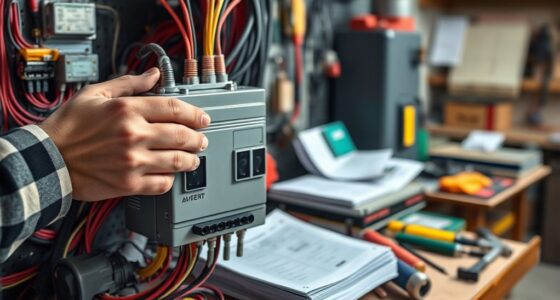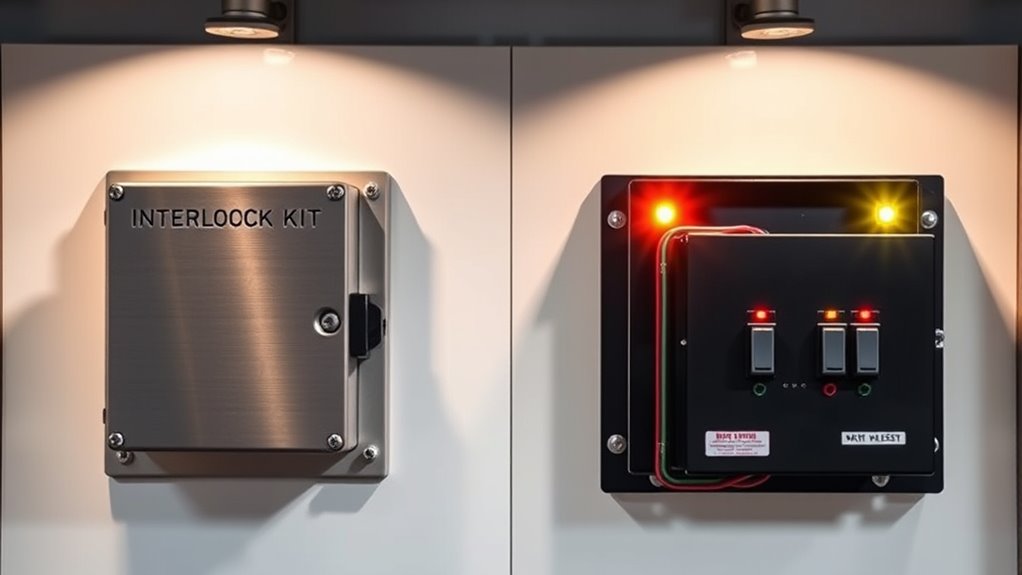

If you want a simple, cost-effective way to switch your generator manually, an interlock kit is a good choice, but it requires your intervention during outages. For easier, automatic power transfer and enhanced safety, a transfer switch is better, though more expensive. Your decision depends on budget, convenience, and safety needs. Keep exploring to find out which option suits your home best and how to install them properly.

Get backup power and energy gear delivered free with Prime
- Fast, free delivery on millions of items
- Prime Video, Amazon Music and more included
- Member-only deals all year
Key Takeaways
- Interlock kits are manual, affordable, easy to install, and suitable for DIY, while transfer switches offer automatic operation and higher safety.
- Transfer switches provide seamless power transfer during outages but cost more upfront compared to simpler interlock kits.
- Both systems must meet safety standards and be installed by qualified electricians to prevent backfeeding and ensure compliance.
- Interlock kits lack automation, requiring manual switching, whereas transfer switches automatically handle power transitions for convenience.
- Choose based on budget, generator compatibility, safety needs, and whether automatic operation or simplicity is prioritized.
Understanding How Interlock Kits and Transfer Switches Work

Interlock kits and transfer switches both serve as essential safety devices that allow you to switch your power source from the utility to a generator. They work by isolating your home’s electrical system, preventing backfeed that could harm utility workers or damage equipment. With interlock kits, you manually slide a mechanical device to connect your generator, ensuring generator compatibility and safe operation. Transfer switches, on the other hand, automatically or manually switch power, providing a seamless transition during outages. Both systems are crucial for emergency preparedness, giving you confidence that your backup power won’t compromise safety. Understanding how each device functions helps you choose the right option for your home, ensuring reliable, safe power when you need it most.
Key Advantages and Disadvantages of Each System

Both interlock kits and transfer switches offer distinct advantages and disadvantages that can influence your choice for home backup power. Interlock kits are simple, cost-effective, and widely compatible with various generators, making them easy to install and maintain. However, they lack automatic operation, requiring manual intervention during outages. Transfer switches, on the other hand, provide seamless, automatic transfer of power, enhancing safety and convenience, but often involve higher upfront costs and more complex installation. When it comes to generator compatibility, both systems work well, but transfer switches can better coordinate larger or multiple generators. Maintenance requirements are generally straightforward for interlock kits, while transfer switches may need periodic testing and professional inspections to ensure reliable operation. Your decision hinges on balancing convenience, cost, and compatibility needs. Additionally, ease of use can be a crucial factor, as automatic systems reduce the need for manual operation during emergencies.
Cost Considerations and Installation Factors
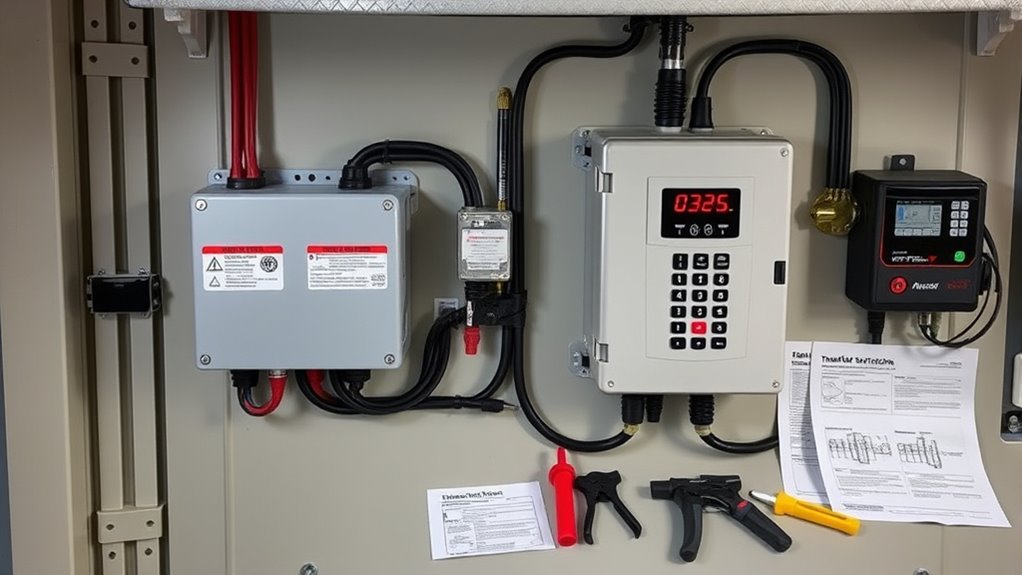
When evaluating your backup power options, cost considerations and installation factors play a significant role in your decision-making process. Understanding these can help you choose the best system for your needs. Consider these key points:
Backup power choices depend on cost and ease of installation to find the best fit.
- Pricing options vary widely between interlock kits and transfer switches, affecting your budget.
- Installation complexity differs; interlock kits often require less wiring and are simpler to install.
- Transfer switches tend to have higher upfront costs but offer greater automation and safety.
- The ease of installation impacts both time and labor costs, influencing your overall expense.
- Additionally, the compatibility with existing electrical systems is crucial when selecting between these options, as it can affect both the installation process and long-term performance.
Safety Aspects and Compliance Requirements
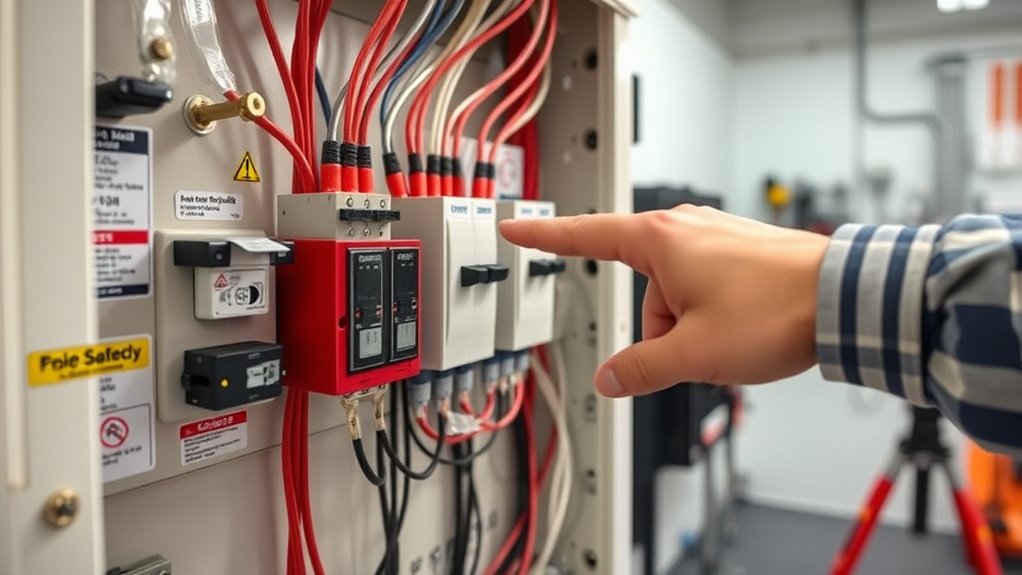
Ensuring safety and compliance is crucial when choosing between interlock kits and transfer switches. You must adhere to the electrical code to prevent dangerous backfeeding and accidental energization. Both options should meet certification standards set by agencies like UL or ETL, guaranteeing they’re tested for safety and reliability. Proper installation according to these standards minimizes risks of electrical faults, shocks, or fires. It’s essential that your setup complies with local regulations to avoid penalties or insurance issues. Always verify that your device has the necessary certifications and is installed by a qualified electrician. Ignoring safety protocols or skipping certification requirements can jeopardize your safety and that of others. Prioritizing compliance ensures your backup power solution operates safely and legally. Additionally, understanding the benefits of heat pump technology can help inform your decisions about energy-efficient and environmentally friendly backup systems.
Making the Right Choice for Your Home

Choosing between interlock kits and transfer switches depends on your specific home setup and backup power needs. Consider these factors to make the right choice:
- Generator compatibility – Ensure your generator works smoothly with the system you select.
- Installation complexity – Transfer switches often require professional wiring, while interlock kits are simpler DIY options.
- Maintenance requirements – Transfer switches typically need less upkeep, whereas interlock kits may need periodic inspection.
- Budget considerations – Interlock kits are usually more affordable upfront, but transfer switches can offer long-term durability.
- System efficiency and safety – Properly installed systems prevent back-feeding and protect utility workers, ensuring system safety and optimal performance.
Think about how often you’ll use backup power, your comfort with maintenance, and your generator’s compatibility. Making an informed choice guarantees reliable power and safety for your home.
Frequently Asked Questions
Can Interlock Kits Be Installed by Homeowners Without Professional Help?
Yes, you can install interlock kits through DIY installation, but you must prioritize safety considerations. Make sure you turn off the main power, follow the manufacturer’s instructions precisely, and use proper tools. If you’re unsure about any step or uncomfortable working with electrical components, it’s best to consult a professional. Proper installation guarantees your safety and system reliability, avoiding potential hazards or code violations.
Are Transfer Switches Compatible With All Generator Types?
Transfer switches aren’t compatible with all generator types, so you need to check generator compatibility before installation. Some models work only with specific generators, especially portable or standby units, to guarantee safety and proper power outage preparedness. Always verify the switch’s specifications and your generator’s output to avoid issues. Choosing the right transfer switch guarantees seamless power transfer and maximizes your home’s safety during outages.
How Long Does Installation Typically Take for Each System?
Installation duration for interlock kits usually takes about 1-3 hours, making it a quick DIY project if you’re comfortable with electrical work. Transfer switches often require more time, typically 4-8 hours, especially if professional installation is involved. Your experience level, the complexity of your setup, and whether you’re doing a DIY installation or hiring a pro can influence the total time.
What Maintenance Is Required for Interlock Kits and Transfer Switches?
Maintaining your system is like tending a garden—regular care keeps it thriving. You should perform routine inspections to check for loose connections and wear, and replace components like fuses or switches as needed. Keep the area clean and dry to prevent corrosion. By staying proactive with maintenance, you’ll guarantee your interlock kit or transfer switch functions reliably, providing peace of mind during power outages.
Do Local Building Codes Influence the Choice Between These Systems?
Yes, local building codes and regulations influence your choice between interlock kits and transfer switches. You need to guarantee your system complies with building code requirements for safety and electrical standards. Check with your local authorities before installing, as some areas may have specific rules that favor one system over the other. Staying compliant not only ensures safety but also prevents potential legal issues during inspections or insurance claims.
Conclusion
Ultimately, choosing between an interlock kit and a transfer switch comes down to understanding your needs and priorities. Both options have their pros and cons, so don’t put all your eggs in one basket. By weighing safety, cost, and ease of use, you can make an informed decision that keeps your home running smoothly during outages. Remember, it’s better to be safe than sorry—don’t let this decision slip through the cracks.
Fall Picks
fall essentials
As an affiliate, we earn on qualifying purchases.