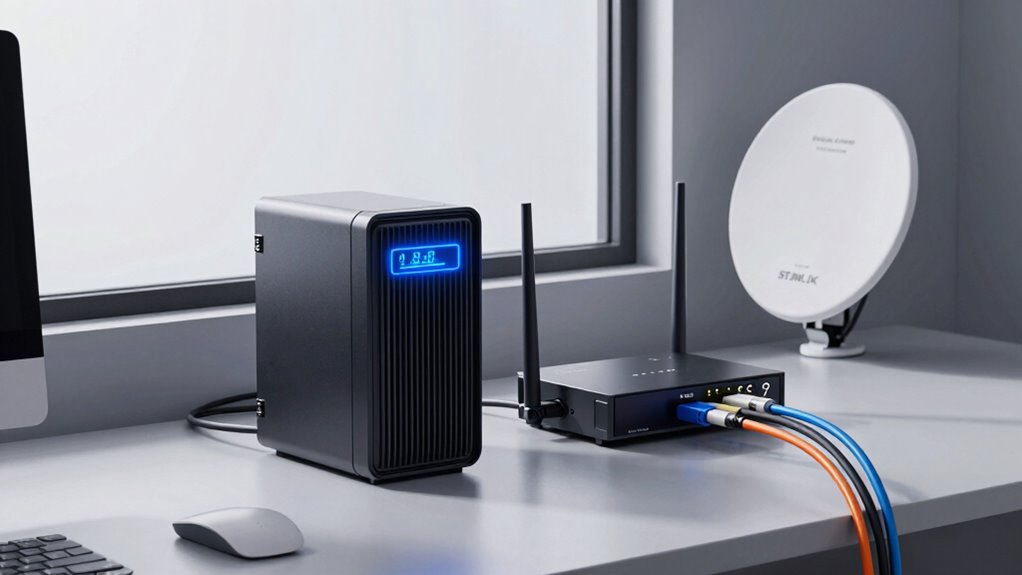

For anyone relying on Starlink or portable routers in remote or emergency scenarios, a dependable power source is essential. The Starlink Mini Kit stands out as the best overall choice for its integrated design and ease of use. Meanwhile, the StarGrid All-in-One Kit offers a more versatile, high-capacity option for longer outages, and the XTAR-Link MP158 excels as a compact, lightweight backup. These options highlight the core tradeoffs: size versus capacity, portability versus runtime, and affordability versus advanced features. Continue reading for a detailed breakdown of each product, so you can find the right fit for your setup.

Get backup power and energy gear delivered free with Prime
- Fast, free delivery on millions of items
- Prime Video, Amazon Music and more included
- Member-only deals all year
Complete the kit


Key Takeaways
- The best portable power stations balance capacity with portability, ensuring reliable runtime without becoming cumbersome.
- Integrated kits with built-in routers simplify setup but may limit upgrade options or capacity expansion.
- High-capacity units tend to be larger and heavier, making them less ideal for frequent transport but better for long-term backup.
- Price varies significantly based on features like output options, battery chemistry, and ruggedness—consider your specific needs to avoid overpaying.
- Most top picks include multiple output ports, but the choice between AC, DC, and USB depends on your device compatibility and power needs.
| Starlink Mini Kit – Portable Satellite Internet System with Built-in WiFi Router |  | Best Overall for Compact, Reliable Remote Connectivity | Frequency Band Class: Tri-Band | Wireless Compatibility: 802.11a | Compatible Devices: Gaming Console | VIEW ON AMAZON | See Our Full Breakdown |
| StarGrid All-in-One Kit for Starlink Mini, 288Wh 90000mAh Battery Pack |  | Best Value for Extended Off-Grid Power | Battery Capacity: 90 amp-hours | Voltage: 19.2 volts | Battery Cell Type: Lithium Ion | VIEW ON AMAZON | See Our Full Breakdown |
| XTAR-Link MP158 Portable Power Bank for Starlink Mini |  | Best for Quick, On-the-Go Power with Fast Recharge | Capacity: 158Wh | Output Voltage: 15-21V DC | Recharge Time: 2.3 hours via PD100W | VIEW ON AMAZON | See Our Full Breakdown |
| Starlink Mini Battery Pack with 6-Hour Runtime and Tripod |  | Best for Short Outdoor Trips & Easy Setup | Capacity: 166Wh / 45,000mAh | Runtime: Up to 6 hours | Recharge Time: 3 hours with 60W+ PD charger | VIEW ON AMAZON | See Our Full Breakdown |
| 288Wh LiFePO4 Battery Pack for Starlink Mini, Portable Power Station with Stand & Carry Case |  | Best for Heavy-Duty, Long-Lasting Outdoor Power | Battery Capacity: 288Wh | Voltage: 19.2V | Battery Type: LiFePO4 | VIEW ON AMAZON | See Our Full Breakdown |
| MK-1 Portable Power Station for Starlink Mini, 189Wh/51300mAh Battery with Tripod, 30V DC Output, IP67 Outdoor Power Supply |  | Best Rugged Outdoor Power Solution | Battery Capacity: 189Wh | Battery Type: Lithium Ion | Voltage: 30V | VIEW ON AMAZON | See Our Full Breakdown |
| 288Wh 90000mAh Battery Pack Power Station for Starlink Mini, StarGrid All-in-One Kit |  | Best High-Capacity Portable Power Kit | Capacity: 288Wh (90000mAh) | Voltage: 19.2V | Battery Type: LiFePO4 | VIEW ON AMAZON | See Our Full Breakdown |
| portable power stations for routers and starlink | Voltage |
|---|---|
| Starlink Mini Kit | — |
| StarGrid All-in-One Kit for St | 19.2 volts |
| XTAR-Link MP158 Portable Power | — |
| Starlink Mini Battery Pack wit | — |
| 288Wh LiFePO4 Battery Pack for | 19.2V |
| MK-1 Portable Power Station fo | 30V |
| 288Wh 90000mAh Battery Pack Po | 19.2V |
More Details on Our Top Picks
Starlink Mini Kit – Portable Satellite Internet System with Built-in WiFi Router
The Starlink Mini Kit stands out for its integrated Wi-Fi router, making it an excellent choice for those who want a self-contained, portable internet solution without extra accessories. Compared to larger battery packs like the Stargrid All-in-One Kit, this option is more compact and easier to carry, but it relies on a separate satellite service plan and its performance varies with satellite coverage. Its low power requirements and simple setup appeal to travelers and outdoor enthusiasts who prioritize convenience and minimal gear. However, the need for a separate subscription adds ongoing cost, and signal quality depends heavily on location. Ideal for solo adventurers or remote workers who need quick, reliable internet in the field, but not suited for users seeking long-term off-grid power independence.
Pros:- Compact, lightweight design ideal for travel and outdoor use
- Built-in Wi-Fi router simplifies connection setup and reduces clutter
- Provides high-speed, low-latency internet in remote locations
Cons:- Monthly Starlink service plan is sold separately, adding ongoing costs
- Performance heavily depends on satellite coverage and signal quality
Best for: Travelers and remote workers needing quick, portable satellite internet with minimal setup
Not ideal for: Heavy users requiring large data throughput or off-grid power independence
- Frequency Band Class:Tri-Band
- Wireless Compatibility:802.11a
- Compatible Devices:Gaming Console
- Antenna Location:Home
- Connectivity Technology:Wi-Fi Router
Our verdict“This pick is best for those needing a portable, all-in-one internet device for quick setup in remote areas.”
StarGrid All-in-One Kit for Starlink Mini, 288Wh 90000mAh Battery Pack
The StarGrid All-in-One Kit offers a high-capacity 288Wh battery, making it ideal for extended outdoor use and off-grid scenarios, especially compared to smaller batteries like the XTAR-Link MP158. Its included durable carrying case and fast charging support make it convenient for camping or remote work setups, but at 8 pounds, it’s less ideal for those prioritizing lightweight gear. Its compatibility is limited strictly to the Starlink Mini, preventing it from powering other devices. The higher capacity translates to longer runtime, yet the added weight may deter casual users or those needing a more portable option. Best suited for users who want long-lasting power without frequent recharges, but less so for ultralight travelers or casual users.
Pros:- High-capacity 288Wh battery provides over 8 hours of power
- Includes a rugged, custom-fit carrying case for portability
- Supports fast charging and pass-through charging with USB-C PD
Cons:- Heavy at 8 pounds, less portable for frequent carry
- Limited to use with Starlink Mini, no multi-device compatibility
Best for: Camping enthusiasts and remote workers needing extended, reliable power for Starlink Mini
Not ideal for: Light travelers or those seeking ultra-light, quick-setup solutions
- Battery Capacity:90 amp-hours
- Voltage:19.2 volts
- Battery Cell Type:Lithium Ion
- Battery Weight:8 pounds
- Additional Features:Supports USB-C PD & pass-through charging
Our verdict“This is the best choice for users who prioritize extended runtime and durability over portability.”
XTAR-Link MP158 Portable Power Bank for Starlink Mini
The XTAR-Link MP158 strikes a balance between portability and runtime, offering up to 8 hours of power for the Starlink Mini. Its 158Wh capacity makes it smaller and lighter than larger packs like the Starlink Mini Battery Pack with Tripod, which is beneficial for quick trips and outdoor use. Its fast PD100W recharge in just over 2 hours is a significant advantage for users needing rapid turnaround between uses. The multiple charging ports support other devices, adding versatility, but the capacity limits its use to mainly the Starlink Mini and similar low-power devices. If portability and speed are priorities, this model excels, but it may fall short for those needing extended or multi-day power solutions. Ideal for travelers, outdoor enthusiasts, or emergency kits.
Pros:- Long runtime of up to 8 hours for Starlink Mini
- Fast recharge in 2.3 hours via PD100W input
- Supports multiple devices with USB-C and USB-A outputs
Cons:- Limited capacity restricts use mainly to Starlink Mini and similar devices
- Requires compatible charging equipment for optimal use
Best for: Travelers or outdoor users needing quick, reliable power for Starlink Mini with fast recharge times
Not ideal for: Users requiring long-term, multi-device power solutions or higher capacity needs
- Capacity:158Wh
- Output Voltage:15-21V DC
- Recharge Time:2.3 hours via PD100W
- Ports:USB-C 100W, USB-A 18W
- Number of Ports:1
Our verdict“This power bank is perfect for quick, portable power needs with rapid turnaround times.”
Starlink Mini Battery Pack with 6-Hour Runtime and Tripod
The Starlink Mini Battery Pack with Tripod offers a practical, lightweight solution for short outdoor durations, with a 166Wh battery providing up to 6 hours of power. Its included built-in tripod simplifies setup on uneven terrain, and its IP67 waterproof and dust-resistant design enhances outdoor durability. Compared to the larger 288Wh options, this unit is more portable but offers fewer hours of runtime, limiting its usefulness for longer trips. The 2.2-pound weight is manageable for most, yet may be burdensome for extended carry. Its quick 3-hour recharge with a 60W+ PD charger makes it suitable for spontaneous outdoor use, but users should consider its shorter runtime for multi-day excursions. Ideal for campers and remote workers needing quick, reliable power for short periods.
Pros:- High-capacity battery for reliable outdoor use
- Built-in tripod for easy setup on various terrains
- IP67 waterproof and dust-resistant design for durability
Cons:- Limited to 6 hours of runtime, not suitable for extended trips
- Relatively heavy at 2.2 lbs for a portable device
Best for: Campers, hikers, and outdoor workers needing a lightweight, quick-to-recharge power source
Not ideal for: Long-term off-grid users or those needing more than 6 hours of continuous power
- Capacity:166Wh / 45,000mAh
- Runtime:Up to 6 hours
- Recharge Time:3 hours with 60W+ PD charger
- Output Power:Up to 100W
- Weight:2.2 lbs
- Water & Dust Resistance:IP67
Our verdict“This unit is best for short outdoor stays where quick setup and durability are key.”
288Wh LiFePO4 Battery Pack for Starlink Mini, Portable Power Station with Stand & Carry Case
The 288Wh LiFePO4 Battery Pack offers a significant upgrade in capacity and durability over smaller packs like the XTAR-Link MP158, providing around 8 hours of runtime for the Starlink Mini. Its built-in stand supports quick setup, and dual ports enable rapid charging of multiple devices, making it suitable for longer outdoor adventures or RV trips. The use of LiFePO4 chemistry enhances safety and longevity, but at over 4 kg (roughly 9 pounds), portability becomes less convenient for quick hikes. Its weather-resistant IP65 rating makes it suitable for outdoor environments, yet its size and weight mean it’s less ideal for users needing ultralight gear. This power station is best for those who prioritize extended use and durability over compactness.
Pros:- Provides up to 8 hours of runtime for Starlink Mini
- Built-in stand simplifies setup and storage
- Fast charging with dual ports (as quick as 2.5 hours)
Cons:- Heavy at over 4 kg, less portable for quick trips
- Limited to compatible devices like Starlink Mini, not multi-device capable
Best for: Long-term outdoor enthusiasts and RV travelers who need extended, reliable power
Not ideal for: Lightweight backpackers or users requiring ultra-portable solutions
- Battery Capacity:288Wh
- Voltage:19.2V
- Battery Type:LiFePO4
- Weight:4070 g
- Charging Time:2.5 hours (dual ports)
- Number of Ports:3
Our verdict“This is the best choice for users seeking maximum runtime and durability in outdoor settings, accepting some added weight.”
MK-1 Portable Power Station for Starlink Mini, 189Wh/51300mAh Battery with Tripod, 30V DC Output, IP67 Outdoor Power Supply
The MK-1 Portable Power Station stands out for its rugged design and quick outdoor setup, thanks to its integrated tripod. While it offers a reliable 30V DC output ideal for Starlink Mini, its 189Wh capacity is modest compared to larger options like the 288Wh kit, making it better suited for shorter sessions or emergency uses. The rugged IP67-rated housing ensures durability in harsh conditions, but the device’s weight and limited capacity mean it’s less suited for extended off-grid use. Compared with the StarGrid All-in-One Kit, the MK-1 is more portable and easier to deploy outdoors, but it lacks the larger capacity and onboard storage of the latter. This pick makes the most sense for users who prioritize durability and quick setup over maximum runtime.
Pros:- Rugged IP67-rated housing withstands harsh weather conditions
- Integrated fold-out tripod allows rapid outdoor setup
- Reliable 30V DC power output tailored for Starlink Mini
- Includes status indicators for easy monitoring
Cons:- Limited battery capacity restricts extended use without recharging
- Requires compatible Starlink Mini model and connector, limiting flexibility
Best for: Outdoor enthusiasts or emergency responders needing a durable, quick-deploy power source for Starlink Mini in rugged environments
Not ideal for: Long-term remote work or extended camping trips where higher capacity or lighter weight is necessary
- Battery Capacity:189Wh
- Battery Type:Lithium Ion
- Voltage:30V
- Power Output:65W
- Charge Time:4 hours
- IP Rating:IP67
Our verdict“Ideal for users needing a rugged, quick-deploy outdoor power solution for Starlink Mini, but less suited for long durations.”
288Wh 90000mAh Battery Pack Power Station for Starlink Mini, StarGrid All-in-One Kit
This StarGrid All-in-One Kit offers a significant upgrade in capacity, providing up to 8 hours of runtime for Starlink Mini, which makes it preferable over smaller units like the MK-1 for longer trips or frequent use. Its 288Wh LiFePO4 battery delivers reliable power with fast USB-C PD charging and pass-through capabilities, supporting quick recharges and simultaneous device use. The custom-fit, splash-resistant carrying case enhances portability, but at around 8 pounds, it’s noticeably heavier and less convenient for quick hikes or short outings. Compared to the MK-1, this unit sacrifices some portability for extended runtime and durability, making it ideal for users who prioritize longer operation over lightweight design. However, its price and limited compatibility with other devices can be drawbacks for some.
Pros:- High-capacity 288Wh battery supports up to 8 hours of continuous operation
- Supports fast USB-C PD pass-through charging for quick recharges
- Durable, splash-resistant carrying case enhances portability
- Multiple safety protections including over-voltage and over-temperature
Cons:- Heavy at 8 pounds, making it less ideal for frequent portage
- Designed specifically for Starlink Mini, limiting multi-device compatibility
- Price and availability may be restrictive for some buyers
Best for: Campers or emergency prepper users who need extended power for Starlink Mini without frequent recharging
Not ideal for: Lightweight travelers or backpackers seeking minimal gear weight who prefer smaller, more portable options
- Capacity:288Wh (90000mAh)
- Voltage:19.2V
- Battery Type:LiFePO4
- Weight:8 pounds
- Charging Power:Up to 120W input, 100W output
- Protection Features:Over-charge, over-discharge, over-voltage, over-temperature
Our verdict“Best suited for users needing long-lasting, reliable power for Starlink Mini during extended outdoor activities or emergencies, despite added weight.”

How We Picked
These products were evaluated based on several key criteria relevant to powering routers and Starlink systems in portable or emergency scenarios. Performance was judged by capacity, runtime, and charging options, ensuring the station can reliably power equipment over extended periods. Usability factors included size, weight, and ease of setup, which are critical for mobile use. Build quality and durability were also considered, especially for outdoor deployment. Lastly, value was assessed by comparing features and capacity against price, helping identify options that offer the best bang for the buck while meeting essential performance standards. Products were ranked to reflect a mix of portability, capacity, and affordability tailored to different user needs.Factors to Consider When Choosing Portable Power Stations For Routers And Starlink
Choosing the right portable power station involves understanding how your specific needs—such as device compatibility, usage duration, and portability—align with product features. Beyond specs, consider practical aspects like ease of transport, weather resistance, and the variety of output ports. A well-chosen unit can prevent outages from turning into major disruptions, especially in remote or outdoor settings. Here are the main factors to weigh when selecting a power station for your router and Starlink system.Capacity and Runtime
The primary consideration is how long the power station can run your devices. Look for a capacity that exceeds your typical usage—adding a buffer helps account for unexpected outages or higher power draw. Units with higher watt-hour ratings or larger mAh ratings generally provide longer runtime but tend to be bulkier and heavier. Matching capacity to your needs prevents overpaying for excess capacity or running short during critical moments.
Portability and Size
Since these stations are meant to be portable, size and weight are critical. Smaller, lighter units are easier to carry but often come with smaller capacities. Conversely, larger units may deliver more runtime but can be cumbersome to move around, especially in outdoor environments. Consider your typical use case—if you need frequent mobility, prioritize compact options; for stationary backup, size may be less of a concern.
Output Options and Compatibility
The variety and type of output ports determine compatibility with your gear. USB-C, USB-A, DC, and AC outlets are common, but ensure the station provides sufficient power levels and connector types for your router, Starlink dish, and any other devices. Some units also include specialized ports like 30V DC, which are useful for certain satellite equipment. Check device power requirements carefully to select a station that won’t underperform or risk damage.
Battery Chemistry and Durability
Battery chemistry impacts longevity, safety, and charging cycles. LiFePO4 batteries, for example, typically last longer and are more stable, making them suitable for repeated use and outdoor environments. Cheaper Lithium-ion options may degrade faster but are lighter and less expensive upfront. Consider the environment where you’ll use the station—outdoor, high-temperature, or rugged conditions benefit from more durable chemistries.
Price and Value
Cost varies widely depending on capacity, features, and build quality. Higher-priced units often include advanced features like multiple charging options, rugged designs, or higher capacities, which can be worth the investment for critical use. However, for casual or infrequent use, more affordable models may provide sufficient power at a better value. Balance your budget with the features that matter most to your setup and frequency of use.
Frequently Asked Questions
How do I know how much capacity I need for my router and Starlink?
To determine your required capacity, start by noting the power consumption of your router and Starlink system, usually listed in watts or milliamps. Estimate how many hours you need to keep them running during an outage. For example, if your devices draw 20W and you want 8 hours of backup, you’ll need at least 160Wh of capacity, plus extra to account for efficiency losses. Always add a buffer—10-20%—to ensure reliable operation over extended periods.
Can I charge these power stations with solar panels?
Many portable power stations support solar charging, which is ideal for off-grid use or prolonged outages. Check the input specifications—voltage, wattage, and connector type—to ensure compatibility with your solar panel setup. Solar charging can extend the station’s usability, but it requires sunlight conditions and may take several hours or days to fully recharge, depending on the panel size and capacity. This option works best when combined with a station that has efficient, fast-charging capabilities.
Are these power stations safe to use outdoors in harsh weather?
Not all power stations are designed for outdoor use, so it’s important to check their ruggedness ratings. Many models feature waterproof or weather-resistant enclosures, like IP67 ratings, which protect against dust and water ingress. Even if a unit isn’t specifically rated for outdoor use, some protective cases or covers can help. Always verify the manufacturer’s specifications and choose a model suited for your outdoor environment to avoid damage or safety hazards.
Will a larger capacity station significantly increase my cost?
Generally, higher capacity units do cost more, reflecting larger batteries and additional features. However, they can be more cost-effective in the long run if you frequently experience outages or need to power multiple devices. Smaller, cheaper stations might suffice for short-term or light use but could require multiple units or frequent recharges. Evaluate your typical power needs and budget to find a balance that provides reliable backup without overspending.
How important is the type of battery chemistry in daily use?
Battery chemistry influences the lifespan, safety, and performance stability of your power station. LiFePO4 batteries are safer, last longer, and handle deeper discharge cycles, making them ideal for regular outdoor or emergency use. Lithium-ion batteries are lighter and cheaper but may degrade faster, especially with frequent cycling or extreme temperatures. Choosing the right chemistry depends on your usage pattern and environmental conditions.
Conclusion
For most users seeking reliable, portable power for routers and Starlink, the Starlink Mini Kit offers an excellent balance of convenience and capacity, making it the best overall choice. Those who prioritize longer runtime or outdoor durability might lean toward the StarGrid All-in-One Kit. Budget-conscious buyers will find the XTAR-Link MP158 provides solid performance at a lower price, while power users needing maximum capacity should consider larger, more rugged units. Beginners should focus on compact, easy-to-use options, while advanced users may want units with versatile charging options and weatherproof features. Ultimately, choosing the right station depends on your specific setup, environment, and how often you need backup power.
Halloween Picks
halloween
As an affiliate, we earn on qualifying purchases.