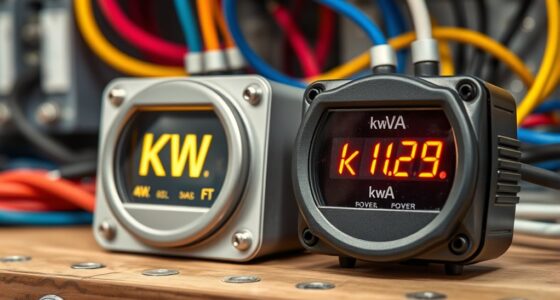
Understanding Kw versus Kva helps you plan your home’s electrical system more effectively. Kw measures the actual power used by appliances, while Kva accounts for the total power including reactive components. Knowing the difference guarantees you select the right equipment, prevent overloads, and optimize energy use. Paying attention to power factor improves efficiency and saves costs. Keep exploring these concepts further, and you’ll gain the knowledge to build a safe, efficient residential system.
Key Takeaways
- Kw measures actual energy used by appliances, while Kva accounts for total load including reactive power.
- Understanding power factor helps convert between Kw and Kva for accurate system sizing.
- Properly differentiating Kw and Kva ensures safety, prevents overloads, and optimizes energy efficiency.
- Calculating Kva from Kw involves dividing Kw by the power factor, aiding in generator and system selection.
- Residential planning benefits from knowing both units to improve appliance performance and manage utility costs effectively.
Understanding the Basics: What Are Kw and Kva?
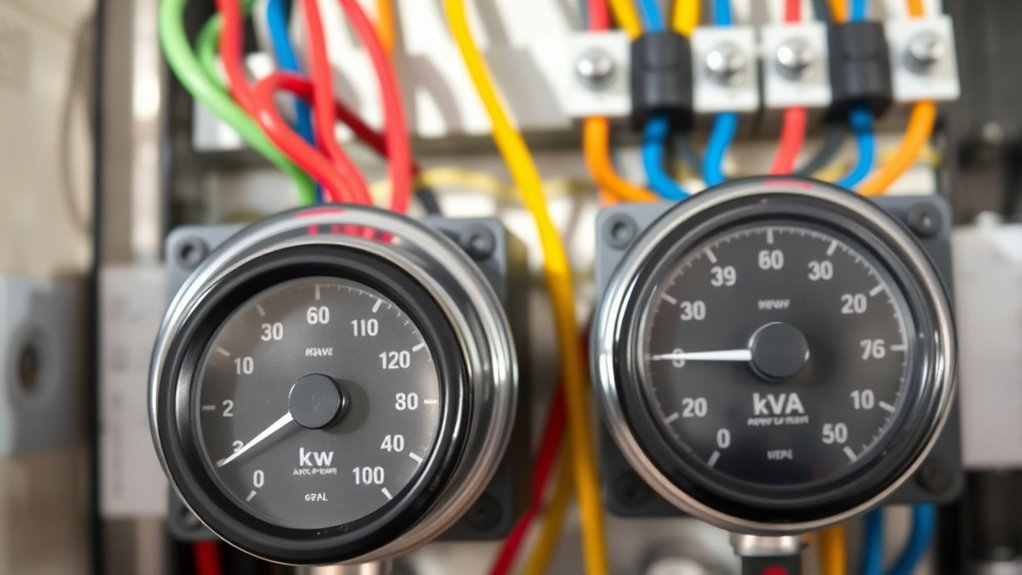
To understand Kw and Kva, it’s important to know that both are units used to measure electrical power, but they serve different purposes. Kilowatts (Kw) represent real power—what actually performs work, like lighting your home or running appliances. Kilovolt-amperes (Kva), on the other hand, measure apparent power, which includes both real power and reactive power that’s necessary for electrical systems to operate smoothly. Knowing the difference helps you optimize energy conservation and guarantees electrical safety by avoiding overloads. When designing or maintaining your residential system, understanding these units helps you select the right equipment and prevent issues like power surges or wastage. This knowledge also promotes safer, more efficient energy use in your home. Additionally, understanding the relationship between real and apparent power is essential for system efficiency and cost management.
The Role of Power Factor in Residential Electrical Systems
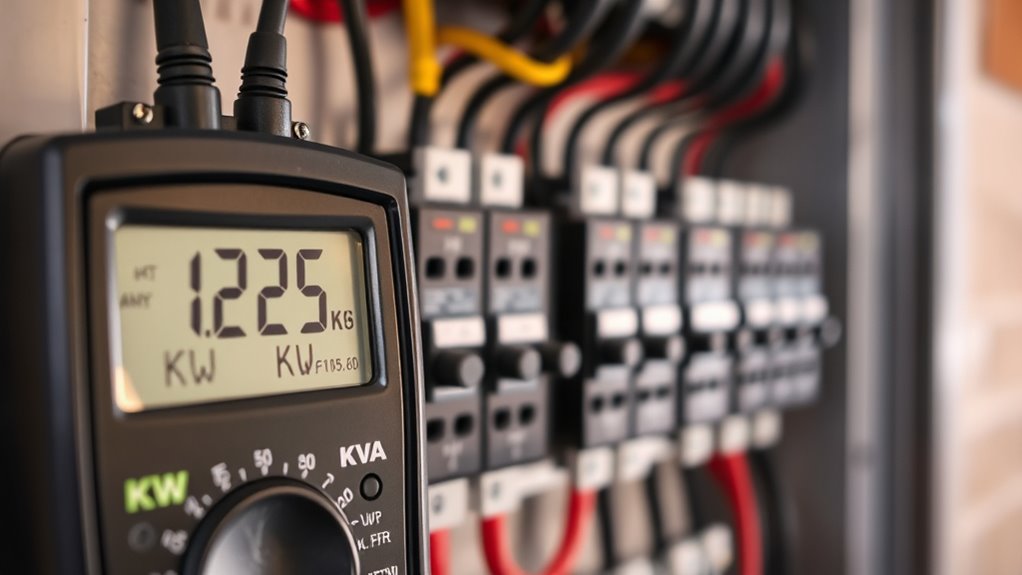
Power factor plays a crucial role in your residential electrical system because it indicates how effectively your home uses the supplied electrical power. A low power factor means you’re wasting energy and paying more for electricity. Improving it through power factor correction helps enhance equipment efficiency and reduce energy costs. When your power factor is close to 1, your system runs smoothly and efficiently. Poor power factor can cause overheating, damage to appliances, and increased utility charges. To optimize your system, consider these key points:
Power factor impacts efficiency, energy costs, and appliance health in your home.
- Installing power factor correction devices
- Upgrading old or inefficient appliances
- Managing large electrical loads effectively
- Regularly monitoring your power factor for improvements
- Understanding cultural intelligence can aid in adopting best practices for energy efficiency and system management within diverse households.
Why Knowing the Difference Matters for Your Home
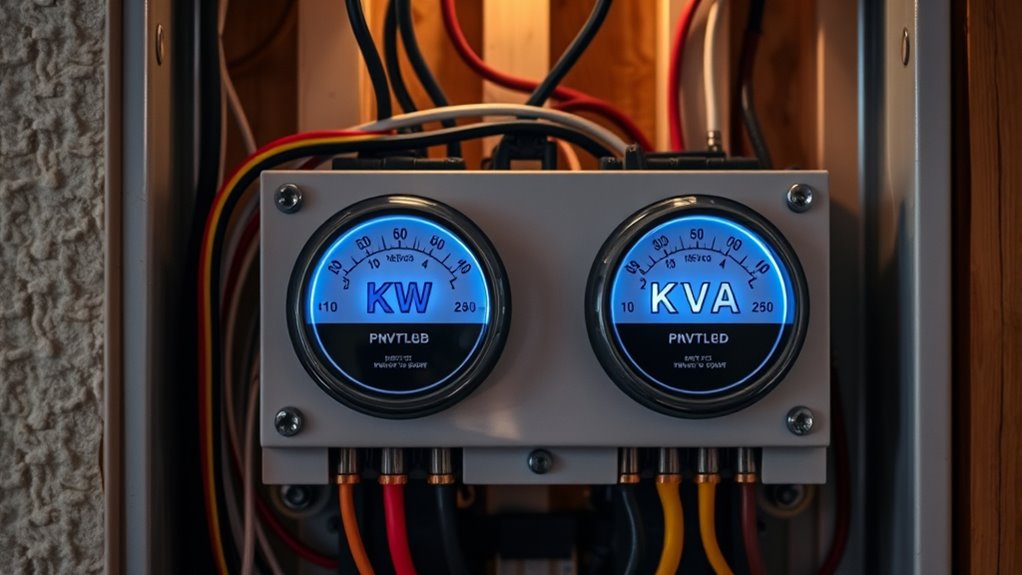
Have you ever wondered why understanding the difference between kW and kVA is important for your home? Knowing this helps you select appliances with better efficiency, guaranteeing you don’t waste energy or pay higher bills. It also guarantees your system complies with safety regulations, reducing the risk of overloads or electrical hazards. When you understand whether your devices are rated in kW or kVA, you can properly size your system and avoid mismatched equipment that could lead to safety issues. This knowledge allows you to optimize your electrical setup, improving appliance performance and longevity. Ultimately, being aware of these differences keeps your home safer, more efficient, and compliant with electrical standards. It’s a vital step toward smarter home electrical management. Additionally, understanding Rhythm Failure can help you better grasp how electrical systems are managed and optimized for safety and performance.
How to Calculate and Compare Kw and Kva in Practice

Calculating and comparing kW and kVA in practice involves understanding the relationship between real power, apparent power, and power factor. To do this effectively, you need to take into account your home’s load demands and how they impact generator sizing and load balancing. A thorough understanding of divorce statistics can be useful when considering the stability of your household environment, which may be relevant during transitions. Here are key steps to follow:
- Determine your total power consumption in kW by summing device wattages.
- Find the power factor to convert kW to kVA using the formula: kVA = kW / power factor.
- Use these calculations to select a generator that can handle your maximum load comfortably.
- Ensure load balancing across circuits to prevent overloads and optimize system efficiency.
These steps help you compare kW and kVA accurately, ensuring your system is reliable and efficiently sized.
Practical Tips for Planning Your Residential Electrical Setup

Planning your residential electrical setup requires careful consideration of your current and future power needs. Start by evaluating your household’s total load, including appliances and potential upgrades. Prioritize electrical safety by ensuring your system meets local codes and uses proper grounding. When estimating costs, factor in equipment, wiring, and professional installation to avoid surprises later. Create a detailed plan that considers future expansion, such as adding new appliances or solar panels. Use accurate load calculations to prevent overloading circuits, which can compromise safety. Consulting a licensed electrician can help refine your plan, ensuring safety and efficiency. Remember, a well-planned setup minimizes risks and costs, providing reliable power for years to come. Focus on safety and precise cost estimation for the best results. Incorporating sound design principles can also help ensure your system integrates seamlessly with other home automation and security features.
Frequently Asked Questions
How Can Incorrect Power Ratings Affect My Home’s Energy Bills?
Incorrect power ratings can lead to reduced power efficiency, making your home’s electrical system work harder than necessary. This inefficiency causes your appliances to consume more energy, raising your energy costs. When your system isn’t properly rated, it may also stress components, leading to potential damage and higher maintenance expenses. Ensuring accurate power ratings helps optimize energy use, ultimately lowering your energy bills and improving overall system performance.
Are There Specific Appliances That Require Special Attention to Kw Vs Kva?
Some appliances, like air conditioners, refrigerators, and industrial tools, require special attention to kW versus kVA because their efficiency impacts power factor correction and energy use. You should consider their power factor to guarantee accurate sizing and prevent overloading. Improving appliance efficiency and correcting power factor can reduce energy costs and extend equipment life. Pay close attention to these factors for appliances with motors or compressors to optimize your home’s electrical system.
What Safety Precautions Are Necessary When Managing Electrical Loads?
You should always prioritize electrical safety by turning off power before working on circuits and wearing protective gear. Proper load management is essential; avoid overloading circuits to prevent hazards. Regularly inspect wiring and appliances for damage. Use appropriate circuit breakers and ensure your system is grounded correctly. Keep a fire extinguisher nearby, and don’t hesitate to consult a professional if you’re unsure. These precautions help keep your home safe and prevent electrical accidents.
Can a Mismatch in Kw and Kva Cause Electrical System Failures?
Yes, a mismatch in kW and kVA can cause electrical system failures. When your power factor drops, it indicates inefficiency, which can lead to transformer overloading or incorrect transformer sizing. This imbalance may result in overheating, equipment failure, or even system outages. To prevent this, verify your system maintains a good power factor and that your transformer is properly sized for both kW and kVA loads, promoting reliable operation.
How Often Should I Review My Residential Electrical System’s Power Ratings?
Did you know that most residential electrical systems experience load changes every few years? You should review your power ratings at least every 2-3 years, especially if you add new appliances or experience frequent outages. Regular checks help guarantee proper load balancing and a good power factor, preventing inefficiencies and potential failures. Staying proactive keeps your system safe, efficient, and aligned with your household’s evolving energy needs.
Conclusion
Understanding the difference between kW and kVA is like having a reliable map for your home’s electrical journey. It helps you avoid surprises and guarantees your system runs smoothly. By mastering these concepts, you’re taking control of your home’s power needs—like a captain steering through calm waters. So, stay informed and plan wisely; your safe, efficient home depends on it. Power up with confidence, and let your home shine bright.