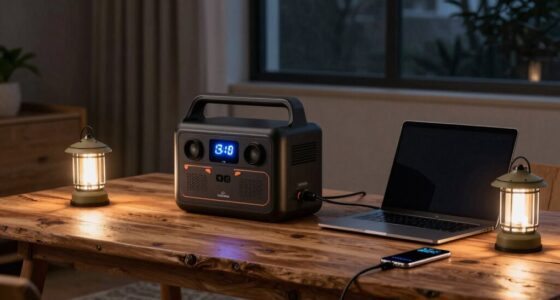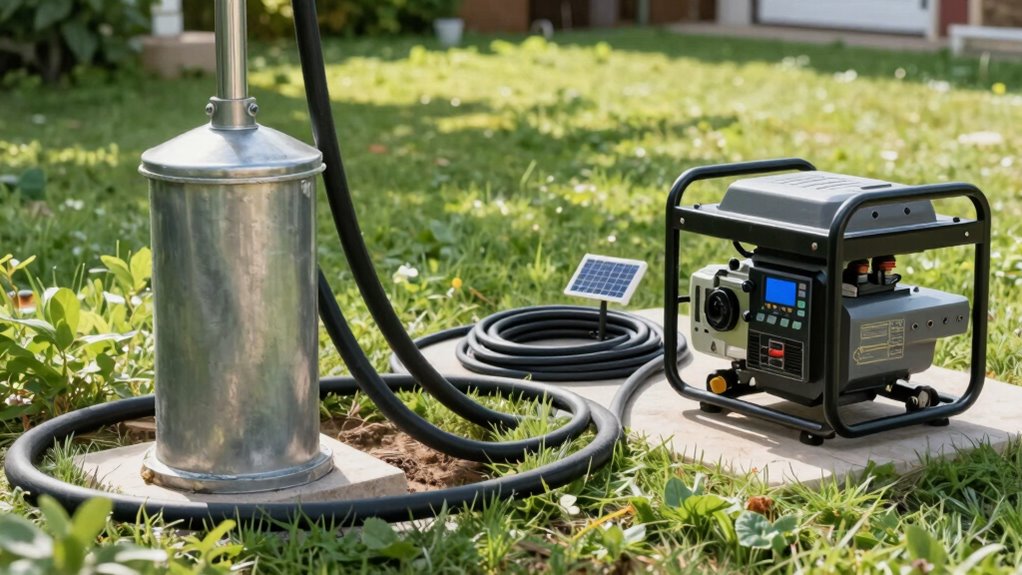

To plan backup power for your well pump, start by selecting a generator that matches your pump’s wattage to avoid overloads. Install it outdoors in a well-ventilated spot, away from windows and vents, for safety. Use a transfer switch to connect it smoothly to your home’s system, and consider automating the switch for emergencies. Store enough fuel safely and regularly test your system to guarantee it’s ready when needed. Keep these tips in mind to maintain your water supply during power outages.
Key Takeaways
- Determine the well pump’s wattage to select an appropriately sized generator.
- Install a dedicated transfer switch for safe and automatic power transfer during outages.
- Choose a safe, well-ventilated outdoor location for generator placement.
- Store sufficient fuel safely and plan for extended outage needs.
- Regularly test and maintain the backup system to ensure reliable operation.
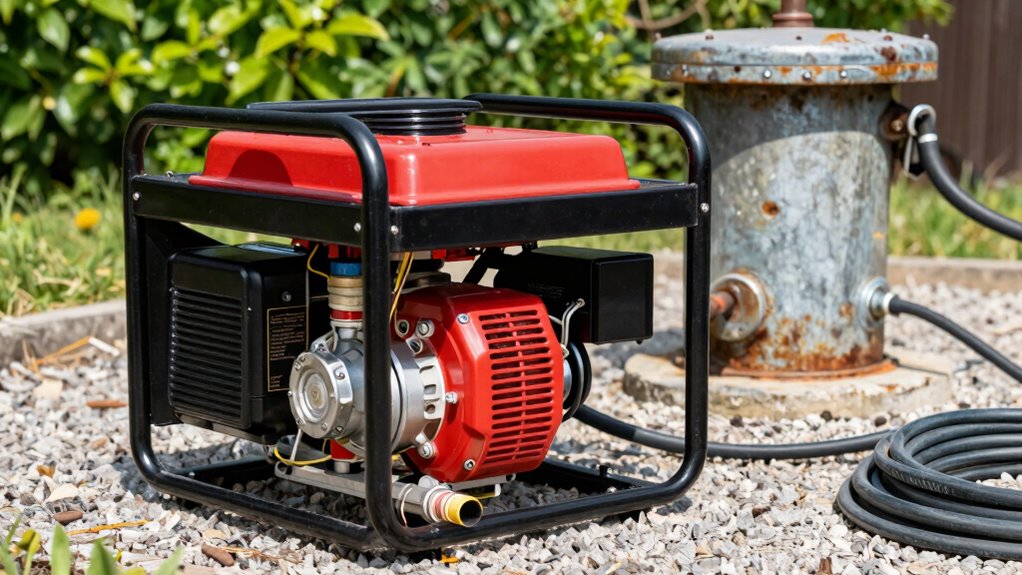
Have you ever experienced a power outage and worried about losing your well water supply? If so, you’re not alone. Power outages can happen unexpectedly, leaving your well pump helpless and your household without water. To prevent this, you need a solid plan for backup power. One of the most effective ways to guarantee continuous water flow is through proper generator installation. Installing a generator designed to power your well pump provides peace of mind, especially during long outages. It’s essential to choose the right size generator, capable of handling your pump’s wattage requirements, so it kicks in smoothly without overloading. A professional installation ensures safety and proper operation, minimizing the risk of electrical issues or generator failure when you need it most.
When planning for power outage preparedness, consider where you’ll install the generator. It should be placed outdoors in a well-ventilated area, away from windows and vents, to prevent dangerous carbon monoxide buildup. Also, think about accessibility for maintenance and refueling. Having a dedicated transfer switch is critical; it allows you to connect your generator to your home’s electrical system safely. This switch makes it easier to power your well pump along with other essential appliances, without the danger of back-feeding power into utility lines. By automating the transfer process, you eliminate the need to manually start and switch over power sources during an outage, making your backup system more reliable and convenient.
You should also plan for fuel storage and management. Depending on your location and the generator size, you might need enough fuel for several hours or days of operation. Keep safety in mind: store fuel in approved containers in a secure, well-ventilated area away from your home. Regularly testing your backup system is equally important. Run your generator periodically to ensure it’s functioning properly and to familiarize yourself with its operation. This routine not only keeps your equipment in good shape but also helps you identify potential issues before an emergency strikes.

Porch Shield Waterproof Universal Generator Cover 32 x 24 x 24 inch - for Most Generators 5000-10000 Watt, Black
Compatible - More sizes for 5000w -10000w gas generator or inverter generator.
As an affiliate, we earn on qualifying purchases.
Frequently Asked Questions
How Long Should a Backup Power Source Last During an Outage?
You should aim for a backup power source that lasts at least 24 to 48 hours during an outage. Consider your well pump’s power needs, which affects the generator capacity you select. Also, check the battery lifespan to guarantee your backup system remains reliable over time. Planning for longer outages might require a larger capacity generator or additional batteries to keep your water supply steady.
What Is the Cost Difference Between Different Backup Power Options?
Think of the cost comparison like choosing between a trusty steed and a luxury car. Power options range from affordable portable generators to more expensive standby generators or solar systems. Portable generators are budget-friendly but less reliable, while standby generators cost more upfront but offer seamless power, and solar systems have high initial costs but lower long-term expenses. Your choice depends on your budget, needs, and desired reliability.
Can a Backup System Be Automated to Activate During Power Outages?
Yes, a backup system can be automated to activate during power outages. You’ll need a transfer switch that detects outages and triggers the generator or battery backup. Regular generator maintenance ensures reliable operation, while monitoring battery lifespan prevents unexpected failures. Automation provides peace of mind, guaranteeing your well pump stays operational without manual intervention, especially during emergency situations. Proper setup and maintenance guarantee your backup system responds swiftly when needed.
How Often Should Backup Power Systems Be Maintained or Tested?
You should test and maintain your backup power system at least twice a year to guarantee reliability. Regular maintenance helps extend battery lifespan and catches issues early. Follow a maintenance scheduling routine, which includes inspecting batteries, checking connections, and testing auto-start functions. Don’t forget to replace batteries as recommended by the manufacturer, usually every 3-5 years, to keep your system ready during power outages.
Are There Any Safety Precautions When Installing Backup Power for Well Pumps?
When installing backup power for your well pump, prioritize generator safety by guaranteeing proper ventilation and grounding, and follow manufacturer instructions. Keep batteries in a dry, cool place, and regularly check their lifespan to prevent failures. Always turn off power sources before maintenance, and use certified wiring and equipment. By following these precautions, you help protect yourself and ensure reliable backup power during emergencies.
Porch Shield Waterproof Universal Generator Cover 38 x 28 x 30 inch - for Most Generators 5500-15000 Watt, Black
Compatible - More sizes for 5500w -15000w gas generator or inverter generator.
As an affiliate, we earn on qualifying purchases.
Conclusion
Think of your well pump as the heart of your home’s water supply—pumping life into your daily routine. Planning backup power is like building a safety net beneath a tightrope. It catches you when the main line falters, ensuring your water flow never stops. With the right backup system in place, you’re prepared for any storm that comes your way, keeping your household running smoothly, no matter what.

GenArmor Generator Covers While Running, 100% Waterproof Heavy Duty Tarps Generator Tent, Portable Outdoor Generator Enclosure for Most 4000w~13000w Generators, Black, Standard
100% Waterproof Protection: A patented innovation from GenArmor independent design lab, ensuring the safety of your generator covers...
As an affiliate, we earn on qualifying purchases.
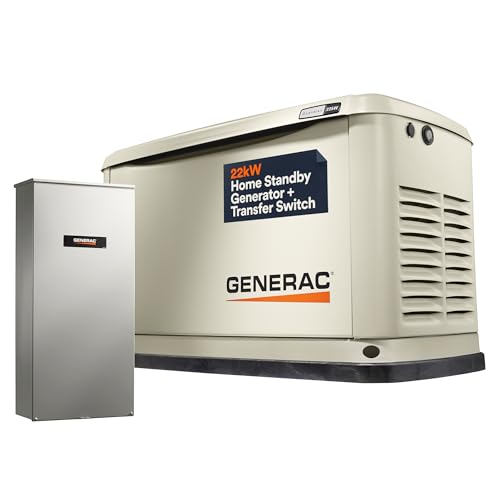
Generac Guardian 22kW Home Standby Generator with 200 Amp Transfer Switch - Automatic Whole House Backup Power for Storms, Emergencies, and Outages, WiFi Enabled, Runs on Natural Gas or Liquid Propane
Remote Monitoring Anywhere: With Generac 7043 22kW Mobile Link Wi-Fi connectivity, effortlessly track generator performance from anywhere. Stay...
As an affiliate, we earn on qualifying purchases.