
TL;DR

Get backup power and energy gear delivered free with Prime
- Fast, free delivery on millions of items
- Prime Video, Amazon Music and more included
- Member-only deals all year
The U.S. Department of Energy announced its intent to provide up to $50 million in Defense Production Act funding for a proposed Virginia and West Virginia transmission project. Led by Virginia Energy, the 48-month effort would use advanced conductors and real-time line monitoring on existing corridors, with an estimated 290 megawatts of added capacity on Appalachian Power’s Virginia system. DOE has not detailed the funding schedule or when construction and deployment would begin.
The U.S. Department of Energy said it intends to provide up to $50 million in Defense Production Act funding for a proposed transmission project in Virginia and West Virginia, aimed at increasing the amount of electricity existing power lines can carry. The project, led by Virginia Energy, is intended to improve grid reliability and support electricity demand tied to households, businesses and national defense.
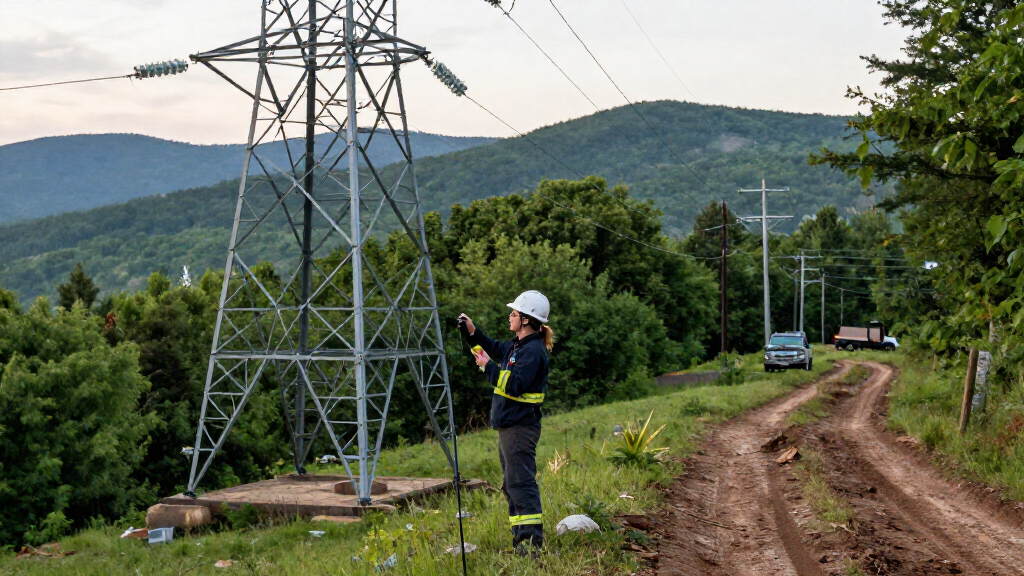
The proposed project, called Grid Enhancing Technologies for Virginia & West Virginia Large Load Growth, would install advanced conductors and Dynamic Line Rating technology along existing transmission corridors. DOE said the measures are intended to increase delivery capacity, reduce congestion and make better use of infrastructure already in place, rather than relying only on conventional transmission upgrades.
DOE estimates the work could add 290 megawatts of transmission capacity across Appalachian Power’s Virginia system. The department said the upgrades could be completed one to four years faster than conventional transmission upgrades. That is an agency estimate; the announcement does not provide a project-by-project construction schedule or explain how the estimate was calculated.
Virginia Energy will lead the proposed 48-month project in coordination with Appalachian Power, Potomac Edison and regional partners. DOE describes the funding as part of a broader federal allocation of $1 billion for energy projects deemed critical to national security. The announcement says Presidential Determination No. 2026-10 identifies transmission lines and conductors, substations, and power-control and protection equipment as essential to national defense.
More Capacity on Existing Lines
The project matters because transmission limits can constrain how much electricity moves through the grid, even where power generation is available. Adding capacity to existing corridors could help meet growing regional demand while avoiding some of the time required to build entirely new transmission routes. The expected 290-megawatt increase applies to the Appalachian Power Virginia system, not necessarily to the entire two-state region.
DOE also links the work to reliable power for military operations and defense-related industries, as well as communities and businesses. The department says improved capacity and reduced congestion could help the grid perform during high-demand periods or disruptions. Those are expected benefits, not outcomes already demonstrated by the proposed project.
The funding approach also places advanced transmission equipment within the administration’s national-security energy priorities. If implemented, the project could provide information on whether reconductoring and real-time monitoring can expand capacity faster than conventional upgrades in these corridors. The announcement does not state how any resulting cost savings would be measured or passed on to customers.
Top picks for "virginia energy department"
As an affiliate, we earn on qualifying purchases.
Federal Funding and Project Design
The Defense Production Act is the federal authority DOE says it will use to support this energy infrastructure work. The department’s announcement ties the proposed award to a $1 billion federal appropriation for energy projects considered critical to national security and cites Presidential Determination No. 2026-10. It does not describe the full set of projects eligible for that funding or how the total will be divided.
The technical approach combines advanced reconductoring—replacing existing conductors with higher-capacity alternatives—with Dynamic Line Rating. The latter uses real-time information to assess how much electricity a line can safely carry under current conditions. DOE says the technologies would be deployed on existing power lines in Virginia and West Virginia, although the estimated 290 megawatts is specifically attributed to Appalachian Power’s Virginia system.
DOE presented the effort as a way to improve grid performance while limiting the need for new corridors. The project’s named participants are Virginia Energy, Appalachian Power and Potomac Edison, along with regional partners whose identities were not specified in the announcement.
“A stronger electric grid doesn’t always mean building more power lines. Sometimes it means making better use of the ones we already have.”
— Office of Electricity Assistant Secretary Katie Jereza
Award and Schedule Still Pending
DOE announced an intent to deploy funding, with an amount of up to $50 million; the release does not set out a final award agreement, payment schedule or conditions for disbursement. It also does not specify when field work will start, which individual lines will be upgraded, or how the project’s 48-month period will be scheduled.
The department has not provided a breakdown of project costs, the share covered by federal funds, or any expected effect on customer bills. The estimated 290 megawatts and the claim that the work could be one to four years faster than conventional upgrades are projections. DOE’s announcement does not provide a detailed methodology, independent assessment or performance guarantees for those estimates.
It is also unclear which regional partners, beyond the named utilities and Virginia Energy, will take part; what permits or approvals may be required; and how progress or reliability gains will be measured. The release does not report that construction has begun or that the proposed capacity is already available.
Funding Steps and Deployment Plans
The next developments are expected to clarify how DOE’s stated funding intent becomes a formal award and how Virginia Energy and its partners will carry out the proposed work. The agency announcement does not give a date for those steps. Project partners would need to identify the transmission corridors, confirm technical designs and establish a deployment schedule before the planned upgrades can be assessed against the stated capacity estimate.
Updates on the award terms, start date, partner roles and progress toward the 48-month project plan will show how quickly the proposed improvements move from announcement to installation. Until those details are published, the project’s timing, final cost and delivered capacity remain unconfirmed.
Key Questions
How much funding did DOE announce?
DOE announced its intent to provide up to $50 million in Defense Production Act funding. The release does not provide final award terms or a disbursement schedule.
Where will the project take place?
The proposed work covers transmission infrastructure in Virginia and West Virginia. DOE’s estimate of 290 megawatts of additional capacity is for Appalachian Power’s Virginia system.
What technologies are planned?
The project proposes advanced reconductoring and Dynamic Line Rating on existing transmission corridors. These technologies are intended to increase the capacity of existing lines and monitor their operating conditions.
When will the upgrades be completed?
The project is described as a 48-month effort, but DOE did not state a start date or give a detailed completion schedule. It also has not published a timeline for finalizing the funding award.
Is the 290-megawatt increase confirmed?
No. It is a DOE estimate for the proposed upgrades on Appalachian Power’s Virginia system. The announcement does not say that the capacity has already been added.
Source: primary
Halloween Picks
halloween
As an affiliate, we earn on qualifying purchases.