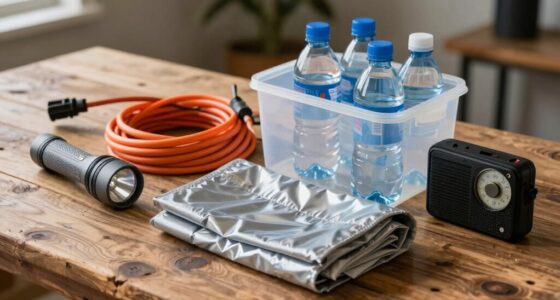
To prepare for rolling blackouts, stock up on essentials like bottled water, non-perishable foods, batteries, and flashlights, and consider investing in a generator for frequent outages. Establish a reliable communication plan with household members and neighbors, using battery-powered radios and emergency contacts. Keep food cold with coolers and ice packs, unplug electronics, and install surge protectors. Stay informed with local alerts. Continued preparation can help you handle blackouts confidently and stay safe longer.

Get backup power and energy gear delivered free with Prime
- Fast, free delivery on millions of items
- Prime Video, Amazon Music and more included
- Member-only deals all year
Key Takeaways
- Stock essential supplies like water, non-perishable food, batteries, and flashlights to ensure readiness during outages.
- Establish a communication plan with household members and neighbors, including backup devices like radios.
- Keep refrigerator and freezer doors closed; use coolers with ice packs to preserve perishables.
- Install surge protectors and unplug electronics to prevent damage from power surges when electricity returns.
- Stay informed with local alerts, emergency apps, and regularly review your emergency preparedness plans.
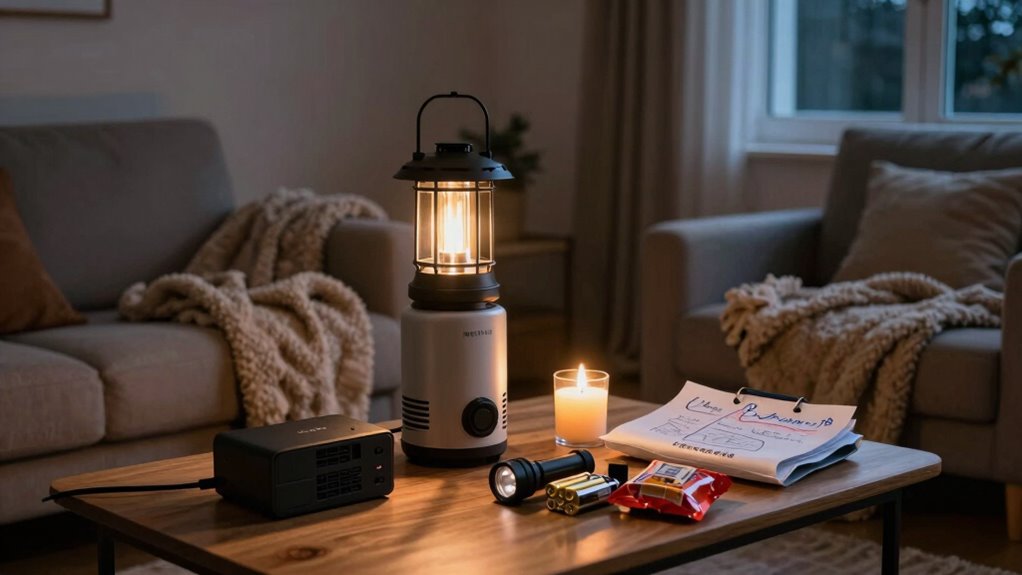
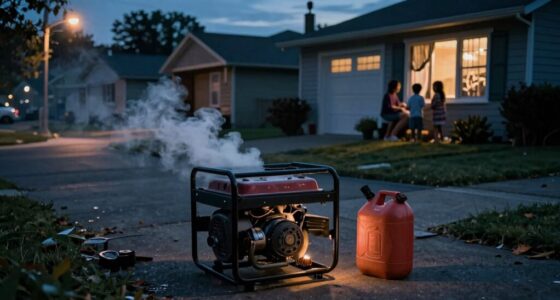
Are you ready for the possibility of rolling blackouts? These disruptions can catch you off guard, but with proper preparation, you can minimize their impact on your daily life. The first step is to gather emergency supplies. Stock up on essentials like bottled water, non-perishable food, batteries, flashlights, and a portable phone charger. Having these on hand guarantees you won’t be left in the dark or without basic necessities when power is out. Consider investing in a generator if outages are frequent in your area, but remember to operate it safely and outside to prevent carbon monoxide buildup. Additionally, keep a first aid kit nearby and make sure your medications are stocked enough to last through prolonged outages.
Prepare with essentials like water, food, batteries, and a generator to stay safe during rolling blackouts.
Beyond physical supplies, establishing a solid communication plan is vital. During blackouts, traditional phone lines and internet services might become unreliable. Decide on a primary way to stay in touch with family members or neighbors—whether it’s a designated meeting point, a shared radio frequency, or a messaging app that works offline. Make sure everyone in your household knows the plan, including how to contact each other if your usual channels are down. Share emergency contact numbers, and consider investing in a battery-powered or hand-crank radio to receive weather updates and emergency alerts. It’s also wise to inform friends, family, and neighbors about your plans so they can lend help if needed or check in on vulnerable individuals. Ensuring your communication devices are compatible with home theatre projectors can provide additional entertainment or information sources during extended outages. Regularly testing your communication devices and plans can help identify potential issues before an emergency occurs. Being familiar with emergency protocols can also make your response more effective and confident during blackouts. Incorporating renewable energy sources, like solar chargers, can further enhance your preparedness and reduce reliance on traditional power sources.
Preparing your home is equally important. Keep your refrigerator and freezer doors closed as much as possible to preserve cold air and prevent food spoilage. Use coolers with ice packs for perishable items if you anticipate long outages. If you have a fireplace or wood stove, stock up on fuel, as these can provide both heat and a way to cook food. Unplug electronics and appliances to avoid power surges when electricity is restored. Installing surge protectors can help safeguard your devices. Remember, home safety measures like installing smoke and carbon monoxide detectors can be vital during prolonged outages. Taking the time to review your emergency plan can ensure everyone knows what to do and where to go in case of an extended blackout.
Lastly, stay informed. Subscribe to local alerts or download relevant apps that notify you of outages or emergencies. Regularly review your emergency supplies and communication plans, updating them as needed. Being proactive and prepared not only helps you stay safe but also reduces stress during unpredictable blackouts. With the right mindset and resources, you can face rolling blackouts confidently, knowing you’re ready for whatever comes your way.
Frequently Asked Questions
How Long Do Rolling Blackouts Typically Last?
Rolling blackouts typically last from a few minutes up to a few hours, depending on the power grid’s capacity and demand. You should stay informed through local updates and practice energy conservation by unplugging unnecessary devices. During these outages, avoid opening refrigerators or freezers to preserve food. Your awareness and energy-saving habits help ease the strain on the power grid, making blackouts shorter and less disruptive.
Are There Specific Times When Blackouts Are More Likely?
Timing troubles tend to target peak periods when power grid stability is strained, often during evenings or extreme weather. Blackouts are more likely during times of high demand, increasing blackout frequency. To stay safe, stay alert to local alerts and avoid unnecessary energy use during these vulnerable windows. Planning ahead guarantees you’re prepared, preventing panic when power suddenly cuts out. Stay informed, stay ready—timing matters when managing blackout risks.
Can I Be Notified Before a Blackout Occurs?
Yes, you can often be notified before a blackout occurs through local alerts or utility notifications. To stay prepared, keep an emergency kit and a power backup ready, so you’re not caught off guard. Sign up for alerts from your utility company or local government, and check their websites regularly. Having these measures in place guarantees you’re informed and prepared to handle power outages smoothly.
What Should I Do if I Have Medical Equipment?
Having medical equipment during a blackout is like having a lifeline, so you need to act fast. You should notify your utility company about your medical needs and explore emergency power options like battery backups or generators. Keep your equipment’s safety in mind, ensuring it’s properly maintained and easily accessible. Make a plan for quick access to backup power, and always have a list of emergency contacts ready.
How Do Blackouts Affect Internet and Communication Services?
During a power outage, your internet and communication services may become disrupted due to loss of power to essential infrastructure. This communication disruption can make it difficult to stay connected with loved ones or access important information. To mitigate this, you should keep backup power sources like portable chargers or generators, and have offline contact plans. Staying aware of local updates through battery-powered radios can also help you stay informed during blackouts.
Conclusion
By taking these simple steps, you’re not just preparing—you’re building an unbreakable fortress against the chaos of rolling blackouts. Think of your efforts as a lifeboat in a stormy sea, keeping you afloat when everything else is sinking. Stay proactive, stock up, and plan ahead. With each small action, you’re transforming uncertainty into security, turning what could be a disaster into a manageable challenge. You’ve got this—your resilience is your greatest power.
Halloween Picks
halloween
As an affiliate, we earn on qualifying purchases.