

To prepare your guests and family for blackout procedures, create a clear emergency communication plan and share it with everyone. Make sure household members know how to operate safety equipment like flashlights and backup power sources. Practice blackout drills to build confidence and reduce anxiety. Keep essential safety and communication tools, such as batteries, radios, and first aid kits, in accessible spots. If you keep these tips in mind, you’ll be ready when an outage occurs—and there’s more to explore for full preparedness.
Key Takeaways
- Educate all household members and guests on blackout safety procedures and communication plans in advance.
- Conduct regular drills to practice blackout scenarios and emergency responses.
- Ensure everyone knows how to operate safety devices, flashlights, and backup power sources.
- Keep emergency contact lists and essential supplies easily accessible for quick reference.
- Designate a safe gathering area and establish evacuation or sheltering procedures.
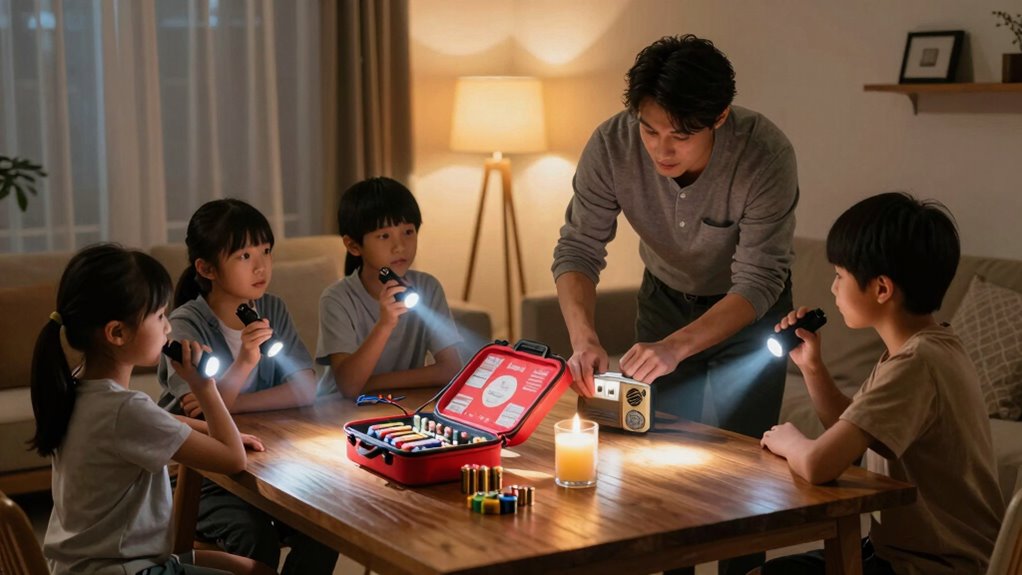
Preparing your guests and family for blackout procedures is crucial to guarantee everyone stays safe and calm during a power outage. One of the most critical steps is establishing clear emergency communication plans. Make sure everyone knows how to reach each other if cell phones lose power or service. Keep a list of emergency contacts handy, including local authorities, utility companies, and nearby friends or relatives. Consider investing in battery-powered radios so you can stay informed about the situation even when the power’s out. It’s also smart to have a standby list of important numbers written down or stored in a place accessible during an outage. Being prepared with reliable communication methods prevents panic and ensures everyone stays connected, even in stressful moments. Additionally, teaching your family and guests about emergency preparedness can significantly improve their confidence and response during a blackout. Knowing how to use essential safety equipment and understanding basic procedures can make a big difference in handling unexpected situations.
Establish clear emergency communication plans and keep essential contact information accessible during outages.
Safety equipment plays an important role in blackout preparedness. Equip your home with flashlights, batteries, and portable chargers, and keep them in easily accessible spots. Make sure everyone in your household knows how to operate these items safely. Installing night lights or glow-in-the-dark tape around key areas can help prevent accidents when the lights go out. Keep a first aid kit within reach, stocked with supplies for minor injuries, and ensure everyone knows where it’s stored. If you have elderly family members or guests with special needs, prepare additional safety equipment like walkers, hearing aids, or mobility aids, and ensure they’re in good working order. Having these tools ready helps minimize hazards and provides peace of mind during an outage. Recognizing the importance of power outage preparedness can further enhance your household’s readiness. Being aware of emergency communication plans and practicing them regularly can make a significant difference in how effectively your household responds. Additionally, understanding how to utilize essential oils for comfort or minor health concerns can help keep everyone calm and reassured during stressful times. Incorporating knowledge about electric bikes and backup power sources can also be beneficial, especially if someone relies on electrically powered medical devices or mobility aids during an outage.
It’s also wise to plan for alternative power sources or backup generators if possible, especially if someone in your household relies on electrically powered medical devices. Regularly check that these devices are functioning properly and have enough fuel or batteries. Communicate this plan clearly to everyone, so nobody is caught off guard. Additionally, prepare a designated safe space in your home where everyone can gather if an emergency arises, and discuss how to evacuate or seek shelter if needed. This preparation ensures that you’re ready to respond swiftly and effectively, reducing confusion and potential dangers.
Involving everyone in these preparations is key. Teach your guests and family how to use safety equipment, review emergency communication plans, and rehearse what to do during a blackout. When everyone understands their role, it fosters confidence and reduces anxiety. Ultimately, being proactive about blackout procedures creates a safer environment and helps everyone stay calm and composed when the lights go out.
Top picks for "prepare guest family"
Open Amazon search results for this keyword.
As an affiliate, we earn on qualifying purchases.
Frequently Asked Questions
How Long Should Blackout Supplies Last?
Blackout supplies should last at least 72 hours, giving you enough time to manage emergency lighting and water needs. Make certain your emergency lighting is functional and batteries are charged, providing illumination during power outages. Store sufficient water, ideally one gallon per person per day, to stay hydrated. Regularly check and replenish supplies to guarantee they’re ready when a blackout occurs, helping you and your guests stay safe and comfortable.
What Are the Best Communication Methods During a Blackout?
You might think traditional cell phones are the best way, but during a blackout, emergency communication is key. Radio alerts, battery-powered emergency radios, and satellite phones work best for power outage alerts. They keep you connected when power’s out. Make certain everyone knows how to operate these devices beforehand. This way, you can stay informed, coordinate with loved ones, and guarantee safety even during prolonged blackouts.
How Can I Ensure Children Understand Blackout Procedures?
You can guarantee children understand blackout procedures by focusing on child safety and emergency education. Use simple language and age-appropriate explanations to teach them what to do during a blackout. Practice drills regularly, so they feel confident and know their roles. Keep communication calm and reassuring, and involve them in safety discussions. Reinforcing these steps helps children stay safe and prepared, fostering a sense of security during emergencies.
What Are Common Mistakes to Avoid During Blackout Preparations?
You should avoid neglecting to assemble a thorough emergency kit, which is vital during a power outage. Don’t overlook practicing blackout procedures regularly; this helps everyone stay calm and prepared. Don’t assume everyone knows what to do—clarify roles and steps clearly. Also, avoid relying solely on electronic devices for information, as they may fail during a power outage. Proper preparation prevents confusion and keeps everyone safe.
How Often Should Blackout Drills Be Conducted?
You should conduct blackout drills at least twice a year to guarantee everyone knows the safety protocols. Regular drills help you identify gaps in your emergency kits and reinforce proper actions during power outages. By practicing consistently, you make sure your guests and family feel confident and prepared. Keep emergency kits updated and accessible, and review safety protocols with everyone during each drill to maximize safety during actual blackouts.
Conclusion
As the lights flicker and fade, imagine your family and guests cozying up in the gentle glow of candles, sharing stories in the embrace of quiet darkness. By preparing them ahead of time, you create a calm oasis amid the shadows, turning potential chaos into a moment of connection. When the blackout arrives, you’ll all feel confident, ready to face the night together, basking in the warmth of preparedness and the comfort of each other’s company.