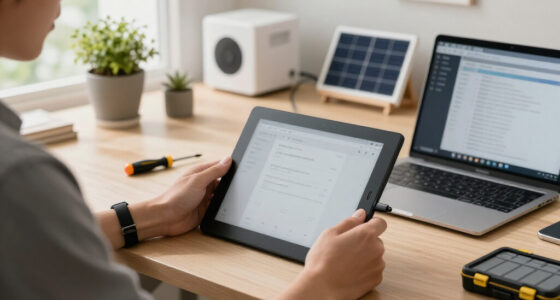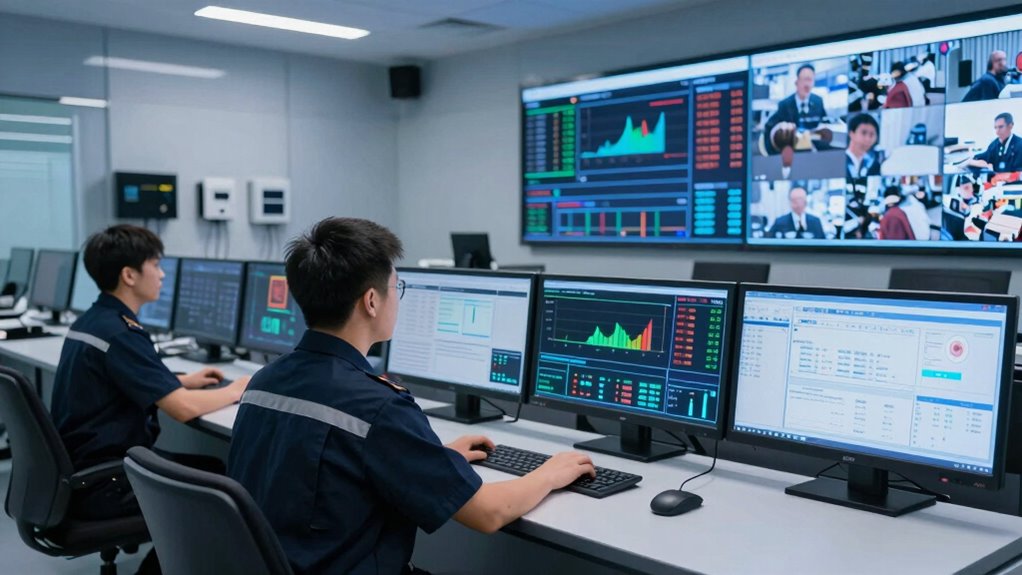

To catch problems early with remote monitoring, set up continuous data tracking from your sensors and systems. Establish thresholds and alerts for unusual readings or performance drops, so you get automatic notifications when something’s off. Keep your security protocols strong with encryption and regular updates to prevent cyber threats. Regularly review your system’s data and fine-tune your alerts to improve early detection. Stay proactive, and you’ll find ways to prevent costly issues before they escalate. Keep exploring to learn more about maximizing your system’s effectiveness.

Get backup power and energy gear delivered free — and shop member deals
- Fast, free delivery on millions of items
- Access to Prime Big Deal Days deals on October 6–7
- Prime Video, Amazon Music and more included
Key Takeaways
- Set clear thresholds and alerts to identify abnormal sensor readings promptly.
- Regularly calibrate and maintain sensors to ensure accurate and reliable data.
- Use secure data transmission protocols to protect sensitive monitoring information.
- Implement automated notifications for immediate alerts on detected issues.
- Conduct routine system reviews and audits to ensure monitoring accuracy and security effectiveness.
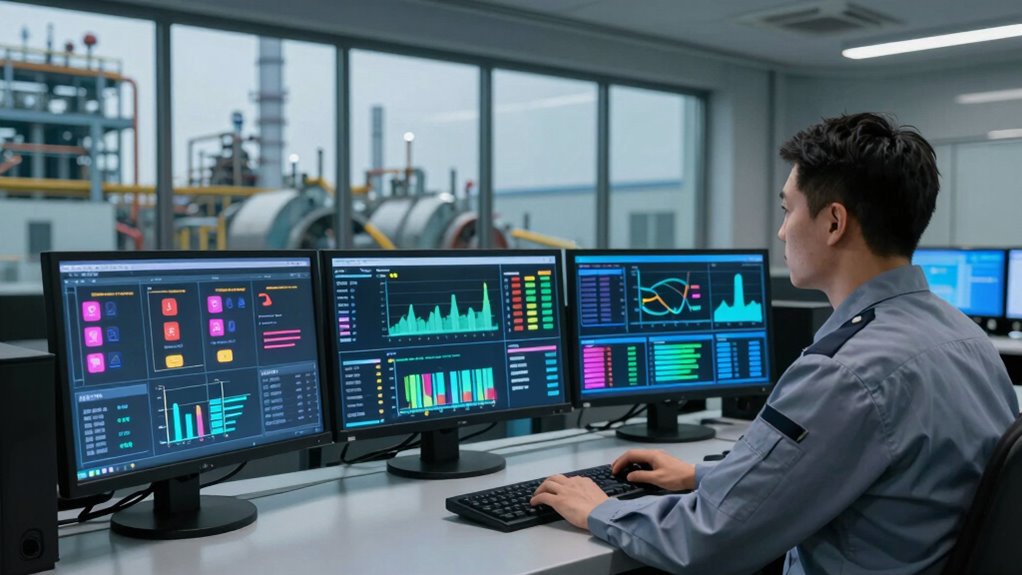
Remote monitoring has become an indispensable tool for managing systems efficiently and guaranteeing security from anywhere. It allows you to keep an eye on equipment, processes, or environments without being physically present. To get the most out of remote monitoring, you need to understand key components like sensor calibration and data security. Proper sensor calibration is crucial because it ensures your sensors deliver accurate readings, which are the foundation of reliable monitoring. If your sensors aren’t calibrated correctly, you might miss early signs of trouble or generate false alarms, leading to unnecessary downtime or overlooked issues. Regularly calibrate your sensors according to manufacturer instructions or industry standards to maintain accuracy. This proactive step helps you catch problems early, saving time and money while maintaining system integrity. Additionally, understanding the importance of sensor accuracy is vital because it directly impacts the reliability of your early warning signals. Ensuring consistent sensor performance can help prevent discrepancies that might otherwise lead to missed detections or false positives. Data security is equally important in remote monitoring. When you transmit sensitive data over the internet, you open your systems to potential cyber threats. To prevent unauthorized access, implement strong encryption protocols and secure login credentials. Use VPNs or secure networks to keep data transmission private and protected from interception. Regularly update software and firmware to patch vulnerabilities that hackers might exploit. Incorporating cybersecurity measures such as multi-factor authentication can further strengthen your defenses. Establishing security protocols and training staff on best practices can also reduce the risk of human error that might compromise your system. Incorporate access controls so only authorized personnel can view or modify system data. By prioritizing data security, you guarantee that your monitoring system remains trustworthy and that the early warning signals you rely on aren’t compromised or manipulated. Maintaining system resilience by implementing comprehensive security measures helps ensure continued operation even when faced with potential cyberattacks or system failures. Once your sensors are properly calibrated and your data security measures are in place, you can set up your monitoring system to detect anomalies early. Many systems allow you to establish thresholds or alerts that notify you immediately when readings go outside normal ranges. This way, you don’t have to constantly watch dashboards but can instead focus on responding swiftly to potential problems. You’ll want to regularly review your system’s performance and adjust thresholds as needed to fine-tune your early detection capabilities. Keep an eye on the health of your sensors and security measures, performing routine maintenance and audits to ensure everything functions smoothly. Over time, this ongoing diligence helps you develop a reliable early warning system, catching issues before they escalate into costly failures or safety hazards.
Frequently Asked Questions
What Are the Costs Associated With Remote Monitoring Systems?
The costs associated with remote monitoring systems vary based on features, scale, and providers. You should conduct a cost analysis to understand upfront expenses like hardware and installation, as well as ongoing costs such as subscriptions and maintenance. Incorporate these into your budget planning to guarantee affordability. Remember, investing in reliable remote monitoring can save money long-term by catching issues early and reducing costly repairs.
How Secure Is Remote Monitoring Data From Cyber Threats?
Remote monitoring data is generally secure, especially when you use data encryption, which protects information from cyber threats. For example, a manufacturing plant that adopted encryption and cyber insurance avoided costly breaches. Regular updates and strong passwords further enhance security. While no system is completely invulnerable, these measures substantially reduce risks, giving you confidence that your data stays safe from cyber threats.
Can Remote Monitoring Be Integrated With Existing Equipment?
Yes, remote monitoring can be integrated with your existing equipment, but you may face compatibility challenges. To guarantee smooth equipment integration, identify the specifications of your current systems and choose remote monitoring solutions designed for compatibility. You might need adapters or software updates to bridge gaps. Careful planning and working with vendors can help you overcome compatibility challenges, enabling seamless remote monitoring that enhances your maintenance and troubleshooting processes.
What Training Is Needed for Staff to Use Remote Monitoring Effectively?
Imagine your staff steering a digital landscape with confidence; that’s what effective staff training and skill development achieve. You need to provide hands-on training sessions, familiarize them with remote monitoring tools, and teach troubleshooting techniques. Ongoing education guarantees they stay updated on new features and best practices. This investment helps your team respond swiftly to issues, guaranteeing seamless operation and early problem detection.
How Often Should Remote Monitoring Systems Be Reviewed or Updated?
You should review and update your remote monitoring systems regularly, ideally every three to six months, to guarantee ideal system calibration and data accuracy. Frequent reviews help identify any discrepancies or outdated configurations that could hinder early problem detection. By maintaining a consistent schedule, you ensure your data remains reliable, enabling you to catch potential issues early and act swiftly, ultimately keeping your operations smooth and efficient.
Conclusion
By embracing remote monitoring, you turn your eyes into a vigilant guardian, catching problems before they bloom. It’s like having a steady heartbeat keeping watch in the night, alert and unwavering. With each data point, you weave a safety net that catches issues early, preventing storms from taking hold. So, harness this technology, and let it be your watchtower—guiding you smoothly through calm and chaos alike, ensuring your systems stay healthy and strong.
Fall Picks
fall essentials
As an affiliate, we earn on qualifying purchases.