
Choosing an enclosure for a home standby generator is less about finding a box that fits and more about balancing airflow, generator clearance, weather protection, and noise control. My top pick for larger installations is the Heavy-Duty Generator Enclosure with Ventilation and Exhaust Kit, thanks to its roomy interior, bolt-down base, and included exhaust kit. The LUNTHINK Generator Enclosure is a strong alternative for buyers who want access and sound insulation, while the HUDSON aluminum enclosure is the more corrosion-resistant option with a stated maximum generator size.

Get backup power and energy gear delivered free with Prime
- Fast, free delivery on millions of items
- Prime Video, Amazon Music and more included
- Member-only deals all year
These products are described as outdoor enclosures, but they are not interchangeable with a generator manufacturer’s approved standby-generator housing. The main tradeoffs are fit versus compactness, passive openings versus fan-assisted ventilation, and lighter aluminum versus heavier steel. I would compare each generator’s exact dimensions and installation instructions before choosing; wattage alone does not establish fit or safe operation.
Complete the kit

Key Takeaways
- The Heavy-Duty enclosure has the largest stated interior here, at 45 × 35.9 × 41 inches, and adds a bolt-down base, exhaust kit, and 50-amp outlet port.
- LUNTHINK suits buyers looking for sound insulation and a front access window, but the generator’s exhaust pipe must connect to an exhaust outlet during operation.
- HUDSON specifies a maximum compatible generator size of 39.4 × 32 × 31.7 inches and uses aluminum with foam-lined panels; its 95.2-pound weight can limit easy repositioning.
- The peastorm steel enclosure is the smallest option listed, at approximately 30 × 22 × 24 inches, so it calls for especially careful measurement before purchase.
- A fan, vents, or a high wattage compatibility claim does not by itself confirm safe standby installation; check manufacturer clearance, exhaust, and enclosure requirements.
| Heavy-Duty Generator Enclosure with Ventilation and Exhaust Kit |  | Best Overall for Larger Generators | Material: Galvanized steel | Internal dimensions: 45 × 35.9 × 41 inches | Generator compatibility: Designed for many 18,000-watt generators; verify exact dimensions | VIEW LATEST PRICE | See Our Full Breakdown |
| LUNTHINK Generator Enclosure with Sound Insulation and Ventilation |  | Best for Sound Treatment and Access | Material: High-temperature galvanized steel with baked paint | Interior dimensions: 39.4 × 35 × 35.5 inches | Generator compatibility: Suitable for most generators up to 15,000 watts; confirm fit | VIEW LATEST PRICE | See Our Full Breakdown |
| HUDSON Aluminum Generator Enclosure with Ventilation and Noise Reduction, White |  | Best Aluminum Option | Material: SD aluminum | Color: White | Maximum generator dimensions: 39.4 × 32 × 31.7 inches | VIEW LATEST PRICE | See Our Full Breakdown |
| Lockable Outdoor Generator Enclosure with Cooling Fan, 30 x 22 x 24 in | 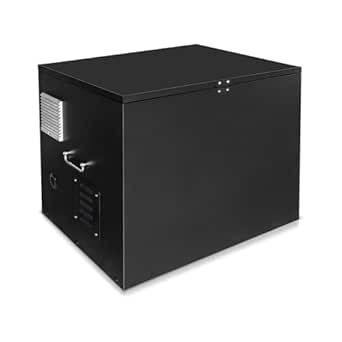 | Best Compact Steel Enclosure | Brand: peastorm | Model: penheifa-30 | Material: Heavy-gauge steel with black powder coating | VIEW LATEST PRICE | See Our Full Breakdown |
| home standby generator enclosure | Material | Ventilation | Security | Generator compatibility |
|---|---|---|---|---|
| Heavy-Duty Generator Enclosure | Galvanized steel | Cooling fan and ventilation panels | Lockable doors; base can be bolted to concrete | Designed for many 18,000-watt generators; verify exact dimensions |
| LUNTHINK Generator Enclosure w | High-temperature galvanized steel with baked paint | Multiple air inlets and heat-resistant exhaust fan | — | Suitable for most generators up to 15,000 watts; confirm fit |
| HUDSON Aluminum Generator Encl | SD aluminum | Louvered vents, airflow openings, and integrated cooling fan | Lock included | — |
| Lockable Outdoor Generator Enc | Heavy-gauge steel with black powder coating | 12V cooling fan and multiple exhaust vents | Hasp for padlock; padlock not included | — |
More Details on Our Top Picks
Heavy-Duty Generator Enclosure with Ventilation and Exhaust Kit
This is the most fully specified choice for a buyer who needs room for a larger generator and wants installation-oriented details included. Its 45 × 35.9 × 41-inch internal dimensions are the largest stated in this group, and the manufacturer says it is intended for many 18,000-watt generators. That wattage guidance is not a fit guarantee: I would compare the generator’s physical dimensions, service clearances, and required airflow against the enclosure and generator manuals before ordering.
Compared with the LUNTHINK, this model offers a larger stated interior and a pre-cut 50-amp power-cord port, which may suit a more substantial home setup. It also includes an exhaust pipe kit, cooling fan, ventilation panels, and sound-absorbing foam. Its lockable doors and base designed to bolt to concrete speak directly to fixed outdoor placement, rather than occasional storage. Those are meaningful advantages if the enclosure will stay in one location and needs a more secure footing.
The compromises are practical. It ships in three boxes, which may arrive on different days, and a large enclosure requires a suitable installation area. The listed features do not confirm that the box is approved for a particular standby model, nor do they establish that the exhaust and clearances match the generator maker’s requirements. Against the lighter HUDSON, this is the more installation-focused and spacious choice, but it is also a more involved purchase. I would shortlist it for a compatible larger unit, then verify fit and installation requirements before committing.
Pros:- Largest stated interior dimensions in this roundup: 45 × 35.9 × 41 inches.
- Includes a cooling fan, ventilation panels, acoustic foam, and an exhaust pipe kit.
- Lockable doors and a base that can be bolted to concrete support fixed outdoor placement.
- Pre-cut 50-amp outlet port is a useful connection detail for compatible installations.
Cons:- Fit and required operating clearances still need to be checked against the generator manual.
- Ships in three boxes, which may arrive on separate days.
- The included enclosure features do not establish approval for a specific standby generator.
Best for: Owners of a larger generator who need a spacious fixed enclosure, a bolt-down base, and an included exhaust kit and power-cord port.
Not ideal for: Buyers with a small generator, limited installation space, or a standby model whose manufacturer requires a specific approved housing.
- Material:Galvanized steel
- Internal dimensions:45 × 35.9 × 41 inches
- Generator compatibility:Designed for many 18,000-watt generators; verify exact dimensions
- Ventilation:Cooling fan and ventilation panels
- Exhaust:Generator exhaust pipe kit included
- Security:Lockable doors; base can be bolted to concrete
- Power access:Pre-cut 50-amp power-cord port
- Sound insulation:Sound-absorbing acoustic foam
- Shipping:Ships in three boxes
Our verdict“I rank this first for larger compatible generators because it combines the most interior space with a bolt-down base and a well-equipped ventilation and exhaust setup.”
LUNTHINK Generator Enclosure with Sound Insulation and Ventilation
LUNTHINK is a balanced option for buyers who place a premium on sound treatment and convenient front access. Its painted, high-temperature galvanized steel construction is paired with a fire-resistant sound-absorbing interior, multiple air inlets, a heat-resistant exhaust fan, and drainage holes. A front operation window and lock add practical access and security details that are not listed for the peastorm model.
The stated interior measures 39.4 × 35 × 35.5 inches, and the listing says it suits most generators up to 15,000 watts. That gives a more specific size reference than the peastorm’s exterior measurements, but it is still not a universal fit claim. Compared with the larger Heavy-Duty enclosure, LUNTHINK is a less roomy choice and does not list a 50-amp port or a concrete-bolt-down base. In return, it foregrounds a front access window and sound insulation, which may make routine access easier for a compatible setup.
The key operational detail is the included exhaust pipe: the listing says the generator exhaust pipe must connect to an exhaust outlet during use. I would treat that as a required installation question, not a minor accessory detail. The fan and air inlets also do not replace manufacturer-specified clearances or prove suitability for every home standby unit. This makes LUNTHINK a better fit for someone whose generator dimensions and exhaust arrangement match the enclosure, and a poor shortcut for anyone hoping to place an arbitrary standby generator inside a generic box.
Pros:- Sound-absorbing interior and double-layer ventilation openings are designed to manage noise and airflow.
- Heat-resistant exhaust fan, multiple air inlets, and drainage holes support outdoor operation planning.
- Front operation window and included lock add access and security features.
- Interior dimensions and a stated wattage range give buyers useful starting points for compatibility checks.
Cons:- Generator must fit within the stated 39.4 × 35 × 35.5-inch interior dimensions.
- The exhaust pipe must connect to an exhaust outlet during use.
- It lacks the Heavy-Duty model’s listed 50-amp port and bolt-down base.
Best for: A buyer with a generator that fits the interior who wants sound-absorbing lining, a front access window, and a lock.
Not ideal for: Owners who need the largest enclosure, a listed 50-amp port, or a simple setup that does not require planning an exhaust outlet connection.
- Material:High-temperature galvanized steel with baked paint
- Interior dimensions:39.4 × 35 × 35.5 inches
- Generator compatibility:Suitable for most generators up to 15,000 watts; confirm fit
- Ventilation:Multiple air inlets and heat-resistant exhaust fan
- Noise treatment:Fire-resistant sound-absorbing interior
- Drainage:Drainage holes
- Access and security:Front operation window and lock
- Included components:Generator box and exhaust pipe
Our verdict“I would choose LUNTHINK over the more basic steel box when sound treatment and front access matter, provided its exhaust arrangement and interior dimensions suit the generator.”
HUDSON Aluminum Generator Enclosure with Ventilation and Noise Reduction, White
HUDSON stands apart from the two galvanized-steel designs by using SD aluminum, a material described as corrosion-resistant and lighter than traditional steel. Its stated maximum generator dimensions—39.4 × 32 × 31.7 inches—make it easier to screen for fit than a listing that provides only exterior measurements. Foam-lined front and side panels target noise reduction, while louvered vents, airflow openings, and an integrated fan address heat management.
Compared with LUNTHINK, HUDSON gives a clear maximum compatible size and includes a lock, but it does not list an exhaust pipe kit, drainage holes, or a front operation window. Compared with the Heavy-Duty model, it is the more corrosion-conscious material choice, while the Heavy-Duty listing gives more internal space, a concrete-bolt-down base, and a 50-amp port. This makes HUDSON a middle-ground enclosure: more explicit about its size limit than the peastorm box, with noise treatment and active airflow, but without some of the installation details found in the larger steel model.
At 95.2 pounds, it should not be mistaken for an easy-to-carry cabinet, even though aluminum is lighter than traditional steel. Its white finish may also be a visual preference rather than a functional advantage. I would check the generator’s dimensions and required service access carefully, then confirm that the ventilation and exhaust arrangement meets the generator manufacturer’s instructions. The fan and foam-lined panels are useful design features, but neither removes the need for safe clearances. Buyers needing a purpose-built standby housing should verify compatibility rather than rely on the material or wattage class alone.
Pros:- Aluminum construction is described as corrosion-resistant and lighter than traditional steel.
- Maximum compatible generator dimensions are stated for fit screening.
- Foam-lined front and side panels are designed to reduce operating noise.
- Louvered vents, airflow openings, an integrated fan, and an included lock are specified.
Cons:- At 95.2 pounds, moving or repositioning the enclosure may take effort.
- No exhaust pipe kit, drainage holes, or bolt-down base is listed.
- The stated maximum dimensions do not confirm required service clearances or model-specific approval.
Best for: Owners seeking an aluminum enclosure with a clearly stated size limit, foam-lined panels, fan-assisted ventilation, and an included lock.
Not ideal for: Anyone who needs an exhaust kit, a front access window, a bolt-down base, or an enclosure that is easy to move frequently.
- Material:SD aluminum
- Color:White
- Maximum generator dimensions:39.4 × 32 × 31.7 inches
- Weight:95.2 pounds
- Ventilation:Louvered vents, airflow openings, and integrated cooling fan
- Noise treatment:Phenolic foam-lined front and side panels
- Security:Lock included
- Model:Hudson-BX-2
Our verdict“I recommend HUDSON to buyers who value aluminum construction and a defined size limit more than a bolt-down base or included exhaust hardware.”
Lockable Outdoor Generator Enclosure with Cooling Fan, 30 x 22 x 24 in
The peastorm enclosure is the compact, straightforward steel option in this lineup. Its approximately 30 × 22 × 24-inch exterior is substantially smaller than the stated interiors of LUNTHINK and the Heavy-Duty model, so it may suit a smaller generator or a tighter storage footprint. Heavy-gauge steel with a black powder-coated finish, a 12V cooling fan, multiple exhaust vents, and a hasp for a separate padlock provide the core features for outdoor storage and basic access control.
Compared with HUDSON, peastorm uses steel rather than aluminum and offers smaller stated dimensions; HUDSON is the more clearly specified choice for buyers who need a stated maximum generator size and an included lock. Compared with LUNTHINK, this model lists no sound-absorbing lining, drainage holes, front access window, or included exhaust pipe. Its appeal is simplicity, not a richer noise or exhaust package. The smaller footprint may be useful where space is limited, but it also narrows the range of generators that can fit.
The listing gives exterior dimensions only, so I would not infer usable interior space from the 30 × 22 × 24-inch measurement. The generator must fit with any required clearances, and the fan and vents should not be treated as proof that the setup is safe for a particular standby unit. Assembly is required, hardware and instructions are included, and the padlock is not. This is the lowest-complexity pick on paper, but it calls for the most caution about the actual fit because no compatible generator dimensions are provided. I would skip it unless careful measurement confirms room for both the machine and its required operating clearances.
Pros:- Heavy-gauge steel has a black powder-coated finish for outdoor storage.
- A 12V cooling fan and multiple exhaust vents support airflow.
- Integrated hasp accepts a padlock for added access control.
- Assembly hardware and instructions are included.
Cons:- Only exterior dimensions are provided, so usable space and clearance need careful verification.
- Padlock is not included.
- No sound-absorbing lining, exhaust kit, or generator compatibility range is listed.
Best for: Owners of a smaller, dimension-compatible generator who want a compact steel enclosure with a fan, vents, and a padlock hasp.
Not ideal for: Buyers with a larger standby generator, those who need stated interior dimensions or sound insulation, or anyone unwilling to source a padlock separately.
- Brand:peastorm
- Model:penheifa-30
- Material:Heavy-gauge steel with black powder coating
- External dimensions:Approximately 30 × 22 × 24 inches
- Ventilation:12V cooling fan and multiple exhaust vents
- Security:Hasp for padlock; padlock not included
- Assembly:Required; hardware and instructions included
- Included components:Generator box
Our verdict“I see this as a compact, basic steel choice for a verified small fit, not a flexible enclosure for larger standby equipment.”
How We Picked
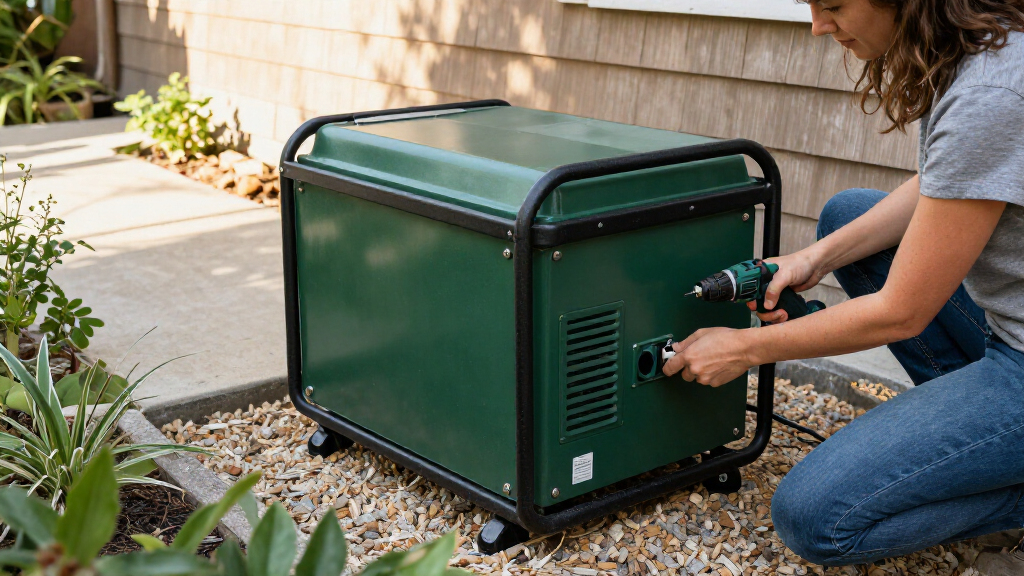
I ranked these four options by how clearly their stated features answer the questions a home generator owner has to resolve: Will the generator fit with required clearance? Can heat and exhaust be managed? How does the enclosure address weather, noise, and access? I also considered installation details that affect ownership, such as a lock, bolt-down capability, an exhaust kit, and whether the dimensions are stated for the interior or the exterior.
The order reflects the available information and the range of use each design appears to serve, not hands-on testing. I give the Heavy-Duty model the broadest recommendation because it combines the largest specified interior with active ventilation, an exhaust kit, and a concrete-bolt-down base. LUNTHINK ranks next for its access window and sound treatment, although its exhaust connection needs attention. HUDSON offers useful size limits and aluminum construction but weighs 95.2 pounds. The peastorm box is a more compact, simpler steel option, but its listed exterior dimensions and lack of stated generator clearance make fit verification especially important.
I would not treat any listed wattage as a substitute for checking the generator manual. A home standby unit may require a purpose-built enclosure and specific clearances, airflow paths, exhaust routing, and electrical access. These listings do not establish that every generator can safely operate inside the enclosure. I would confirm compatibility with both the generator maker and a qualified installer before installation or operation.
| home standby generator enclosure | Material | Generator compatibility | Security | Noise treatment |
|---|---|---|---|---|
| Heavy-Duty Generator Enclosure | Galvanized steel | Designed for many 18,000-watt generators; verify exact dimensions | Lockable doors; base can be bolted to concrete | — |
| LUNTHINK Generator Enclosure w | High-temperature galvanized steel with baked paint | Suitable for most generators up to 15,000 watts; confirm fit | — | Fire-resistant sound-absorbing interior |
| HUDSON Aluminum Generator Encl | SD aluminum | — | Lock included | Phenolic foam-lined front and side panels |
| Lockable Outdoor Generator Enc | Heavy-gauge steel with black powder coating | — | Hasp for padlock; padlock not included | — |
Factors to Consider When Choosing Home Standby Generator Enclosures
I would choose an enclosure only after confirming what the generator manufacturer permits. These four products differ in material, size information, sound treatment, and supplied installation parts, but none of those features alone confirms safe operation with a particular standby unit. Use this guide to narrow the options, then verify the final setup against the manuals and site requirements.
Start with the generator maker’s enclosure and clearance requirements
A home standby generator is designed to operate outdoors, but that does not mean any outdoor box is suitable. Check the generator manual for approved enclosure types, minimum clearance on each side, access for service, exhaust direction, and required distance from buildings, openings, and combustible materials. Ask the manufacturer or installer whether an aftermarket enclosure is allowed for your exact model. If the generator requires an approved housing, prioritize that requirement over a general product claim about weather resistance or wattage compatibility.
Keep service access in mind as well as the generator’s footprint. A unit may physically fit while leaving too little room to open panels, reach maintenance points, or maintain airflow. The product dimensions in this roundup are not presented in one consistent format: peastorm lists exterior dimensions, while LUNTHINK and the Heavy-Duty option provide internal dimensions and HUDSON specifies maximum generator dimensions. Those measurements cannot be compared as though they describe the same space.
Compare materials and outdoor exposure
Galvanized steel appears in the LUNTHINK and Heavy-Duty models; the peastorm unit uses heavy-gauge steel with a powder-coated finish. HUDSON uses aluminum, which the listing describes as corrosion-resistant and lighter than traditional steel. These differences may matter in a wet or exposed location, but material alone does not tell me how every seam, fastener, finish, or moving part will hold up. Consider where rain and snow reach the enclosure, whether water can drain away, and what maintenance the manufacturer specifies.
For a fixed location, the Heavy-Duty model’s base that can be bolted to concrete offers a useful installation feature not stated for the others. LUNTHINK lists drainage holes; the other listings do not describe drainage in the same way. No enclosure should be placed where water can collect around electrical connections or the generator. Follow site and electrical requirements rather than assuming a metal cabinet automatically provides sufficient weather protection.
Treat ventilation and exhaust as safety requirements
All four listings describe some airflow feature. Peastorm includes a 12V fan and exhaust vents; HUDSON lists louvered openings and an integrated cooling fan; LUNTHINK adds multiple inlets and a heat-resistant fan; the Heavy-Duty enclosure combines a fan with ventilation panels. Fans and vents can support heat management, but their presence does not prove that airflow meets the needs of a specific generator. Confirm required intake and exhaust paths, fan power arrangements, and clearances with the generator documentation and a qualified installer.
Exhaust deserves separate attention. LUNTHINK says its exhaust pipe must connect to an exhaust outlet during use, and the Heavy-Duty model includes an exhaust pipe kit. HUDSON and peastorm do not list an exhaust kit. Do not improvise an exhaust route or direct exhaust toward a building, door, window, or air intake. A standby generator can produce dangerous exhaust; follow the manufacturer’s installation instructions and local requirements, and use appropriate carbon monoxide protection in the home.
Choose noise treatment with realistic expectations
Noise-control features differ across this group. LUNTHINK has a sound-absorbing interior, HUDSON uses foam-lined front and side panels, and the Heavy-Duty enclosure lists acoustic foam. Peastorm describes a cooling fan and vents but does not list sound insulation. These features distinguish the more noise-focused choices from the simpler steel box, but the listings provide no comparable measured noise figures. I would not assume a particular reduction or that lining can compensate for poor placement or an unsuitable enclosure.
Acoustic material must coexist with safe ventilation and heat management. Check the manufacturer’s instructions for any restriction on lining near hot components or exhaust parts. If noise is a major concern, also consider the generator’s own sound specifications and where it can legally and safely be installed. The enclosure should not be sealed or altered to reduce sound if doing so compromises cooling or exhaust handling.
Match dimensions, access, and security to the installation
Measure the generator itself, then account for the clearances and service space required by its maker. HUDSON states maximum generator dimensions of 39.4 × 32 × 31.7 inches. LUNTHINK gives an interior size of 39.4 × 35 × 35.5 inches, while the Heavy-Duty model provides the largest stated interior at 45 × 35.9 × 41 inches. Peastorm’s 30 × 22 × 24-inch figures are exterior dimensions, so its usable interior cannot be read directly from the listing. Ask the seller for missing internal measurements when the fit is close.
Access and security are different here too. LUNTHINK includes a front operation window and lock; HUDSON includes a lock; peastorm has a hasp but requires a separate padlock; the Heavy-Duty enclosure has lockable doors and a bolt-down base. Decide whether routine access, lock provision, or resistance to being moved matters most at your site. A lock can deter casual access, but it does not replace safe installation, and it should not interfere with required emergency access or maintenance.
Check what is included and how installation will work
Included parts can change the amount of planning needed. The Heavy-Duty model lists an exhaust kit and a pre-cut 50-amp port; LUNTHINK includes an exhaust pipe; HUDSON includes a lock; peastorm includes assembly hardware and instructions but not a padlock. Confirm which connections, fasteners, supports, and weather-sealing parts are still needed for your generator and site. A listed accessory does not confirm compatibility with your specific equipment.
Think about delivery and assembly before choosing a large unit. The Heavy-Duty enclosure ships in three boxes that may not arrive together, and peastorm requires assembly. HUDSON weighs 95.2 pounds, which may make repositioning difficult despite its aluminum construction. Plan a stable location, a safe route to that location, and qualified electrical and mechanical installation where required. If you cannot verify dimensions, airflow, exhaust routing, and approval, pause the purchase and ask the generator manufacturer or installer.
Frequently Asked Questions
Can I put any home standby generator inside one of these enclosures?
No. Physical fit is only one requirement, and the product descriptions do not establish approval for every standby generator. Check the generator maker’s instructions for permitted housings, clearances, service access, ventilation, and exhaust routing. If the manual requires a specific enclosure or prohibits an aftermarket cabinet, follow that direction and ask the manufacturer or a qualified installer before proceeding.
Which enclosure has the largest stated interior?
The Heavy-Duty Generator Enclosure lists internal dimensions of 45 × 35.9 × 41 inches, the largest interior stated among these four options. LUNTHINK lists 39.4 × 35 × 35.5 inches inside. HUDSON gives maximum generator dimensions of 39.4 × 32 × 31.7 inches, while peastorm provides exterior dimensions only. Compare measurements in the same way and leave all clearances required by the generator maker; a larger cavity does not automatically mean the installation is suitable.
Which options include sound-absorbing material?
LUNTHINK describes a fire-resistant sound-absorbing interior, HUDSON lists phenolic foam-lined front and side panels, and the Heavy-Duty model includes sound-absorbing acoustic foam. Peastorm does not list sound insulation. The descriptions do not provide comparable measured noise figures, so I would treat the linings as a differentiating feature rather than a guarantee of a particular noise reduction. Confirm that any acoustic material is compatible with the generator’s heat and ventilation requirements.
Do the listed cooling fans make an enclosure safe to operate?
A fan can support airflow, but its presence does not certify safe operation or replace required ventilation openings, exhaust routing, and clearance. The four products describe different combinations of fans, vents, and exhaust accessories, and the listings do not confirm that each combination meets the requirements of every generator. Follow the generator manual and have a qualified installer check the complete setup. Never close off required airflow or redirect exhaust without manufacturer-approved instructions.
Which model makes the most sense for a compact installation?
Peastorm has the smallest stated dimensions, approximately 30 × 22 × 24 inches externally, so it is the compact choice on paper. That measurement does not reveal its usable interior, and the listing gives no generator compatibility range. Measure the generator and required clearances, then request interior measurements if needed. If the unit does not fit with proper service space, consider a larger option such as HUDSON or LUNTHINK only after checking their stated limits and the generator manufacturer’s enclosure requirements.
Conclusion
For a larger compatible generator and a fixed outdoor installation, I would start with the Heavy-Duty enclosure: it has the largest stated interior, a bolt-down base, an exhaust kit, and a 50-amp port. For buyers prioritizing sound treatment and front access, LUNTHINK is the more focused alternative, provided its exhaust connection suits the installation. HUDSON is my pick for someone who values aluminum construction and a defined maximum generator size, while peastorm is best reserved for a verified smaller fit where a basic steel box and separate padlock are acceptable.
My final recommendation is to treat every listing as a shortlist, not a compatibility certificate. Before buying, check the exact generator model’s required enclosure, dimensions, clearances, airflow, and exhaust instructions with its manufacturer or a qualified installer. That extra check matters more than choosing between a fan, foam lining, or a particular casing material.