Generator run hours tell you how much the unit has been used and help predict when maintenance is needed. They reflect operational stress, reveal wear on components, and show fuel efficiency trends. Monitoring these hours allows you to plan servicing proactively, avoiding unexpected breakdowns and extending your generator’s lifespan. Understanding what run hours reveal can improve your maintenance routine and keep your equipment running smoothly—if you want to know more, keep exploring.
Key Takeaways
- Run hours indicate the generator’s overall health and help schedule timely maintenance.
- They reveal usage patterns and operational stress, aiding in early identification of component wear.
- Increased run hours may signal declining fuel efficiency and potential underlying mechanical issues.
- Tracking run hours allows for proactive maintenance, reducing unexpected breakdowns and extending lifespan.
- They provide critical data for optimizing performance, fuel management, and cost-effective operation.
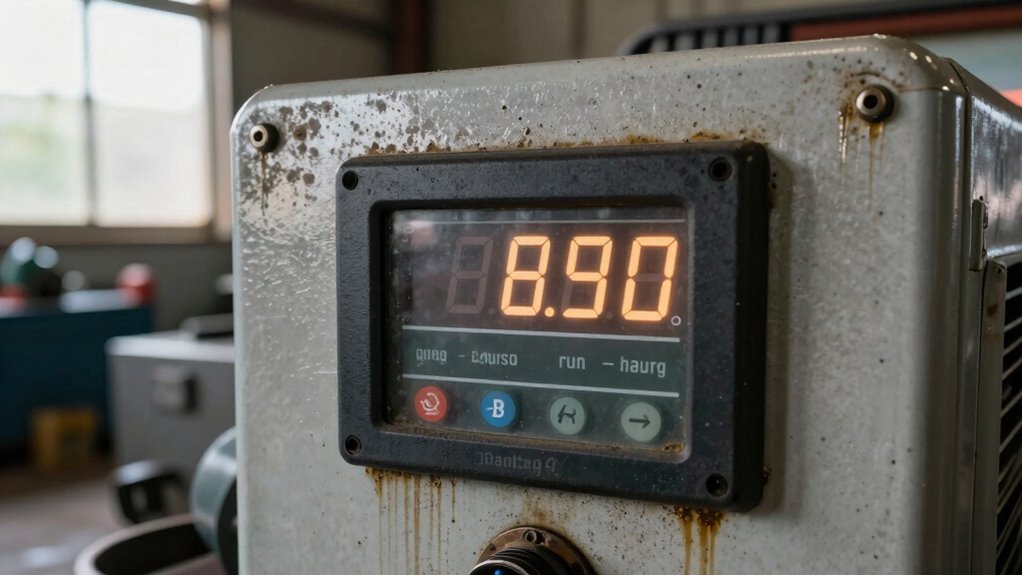
When it comes to maintaining your generator, understanding what the run hours really tell you is essential. Run hours are more than just a number; they’re a key indicator of your generator’s overall health and performance. Knowing how to interpret these hours helps you plan effective maintenance schedules, ensuring your equipment runs smoothly when you need it most. If your generator has accumulated significant run hours, it’s a sign that it’s been used frequently or for extended periods. This information allows you to anticipate when certain maintenance tasks, like oil changes, filter replacements, or inspections, are due. Staying on top of these schedules minimizes unexpected breakdowns and prolongs your generator’s lifespan. Additionally, tracking run hours can give insights into your generator’s digital content and research capabilities, helping you optimize its performance in various operational contexts. Monitoring the wear and tear associated with accumulated run hours can further inform your maintenance decisions, ensuring components are serviced before failure occurs. Regularly reviewing your generator’s operating data can also help identify patterns that may indicate underlying issues early on, before they develop into major problems.
Understanding run hours helps optimize maintenance, prevent breakdowns, and extend your generator’s lifespan.
Fuel efficiency is another critical aspect you should consider in relation to run hours. As a generator ages and accumulates more hours, its fuel consumption patterns can change. An increase in fuel usage might indicate that certain components are wearing out or that the generator isn’t operating as efficiently as it once did. Monitoring run hours helps you identify these trends early, so you can address underlying issues before they lead to costly repairs or excessive fuel costs. Understanding your generator’s maintenance needs enables you to plan repairs more effectively and avoid unnecessary expenses. Additionally, understanding your generator’s run hours enables you to optimize its use, avoiding unnecessary idling or overworking the system. This not only conserves fuel but also reduces wear and tear, further extending the unit’s operational life.
Another advantage of tracking run hours is the ability to schedule preventive maintenance proactively. Instead of waiting for a problem to arise, you can plan maintenance tasks around actual usage rather than just calendar dates. For example, if your generator runs heavily during certain seasons, you’ll know when to schedule more intensive servicing or inspections. This proactive approach ensures your generator remains reliable and efficient, especially during critical times when you depend on it most. Properly managing run hours also helps in budgeting for future repairs and replacements, making your maintenance process more predictable and cost-effective.
In essence, run hours serve as a vital metric that guides your maintenance routines and fuel management strategies. They give you a clearer picture of your generator’s condition, helping you balance operational needs with cost efficiency. By paying close attention to these hours, you can prevent unexpected failures, optimize performance, and extend your generator’s service life. Remember, the key isn’t just in knowing the number of hours but in understanding what those hours reveal about your generator’s health and how best to care for it.
Top picks for "generator hour really"
Open Amazon search results for this keyword.
As an affiliate, we earn on qualifying purchases.
Frequently Asked Questions
How Accurate Are Generator Hour Meters Over Time?
Generator hour meters are generally accurate initially, but over time, factors like maintenance history and fuel consumption can affect their precision. You might notice discrepancies if the meter isn’t properly maintained or if there’s irregular fuel use. Regularly checking and calibrating your hour meter guarantees it remains reliable. Tracking maintenance and fuel consumption helps you better understand your generator’s actual runtime, making it easier to schedule maintenance and avoid unexpected breakdowns.
Can Low Run Hours Indicate Poor Generator Maintenance?
Low run hours can indicate poor maintenance history or unusual usage patterns, but they don’t always mean neglect. If your generator hasn’t been used much, it might not have been exercised enough to stay in good condition. Regular maintenance is essential regardless of hours, so check the maintenance records and usage patterns. A generator with low hours can still be well-maintained or neglected, depending on its upkeep history.
Do High Run Hours Mean the Generator Is Unreliable?
High run hours don’t automatically mean your generator’s unreliable. Instead, they show it’s been working steadily, which can be good if you’ve maintained it properly. You need to check fuel efficiency and adhere to maintenance intervals to guarantee reliability. Regular maintenance and monitoring fuel consumption help you keep your generator dependable, regardless of whether it has high or low run hours. Proper care makes all the difference.
How Do Environmental Conditions Affect Run Hour Readings?
Environmental conditions considerably impact run hour readings. High temperatures or humidity can diminish fuel efficiency, making your generator work harder and increasing run hours. Conversely, cold weather might require longer operation to maintain performance. Noise levels may also rise with extreme conditions, signaling strain on the system. These factors can cause fluctuations in run hours, so you should regularly monitor environmental impacts to guarantee peak performance and avoid unnecessary wear.
Are There Alternative Ways to Assess Generator Health?
You can gauge your generator’s health by listening to its heartbeat—monitoring fuel efficiency and vibrations—beyond just running hours. Regular inspections and oil analysis act as your health report cards, revealing wear and tear early. Maintenance scheduling becomes your rhythm, keeping everything in sync. By combining these methods, you maintain a steady pulse, ensuring your generator stays resilient, efficient, and ready to power through any storm.
Conclusion
Understanding your generator’s run hours is like reading its heartbeat—you get a clear picture of its health and lifespan. Just like a well-tuned engine, consistent maintenance based on those hours keeps everything running smoothly. Don’t let those hours pile up like unread emails; instead, use them as your guide to keep your generator in top shape. With regular check-ins, you’ll guarantee it’s always ready to spring into action when you need it most.