Quiet-test modes help you run device diagnostics without causing loud noises or disruptions. They work by limiting fan speeds, lowering power use, and disabling sound functions, making testing more discreet. To use them effectively, you should understand how to activate these modes via device settings and follow proper maintenance routines to guarantee smooth operation. Once you’re comfortable with these settings, you’ll see how they improve troubleshooting, and there’s more to uncover if you keep exploring.
Key Takeaways
- Quiet-test modes reduce noise by limiting fan speeds and disabling sound functions during device diagnostics.
- They are activated via device settings or user guides to create an unobtrusive testing environment.
- Proper maintenance enhances the effectiveness and reliability of quiet-test modes.
- These modes are intended for diagnostics, not regular operation, and should be turned off afterward.
- Using quiet-test modes helps minimize disruptions and prolongs device lifespan during troubleshooting.
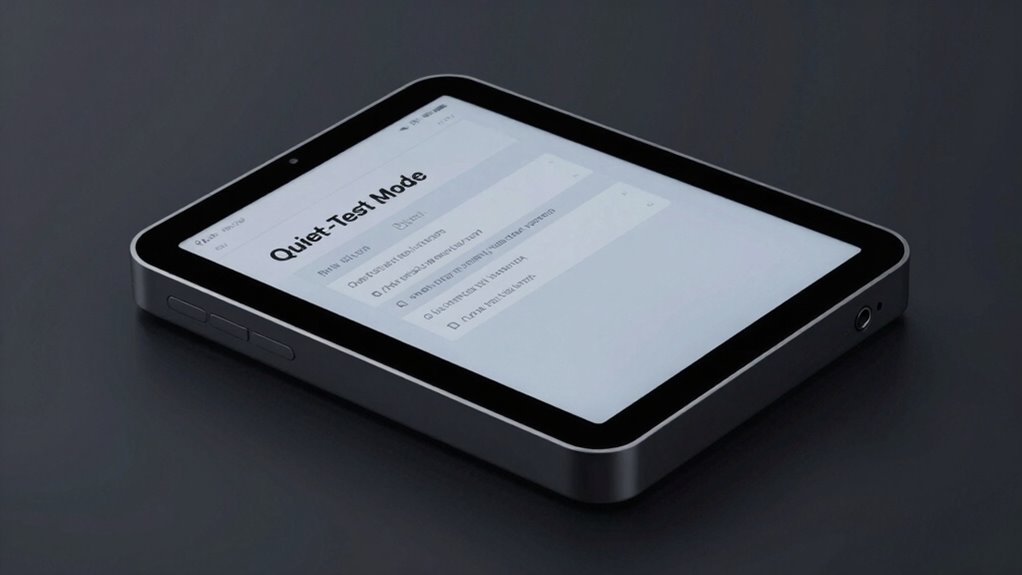
Have you ever needed to run diagnostics on your device without disturbing others? If so, quiet-test modes are your best solution. These modes are designed to minimize noise, allowing you to perform testing procedures discreetly and efficiently. Whether you’re troubleshooting a device at work or testing equipment in a shared space, quiet-test modes help you avoid unnecessary disruptions, guaranteeing your testing process remains as unobtrusive as possible.
Quiet-test modes enable discreet, efficient diagnostics without disturbing others in shared spaces or work environments.
When you activate a quiet-test mode, your device typically reduces its operational noise considerably. This is achieved through various techniques such as limiting fan speeds, reducing power consumption, or disabling certain functions that generate sound. The primary goal is to create an environment where you can conduct thorough testing without drawing attention or disturbing others. This is especially useful in environments like offices, labs, or shared workspaces where noise can interfere with productivity or concentration. Additionally, just like proper piercing care and hygiene are essential for preventing infections, ensuring your device is in optimal condition before testing can help avoid issues during quiet operation. Proper maintenance practices can also enhance the effectiveness of these modes, ensuring your device runs smoothly. Understanding how to optimize your device’s settings can further improve the efficiency of quiet-test modes and extend their benefits. Moreover, being aware of regulatory compliance related to device operation can help ensure your testing adheres to safety standards and best practices.
Using quiet-test modes also helps you maintain a professional environment. If you’re working on sensitive tasks or in a shared space, you don’t want the noise from your device to interfere with others’ work. By opting for these modes, you demonstrate consideration for your colleagues and ensure a smoother workflow. Additionally, these modes can extend the lifespan of your device by reducing stress on hardware components during diagnostics, which can be particularly beneficial for equipment that operates in high-demand settings. Proper device upkeep can contribute to more consistent and reliable testing outcomes in quiet-test mode. To maximize efficiency, it’s beneficial to familiarize yourself with your device’s specific quiet-test options and user guides to ensure proper usage.
While quiet-test modes are invaluable for noise reduction during testing procedures, they aren’t meant for everyday use. Once diagnostics are complete, it’s best to switch back to normal operation to restore full functionality and performance. Familiarizing yourself with your device’s specific quiet-test options will help you seamlessly switch between modes, making your troubleshooting process more efficient. Overall, these modes are a smart tool to help you conduct necessary testing without causing disruptions, ensuring both productivity and peace of mind.
Top picks for "know about quiet"
Open Amazon search results for this keyword.
As an affiliate, we earn on qualifying purchases.
Frequently Asked Questions
Can Quiet-Test Modes Be Disabled Manually?
Yes, you can manually disable quiet-test modes through user control. Typically, this involves accessing your device’s settings or control panel, where you can toggle the mode off. Depending on your device, you might need to follow specific steps or enter a particular menu for manual disabling. Always consult your device’s manual or support resources for precise instructions to guarantee you correctly disable quiet-test modes when needed.
Are Quiet-Test Modes Available on All Devices?
Quiet-test modes are like hidden gems—availability depends on your device. Not all devices support these modes, so you need to check device compatibility first. Keep in mind that software updates can add or remove these features, so staying current may open up new options. If your device doesn’t have quiet-test modes, it’s worth exploring updates or alternatives to achieve a similar silent testing environment.
Do Quiet-Test Modes Affect Device Performance?
Quiet-test modes typically don’t impact your device’s performance considerably. You might notice a slight increase in device temperature or power consumption during testing, but overall, these modes are designed to minimize disruptions. They allow you to run diagnostics without affecting normal operation. So, while testing, keep an eye on device temperature and power use, but rest assured, your device should perform normally once the mode is exited.
How Long Does Quiet-Test Mode Last?
Imagine your device as a busy city, pausing briefly for a health check. Quiet-test mode activation lasts typically between a few seconds to a few minutes, depending on the device and test type. During this test duration, your device quietly assesses its systems without interruption. Once the test duration ends, it automatically exits quiet-test mode, returning to full functionality. This brief pause guarantees everything runs smoothly without affecting your device’s regular performance.
Is There a Risk of Data Loss During Quiet-Test Mode?
There’s minimal risk of data loss during quiet-test mode if you follow safety precautions. It’s designed to avoid altering your data, making data recovery unlikely. However, it’s wise to back up important files before testing, just in case. You should also make certain your device is properly powered and avoid interrupting the process. These safety precautions help protect your data and ensure a smooth testing experience.
Conclusion
Now that you know the ins and outs of quiet-test modes, you’re probably wondering what’s next. Could there be hidden features or unexpected challenges lurking beneath the surface? The truth is, these modes aren’t just about silence—they hold secrets that could change your testing game entirely. Stay curious, stay alert, because the next discovery might just be the game-changer you didn’t see coming. Are you ready to uncover what’s really behind the quiet?