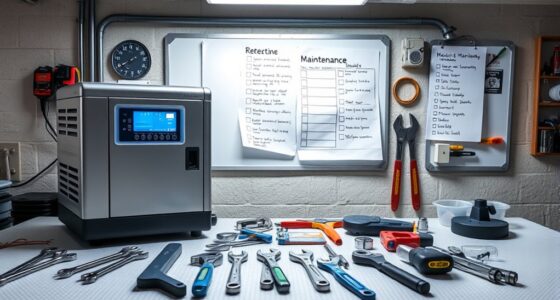
To keep your standby generator’s battery reliable, you should regularly test its charge, inspect for corrosion, and clean the terminals with baking soda and water. Replace batteries when they show signs of slow cranking or are over three to five years old. Keep the area dry and consider using battery warmers or protectors in cold weather. Following proper maintenance steps guarantees your generator starts when you need it most—learn more to keep your system in top shape.
Key Takeaways
- Regularly test battery voltage and charge levels to ensure reliable startup during outages.
- Replace batteries every 3 to 5 years or when signs of deterioration appear.
- Clean terminals and apply corrosion prevention measures like petroleum jelly or terminal sprays.
- Follow manufacturer guidelines for maintenance intervals and proper replacement procedures.
- Keep the battery area clean, dry, and protected from extreme temperatures to extend lifespan.
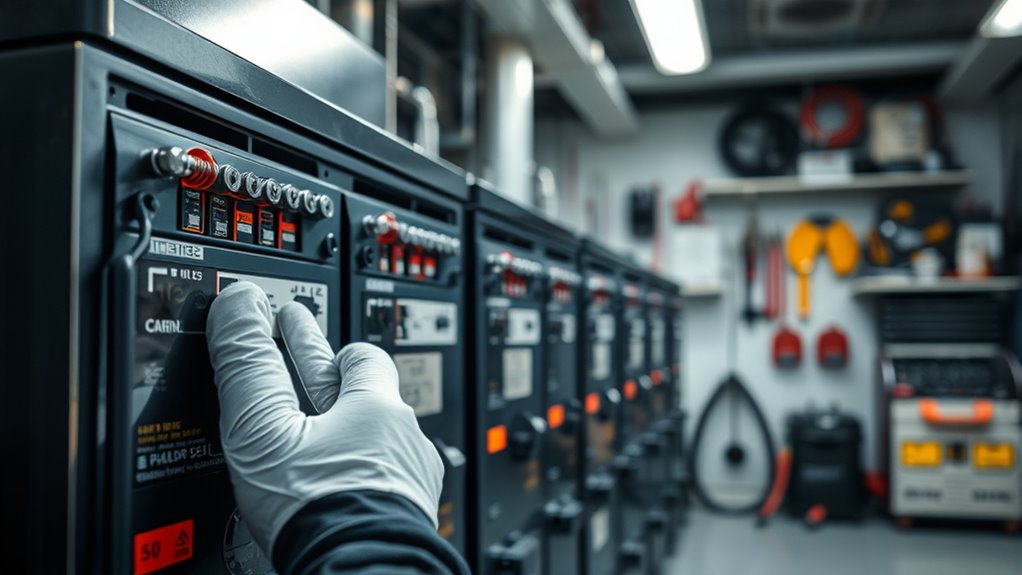
Proper battery maintenance is vital to guarantee your standby generator starts reliably when you need it most. The battery serves as the heart of your generator’s starting system, and neglecting its care can lead to unexpected failures during critical moments. Regular battery maintenance involves checking the charge level, cleaning terminals, inspecting for corrosion, and ensuring the connections are tight and secure. You should test your battery periodically with a multimeter or a specialized battery tester to confirm it holds a proper charge. If the voltage drops below the recommended level, it’s time to recharge or consider replacing the battery to prevent starting issues when power outages occur. Regular testing of your battery helps identify potential problems early and ensures reliable operation.
Proper battery maintenance ensures your standby generator starts reliably when needed most.
Battery replacement is a vital aspect of ongoing maintenance, especially if your battery is several years old or shows signs of deterioration. Most standby generator batteries have a lifespan of about 3 to 5 years, depending on usage and environmental conditions. As the battery ages, it becomes less capable of delivering the necessary current to start the generator promptly. If you notice slow cranking, difficulty starting, or frequent battery-related error messages, it’s likely time for a new battery. Replacing the battery before it completely fails can save you from inconvenient shutdowns and costly repairs. When selecting a replacement, make sure to choose a battery with the correct specifications recommended by your generator manufacturer to guarantee peak performance.
Maintaining your battery properly also involves keeping it clean and dry. Corrosion buildup on the terminals is common and can impede electrical flow. Use a mixture of baking soda and water to clean corrosion off the terminals, then dry them thoroughly. Applying a terminal protector spray or a thin layer of petroleum jelly can help prevent future corrosion. Additionally, keep the battery case free from dirt, debris, and moisture, which can accelerate deterioration. If your generator is in a location with extreme temperatures, consider using a battery warmer or isolator to help preserve battery life.
Finally, always follow the manufacturer’s guidelines for maintenance intervals and procedures. Regular inspections, testing, and timely battery replacement are straightforward steps that guarantee your standby generator remains reliable. By paying attention to your battery’s health, you reduce the risk of unexpected failures and extend the life of your backup power system. Ultimately, proper battery care not only guarantees your generator will start when needed but also provides peace of mind during power outages, knowing your backup system is ready to perform.
Frequently Asked Questions
How Often Should I Test My Generator Battery?
You should test your generator battery monthly to guarantee its peak performance. During each test, check the battery’s capacity to confirm it can hold a full charge. Also, evaluate the charging cycles to see if the battery charges properly without excessive strain. Regular testing helps identify issues early, extending the battery’s lifespan and ensuring your generator will start reliably when needed.
Can I Use a Car Battery for My Generator?
You shouldn’t use a car battery for your generator because car batteries aren’t designed for continuous, deep cycling like generator batteries. Car batteries deliver short bursts of power, whereas generator batteries require sustained, reliable energy. Using a car battery can lead to premature battery failure, frequent battery replacement, and potential damage to your generator’s starting system. Always choose a battery specifically designed for standby generators to guarantee maximum performance and longevity.
What Are Signs of a Failing Generator Battery?
If your generator battery shows signs like slow engine starts, dim indicator lights, or frequent need for jump-starts, it’s likely failing. Check for battery corrosion, which appears as white or greenish deposits on terminals, and replace the battery if corrosion is severe. Regular maintenance, including battery replacement when needed, keeps your generator ready and prevents unexpected failures during power outages.
How Does Temperature Affect Battery Lifespan?
Your generator’s battery, like a delicate flower, suffers greatly from temperature swings. Extreme heat accelerates battery chemistry breakdown, shortening lifespan, while cold slows chemical reactions, reducing efficiency. Proper temperature regulation is essential to prevent premature failure. Keep the battery in a stable environment, ideally between 20-25°C, to guarantee ideal performance and longevity. Ignoring temperature effects can turn your reliable backup into a costly, useless piece of equipment.
Is Battery Maintenance Different for Outdoor vs. Indoor Generators?
Yes, battery maintenance differs for outdoor and indoor generators. For outdoor units, you need to focus on corrosion prevention due to exposure to weather, and regularly check for corrosion on terminals. Indoor generators typically face less environmental stress, but you should still adhere to the recommended battery replacement schedule to ensure reliable operation. Both require routine inspections, but outdoor units demand extra attention to avert corrosion and weather-related issues.
Conclusion
Proper battery care is essential to guarantee your standby generator starts reliably when needed. Regular inspections, cleaning, and testing can extend your battery’s lifespan and prevent unexpected failures. Did you know that batteries that receive regular maintenance can last up to 50% longer? By taking a few simple steps, you’ll keep your generator ready and avoid costly repairs or outages. Stay proactive with battery care, and you’ll always have peace of mind during power outages.