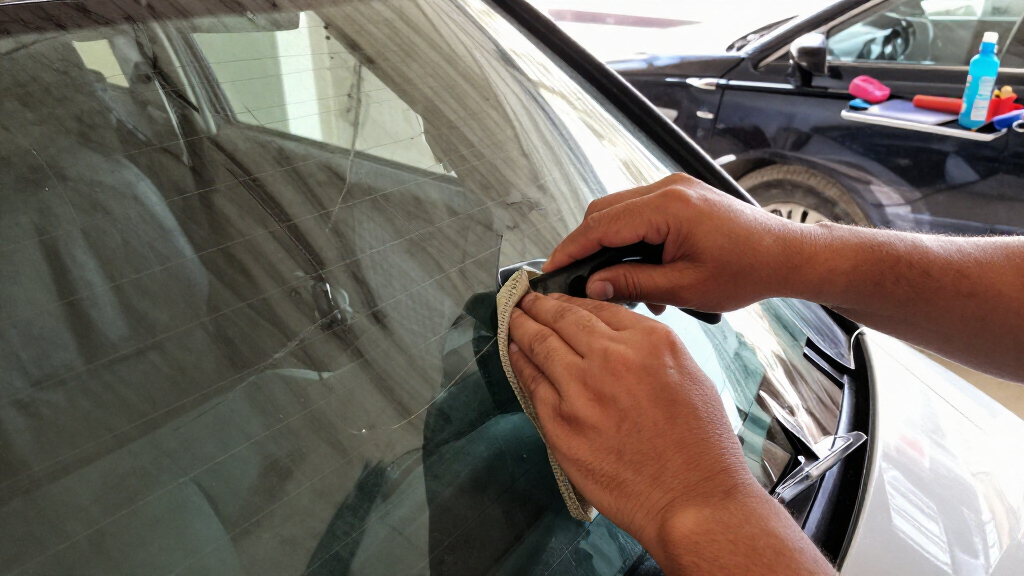

TL;DR

Get backup power and energy gear delivered free — and shop member deals
- Fast, free delivery on millions of items
- Access to Prime Big Deal Days deals on October 6–7
- Prime Video, Amazon Music and more included
Lines on car rear windows are functional features, not just decoration. They help with aerodynamics, deflect sunlight, and assist in safety. Their popularity is rising, but some details remain unclear.
Many drivers notice the lines etched or painted on their car’s rear window but assume they are purely decorative. However, experts confirm these lines serve practical functions, including aerodynamics, sun glare reduction, and safety enhancement. This trend has seen a spike in online searches, raising public curiosity about their true purpose.
The lines on the rear window of vehicles, often seen as stylistic features, are actually designed with specific functions in mind. According to automotive specialists, these lines can help improve aerodynamics by reducing turbulence around the vehicle’s shape, which may contribute to better fuel efficiency. They also serve to deflect sunlight and reduce glare, making it easier for drivers to see behind the vehicle in bright conditions. Furthermore, some safety experts note that these lines can aid in visibility for other drivers, especially in poor weather or low-light situations.
While the exact design and placement of these lines vary across vehicle models and manufacturers, their functional purpose is generally consistent. Automotive manufacturers have increasingly incorporated these features as part of broader aerodynamic and safety improvements, especially as consumer interest in vehicle aesthetics and efficiency grows. Despite this, some car owners remain unaware of their true purpose, believing they are merely decorative accents.
Search trends indicate that public curiosity about these lines is rising, possibly fueled by social media and online forums discussing car design. Experts emphasize that understanding the purpose of these features can help drivers appreciate their vehicle’s design and safety features more fully. However, detailed technical specifications and the full extent of their benefits are still being studied, and some claims about their effectiveness remain unverified.
Why Car Rear Window Lines Are More Than Just Looks
Understanding the purpose of the lines on your car’s rear window can influence how you view vehicle design and safety features. These lines contribute to improved aerodynamics, which can enhance fuel efficiency — an increasingly important factor for consumers and environmental considerations. They also help reduce glare, improving driver comfort and safety, especially during bright sunlight or nighttime driving. Recognizing these features as functional rather than purely aesthetic can lead to more informed vehicle choices and maintenance practices.
For manufacturers, incorporating such features aligns with trends toward safer, more efficient vehicles. For consumers, it underscores the importance of paying attention to design elements that might otherwise be dismissed as decorative. Overall, these lines exemplify how subtle design choices can have tangible impacts on vehicle performance and safety, making them relevant for everyday drivers to understand.
Evolution and Public Interest in Rear Window Lines
While the lines on rear windows have been a feature of vehicle design for decades, their purpose has often been overlooked by consumers. Historically, some manufacturers used them solely for branding or styling. However, recent years have seen a shift toward functional design elements, driven by advances in aerodynamics and safety technology. The trend appears to be gaining momentum, partly due to increased online discussion and the desire for more efficient, safer vehicles.
Search interest in the purpose of these lines has spiked recently, though sources caution that this surge may be driven by social media trends rather than official industry statements. Automotive engineers have long understood these features’ potential benefits, but broader public awareness is still developing. As vehicle design continues to evolve, these lines may become more prominent or integrated with other safety and efficiency features.
It is worth noting that this trend aligns with broader efforts in the automotive industry to improve fuel economy and safety standards, especially as regulations tighten globally. However, detailed technical data on their effectiveness remains limited, and some claims about their benefits are still unverified by independent research.
What Details About Their Effectiveness Still Remain Unclear
While experts agree that these lines serve practical purposes, precise data quantifying their impact on fuel efficiency and safety is limited. Some claims about their benefits are based on theoretical or anecdotal evidence, and comprehensive independent studies are lacking. It is also unclear how much variation exists between different vehicle models and whether newer designs incorporate additional or more effective features.
Additionally, the extent to which these lines influence overall vehicle safety and efficiency remains a topic of ongoing research. Industry insiders suggest that manufacturers may continue refining these features, but definitive proof of their benefits is still under development.
Future Developments and Industry Trends for Rear Window Features
Automakers are expected to continue exploring functional design elements like rear window lines as part of broader efforts to improve vehicle aerodynamics and safety. Future models may feature more integrated or advanced versions of these lines, possibly combined with other aerodynamic enhancements or safety technologies such as camera systems or sensors.
Research institutions and industry groups are likely to conduct more rigorous testing to better quantify their benefits, which could lead to standardized guidelines or regulations. Public awareness campaigns may also emerge to educate consumers about the functional aspects of vehicle design features, fostering more informed purchasing decisions.
As electric vehicles and hybrid models become more prevalent, design features that improve efficiency will gain even greater importance, potentially making these lines more prominent or multifunctional in future vehicle models.
Key Questions
Are the lines on my car’s rear window purely decorative?
No, they typically serve functional purposes such as improving aerodynamics, reducing glare, and enhancing safety, although their specific design varies across models.
Do these lines really help with fuel efficiency?
Experts suggest that these lines can help streamline airflow around the vehicle, which may contribute to better fuel economy, but precise effects depend on the design and vehicle type.
Can I modify or remove these lines without affecting safety?
It is recommended to consult a professional before modifying vehicle design features. Removing or altering them could impact aerodynamics or safety features, depending on their purpose.
Why are these lines becoming more popular now?
Growing consumer interest in vehicle efficiency and safety, along with increased online discussion, has heightened awareness and curiosity about these design features.
Will future cars have more advanced versions of these lines?
Yes, automakers are likely to incorporate more integrated and technologically advanced aerodynamic features as part of ongoing vehicle design improvements.
Source: rss
Fall Picks
fall essentials
As an affiliate, we earn on qualifying purchases.