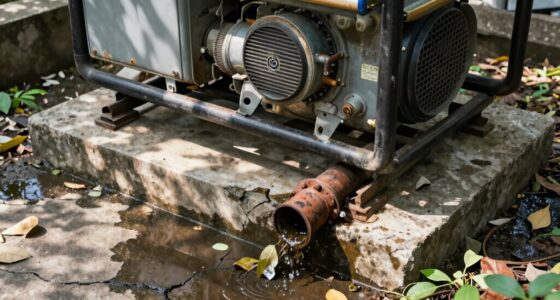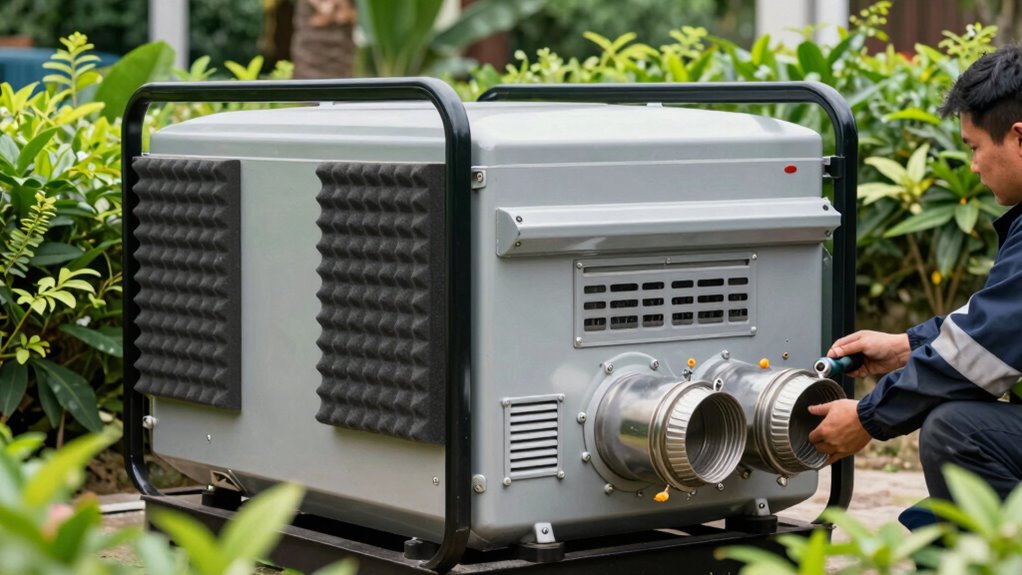
To reduce generator noise without causing heat issues, enclose it in a soundproof box lined with sound-absorbing materials and guarantee the enclosure has proper ventilation. Use vibration dampers and place the generator on resilient surfaces to minimize vibrations and sound transmission. Position it away from windows and noise-sensitive areas. Add mufflers or silencers to the exhaust system for extra quietness. Balancing noise control with effective heat dissipation is key—keep exploring for more tips.

Get backup power and energy gear delivered free — and shop member deals
- Fast, free delivery on millions of items
- Access to Prime Big Deal Days deals on October 6–7
- Prime Video, Amazon Music and more included
Key Takeaways
- Use soundproof enclosures with proper ventilation to prevent heat buildup while reducing noise.
- Incorporate mufflers and silencers to minimize exhaust noise without obstructing airflow.
- Install vibration dampers and isolate the generator to reduce noise transmission without increasing heat.
- Position the generator away from sensitive areas to minimize sound reflection and disturbance.
- Balance soundproofing with adequate airflow to ensure efficient cooling and prevent overheating.
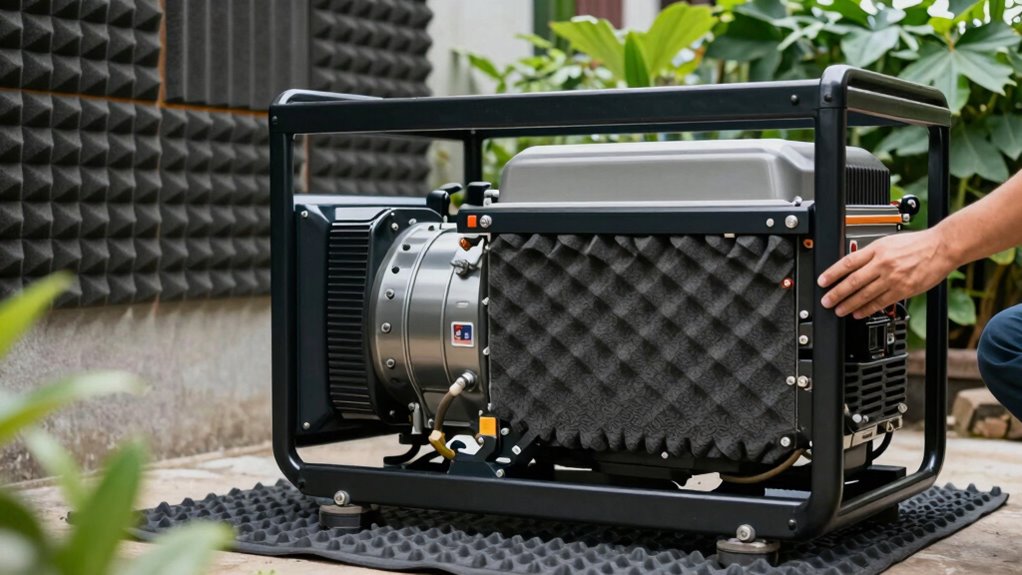
Generators can be noisy, but there are effective ways to reduce their sound levels and make them more bearable around your home or workspace. One of the most straightforward strategies involves soundproofing techniques. You can start by enclosing your generator in a soundproof box or building a dedicated shed with sound-absorbing materials like acoustic panels or foam insulation. These barriers help block direct noise emissions and prevent sound waves from traveling freely through the air. However, guarantee the enclosure has adequate ventilation to prevent heat buildup, as heat problems can be a serious concern if airflow is restricted. Incorporating landscaping elements around the enclosure can also help absorb sound and further reduce noise pollution.
Enclose your generator in a soundproof box or shed with proper ventilation to reduce noise and prevent heat buildup.
To further reduce noise, vibration dampening becomes essential. Excessive vibrations from a generator can amplify noise levels and cause structural noise transfer. You can install anti-vibration pads or mounts beneath the generator to absorb and isolate vibrations from the surface it sits on. This not only diminishes the noise but also protects the generator from wear caused by constant shaking. Using rubber or foam vibration dampers can markedly cut down on the sound transmission through floors or walls, making the noise less intrusive. Additionally, choosing properly isolated mounting locations can enhance these effects and improve overall noise reduction.
Another practical step involves placing the generator on a resilient surface, such as a thick concrete pad or a platform with vibration-absorbing materials. This helps prevent vibrations from traveling into the ground or surrounding structures, reducing noise reflection and transfer. When positioning your generator, consider placing it as far as possible from windows, walls, and outdoor living areas to minimize noise disturbance. Proper placement can significantly impact the effectiveness of noise reduction strategies.
In addition, you can incorporate mufflers or exhaust silencers designed to reduce the sound of exhaust gases escaping from the engine. These devices are especially effective because much of the noise from a generator originates from the exhaust system. Regular maintenance of the muffler and ensuring it’s functioning correctly will sustain noise reduction over time and prevent heat issues caused by blocked or damaged silencers. Proper generator capacity and selecting an appropriately sized unit can also help minimize excess noise and heat generation.
Lastly, combining these techniques—soundproofing, vibration dampening, and proper placement—creates an all-encompassing approach to noise reduction. Just remember, while reducing noise, always keep heat dissipation in mind. Adequate ventilation and airflow are crucial to prevent overheating, which could compromise your generator’s performance and longevity. Ensuring proper heat management can help maintain the optimal functioning of your generator during operation. By balancing soundproofing and heat management, you’ll enjoy a quieter environment without risking heat problems or operational inefficiencies.
Frequently Asked Questions
Can Soundproof Enclosures Cause Overheating Issues?
Soundproof enclosures can cause overheating issues if you don’t include proper acoustic barriers and ventilation solutions. When you trap noise without allowing airflow, heat builds up, risking generator damage. To prevent this, you should integrate effective ventilation systems and acoustic barriers that block sound while maintaining airflow. This way, you reduce noise levels without compromising cooling, ensuring your generator operates safely and efficiently.
Are There Specific Materials Best for Noise Reduction?
You should choose materials like mineral wool, foam, or mass-loaded vinyl, as they excel in sound absorption and reduce noise effectively. These materials work by trapping sound waves, preventing them from escaping and amplifying. Their specific properties help you minimize generator noise without risking overheating, making them ideal for creating soundproof enclosures that balance noise reduction with heat management.
How Often Should Maintenance Be Performed to Reduce Noise?
You should perform regular maintenance according to your generator’s maintenance schedule, ideally every 50 to 100 hours of operation or as recommended by the manufacturer. During each maintenance session, conduct a noise inspection to identify any unusual sounds or loose components. Consistent upkeep helps keep parts lubricated, tight, and functioning smoothly, which reduces noise. Staying proactive with maintenance guarantees your generator runs quietly and efficiently over time.
Does Increasing Distance Always Reduce Noise Effectively?
Increasing distance can considerably reduce generator noise, but it doesn’t always eliminate it completely. To improve noise absorption, you should combine distance with sound barriers—like walls or barriers designed to absorb sound waves. These barriers help block direct sound paths, making noise less intrusive. Keep in mind that the effectiveness depends on the environment, so combining distance with sound absorption techniques offers the best noise reduction without causing heat problems.
Can Vibration Pads Decrease Noise and Heat Simultaneously?
Vibration pads can indeed decrease noise and heat simultaneously. Studies show they reduce vibration by up to 70%, which directly lowers noise levels through effective vibration dampening. When combined with insulation techniques, vibration pads help isolate the generator, preventing heat buildup caused by vibrations. This dual approach improves overall efficiency, making your generator quieter and cooler without sacrificing performance. You’ll enjoy a more comfortable, safer environment with these simple modifications.
Conclusion
By implementing soundproofing techniques like installing mufflers, using vibration pads, and placing your generator in a sound-absorbing enclosure, you can markedly cut down noise levels without risking overheating. Did you know that proper insulation can reduce noise by up to 50%? Just remember, balancing noise reduction with adequate ventilation is key—so your generator stays cool and efficient while operating quietly. With these tips, you’ll enjoy a quieter environment without sacrificing performance.
Fall Picks
fall essentials
As an affiliate, we earn on qualifying purchases.