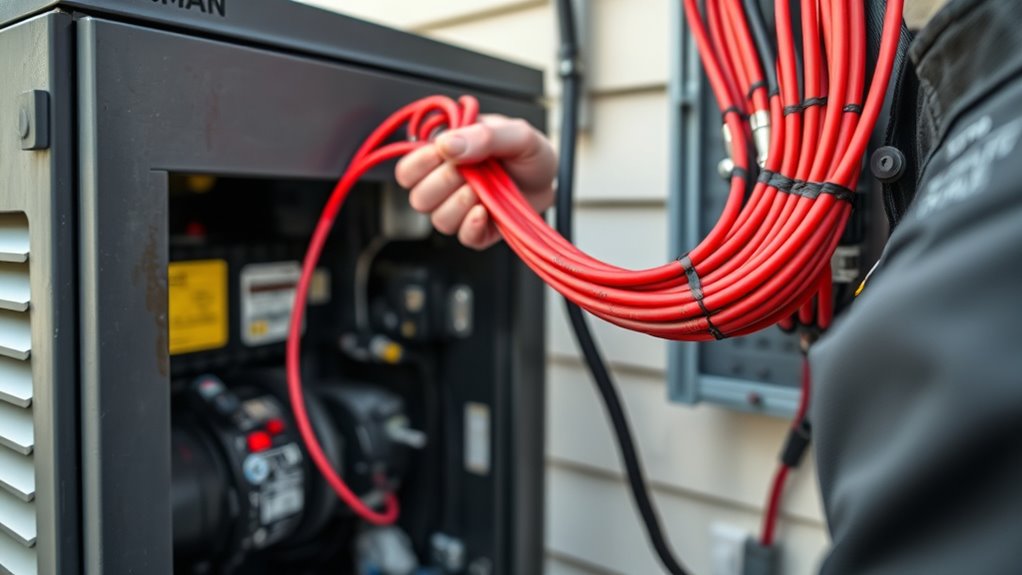
To wire your standby generator safely to your home, start by hiring a licensed electrician to follow the manufacturer’s instructions carefully. They will guarantee proper wiring, grounding, and transfer switch installation, whether manual or automatic. Avoid connecting directly to outlets or circuits yourself, as this can cause back feeds or electrical hazards. Proper wiring keeps your system safe and reliable, and if you want to learn more about best practices, keep exploring the essential steps involved.
Key Takeaways
- Turn off main power and generator before wiring; follow manufacturer instructions carefully.
- Use proper gauge wiring and high-quality connectors to ensure safe, reliable connections.
- Hire licensed electricians to perform complex wiring and ensure code compliance.
- Properly wire transfer switches (manual or automatic) according to manufacturer specifications.
- Ensure correct grounding and double-check wiring to prevent back feeds, shocks, or equipment damage.
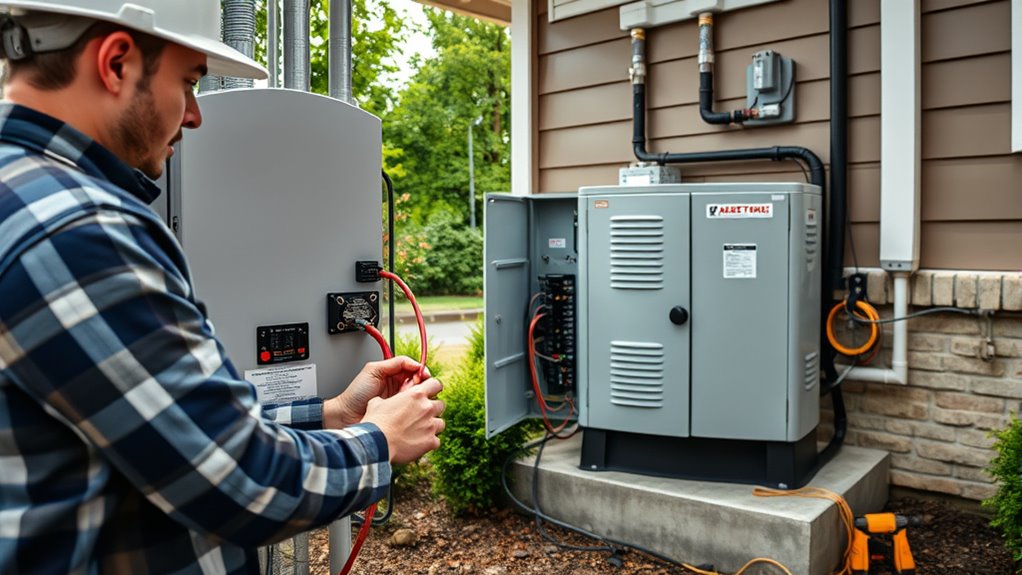
Wiring a standby generator requires careful planning and precise execution to guarantee your system operates safely and reliably. One of the most critical components in this process is choosing the right transfer switch. Transfer switches act as the bridge between your generator and your home’s electrical system, ensuring power flows smoothly and safely during outages. When selecting a transfer switch, you’ll encounter two main options: manual and automatic. Understanding the differences helps you determine which best suits your needs.
Choosing the right transfer switch is essential for safe, reliable standby generator operation.
Manual transfer switches require you to physically switch the power source when the utility fails. This means during an outage, you must go outside, open the panel, and flip the switch to connect your generator. While this method is generally less expensive upfront, it demands your active involvement during emergencies, which might not be convenient or safe if you’re not home or if conditions are unsafe. Manual switches are straightforward to install and maintain, making them suitable for smaller loads or backup systems where frequent power interruptions are rare.
Automatic transfer switches, on the other hand, detect power outages instantly and switch to generator power automatically. They provide seamless transition, ensuring your appliances and critical systems keep running without manual intervention. This convenience comes at a higher initial cost but offers increased safety and peace of mind, especially if you rely on essential medical devices or have a home business. When wiring an automatic transfer switch, you need to pay close attention to proper connections and ensure it integrates correctly with your generator control system. Proper wiring ensures that the switch communicates effectively with your generator, preventing dangerous back feeds and electrical mishaps.
Regardless of which transfer switch you choose, it’s crucial to follow manufacturer instructions meticulously. Incorrect wiring can lead to serious hazards, including electrical shocks or damage to your generator and home wiring. Before starting, turn off all power sources and double-check your wiring plan. Use proper gauge wiring and high-quality connectors, and ensure grounding is correctly established to reduce the risk of electrical faults. Additionally, understanding transfer switch fundamentals is essential for safe and effective installation.
If you’re not experienced in electrical work, consider hiring a licensed electrician. They know how to handle the complexities of wiring transfer switches and ensure code compliance. Proper wiring not only guarantees safety but also enhances your system’s reliability. Take time to plan the setup, understand the differences between manual and automatic transfer switches, and execute the wiring carefully. Doing so will provide you with a dependable backup power system, giving you confidence that your home will stay safe and powered during outages.
Frequently Asked Questions
Can I Connect a Standby Generator Without Professional Help?
You shouldn’t attempt DIY wiring for your standby generator because it can jeopardize electrical safety. Connecting a generator involves complex tasks that require specialized knowledge and tools, and mistakes could lead to electrical shocks, fires, or damage. For your safety and your home’s protection, it’s best to hire a licensed electrician. They ensure proper wiring, adherence to code, and safe operation, giving you peace of mind during power outages.
What Is the Average Cost of Installing a Standby Generator?
The average cost of installing a standby generator ranges from $2,500 to $10,000, depending on the size and features. You should do a cost analysis and budget planning to determine what fits your financial situation. Keep in mind that professional installation, permits, and potential upgrades to your electrical system can add to the total expense. Investing in quality now can save you money and hassle in the long run.
How Often Should I Perform Maintenance on My Generator?
You should perform maintenance on your standby generator at least once a year, following the manufacturer’s maintenance schedule. Regular checks help identify issues early and ensure reliable operation during outages. During maintenance, clean or replace filters, check the oil level, and inspect for damage. Keep troubleshooting tips in mind, like listening for unusual sounds or difficulty starting, so you can address problems promptly and keep your generator running smoothly.
Are There Specific Permits Required for Installation?
Yes, you need specific permits for installing a standby generator. You should check your local building department and electrical codes to guarantee compliance. Proper permits are essential for generator safety and meeting electrical codes, preventing future issues or hazards. Failing to obtain necessary permits can lead to fines or complications during future home inspections. Always consult with licensed professionals to handle the permit process and ensure your installation adheres to all safety standards.
How Long Can a Standby Generator Run Continuously?
Your standby generator can run for days on end if it has enough fuel capacity, but most models have runtime limits of about 8 to 24 hours. Beyond that, you risk overheating or damaging the unit. To keep it running smoothly, regularly check your fuel supply and follow manufacturer guidelines. Planning for refueling or automatic transfer switches guarantees continuous power without risking the generator’s longevity.
Conclusion
Wiring your standby generator safely isn’t just a task; it’s a shield that guards your home and loved ones. Think of it as a bridge between power and safety—each wire a essential thread in this critical connection. When you guarantee proper wiring, you’re not just preventing electrical mishaps; you’re weaving a tapestry of security and peace of mind. Remember, safety is the current that keeps everything flowing smoothly amidst any storm.