To protect your generator from flooding and water damage, you should elevate it on concrete pads or foundations above flood levels, and use waterproof covers and protective enclosures with proper ventilation. Installing barriers, drainage systems, or sump pumps helps divert floodwaters away. Regular maintenance, like checking for corrosion and ensuring tight electrical connections, keeps it in good shape. Following these steps and considering site placement can greatly reduce water risks; exploring further solutions can help you stay prepared.
Key Takeaways
- Elevate generators on concrete pads or foundations above flood levels to prevent water contact.
- Use waterproof covers and seal electrical connections to protect against water ingress.
- Place generators in flood-resistant zones away from low-lying flood-prone areas.
- Install drainage systems or sump pumps to divert floodwaters away from the generator site.
- Conduct regular maintenance and inspections to identify vulnerabilities and ensure proper functioning during floods.
Flooding can quickly damage generators, leaving you without power when you need it most. That’s why understanding how to protect your generator from floodwaters is vital. One key step is regular generator maintenance. Keeping your generator in good condition guarantees it functions properly when you need it most and makes identifying vulnerabilities easier. Check for corrosion, loose connections, and wear and tear often, especially if your area is prone to flooding. Proper maintenance also includes inspecting fuel lines, oil levels, and filters to prevent malfunctions caused by water intrusion. When your generator is well-maintained, it’s better prepared to withstand floodwaters and operate reliably during emergencies.
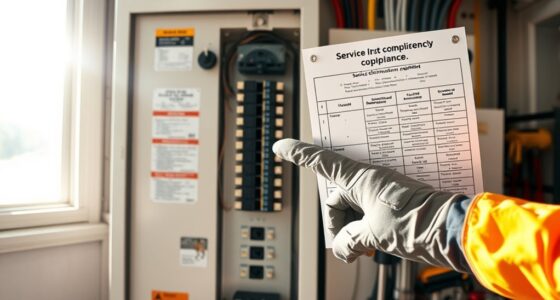
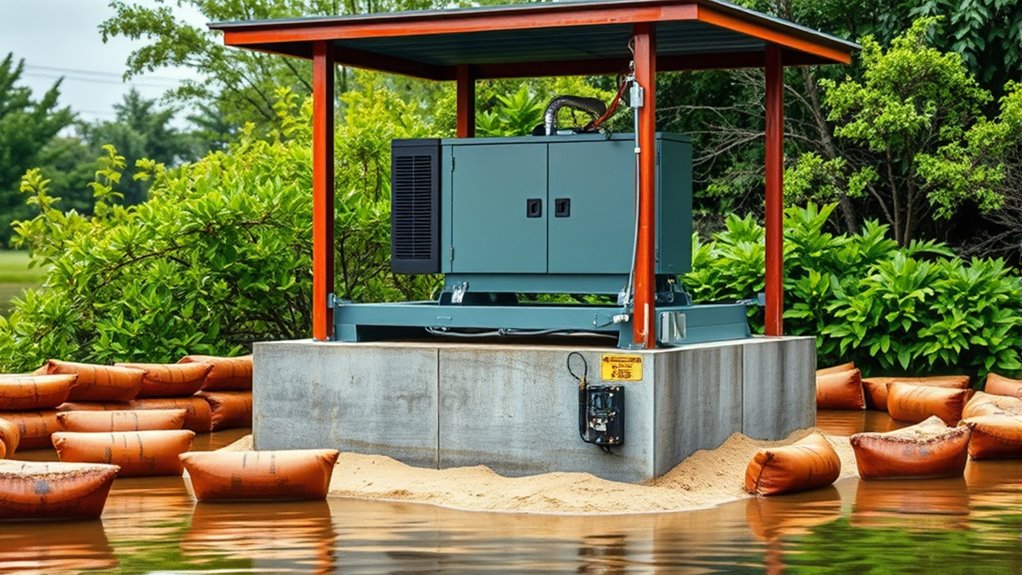
In addition to maintenance, implementing effective floodproofing strategies is essential. Elevating your generator is one of the most straightforward ways to minimize water exposure. Installing it on a concrete pad or foundation that’s above the expected flood level can notably reduce the risk of water damage. Consider building a protective enclosure or barrier around the unit, but ensure it has adequate ventilation to prevent overheating. Sealing all electrical connections and using waterproof covers can prevent water from seeping into sensitive components. Installing a sump pump or drainage system around the generator area can also divert floodwaters away, further reducing risk.
Another smart floodproofing strategy is to plan your generator’s placement carefully. Avoid situating it in low-lying areas or near drainage paths where water tends to collect. If you have a backup power system for your home or business, make sure it’s located in a flood-resistant zone. You might also consider installing a generator cover designed specifically for flood protection. These covers not only shield the unit from rain and surface water but also help prevent debris from clogging air intakes or exhaust outlets during a storm.
Finally, stay proactive by preparing an emergency plan that includes steps for flood events. Have a clear process for shutting down and securing your generator before a flood hits, and keep emergency supplies on hand. Regularly review and update your floodproofing strategies based on weather patterns and new risks. Additionally, maintaining your generator’s performance kits can ensure it continues to operate efficiently during critical moments. Combining diligent generator maintenance with thoughtful floodproofing measures guarantees your power source remains operational and protected, even during severe weather. Being proactive now saves you from costly repairs and power outages later, giving you peace of mind when flooding occurs.
Frequently Asked Questions
How Can I Tell if My Generator Is Water-Damaged?
You can tell if your generator is water-damaged by inspecting for water intrusion signs, such as moisture or rust. Look for corrosion around connections and internal components during a thorough inspection. If you notice discoloration, corrosion, or if the generator isn’t starting properly, water damage might be the cause. Regular corrosion inspections can help catch issues early, preventing more serious damage and ensuring your generator stays reliable during emergencies.
Are There Specific Flood-Resistant Generator Models?
Like a fortress against rising waters, some generators come with flood-resistant features and waterproof housing, making them ideal for flood-prone areas. You should look for models specifically designed with sealed enclosures, elevated platforms, and corrosion-resistant materials. These features help prevent water ingress and damage. Investing in a flood-resistant generator guarantees you stay powered during storms, just as a well-fortified ship endures the stormy seas.
What Are the Safety Protocols After Flooding a Generator?
After flooding your generator, prioritize flood safety by turning it off and disconnecting it from power sources. You should then conduct a thorough generator inspection, checking for water intrusion, corrosion, or damage. Avoid operating it until you’re confident it’s dry, clean, and safe. Guarantee proper ventilation during inspection and repairs. If uncertain, consult a professional to prevent electrical hazards or further damage. Safety always comes first with flood-affected equipment.
How Long Should I Let a Flooded Generator Dry Before Use?
You should let your flooded generator dry for at least 48 to 72 hours before use. Water absorption can cause corrosion and damage, so thorough drying is essential. Make sure it’s in a well-ventilated area, and consider using fans or dehumidifiers to speed up drying time. Before restarting, check for any signs of moisture or corrosion, and verify that all parts are completely dry to prevent future issues.
Can I Repair Water-Damaged Generators Myself or Need Professional Help?
You might think you can fix water-damaged generators with a quick DIY repair, but don’t be fooled—this isn’t a job for amateurs. Water damage can cause hidden, catastrophic failures that only a professional assessment can uncover. Attempting repairs yourself risks further damage or safety hazards. To guarantee your generator is safely restored and reliable, it’s best to leave water damage repairs to trained professionals who have the right tools and expertise.
Conclusion
By taking proactive steps to shield your generator from flooding, you’re building a fortress against nature’s unpredictable storms. Think of your generator as a ship steering through rough waters—you don’t want it to sink when the tide rises. Regular maintenance, proper placement, and quick drainage solutions keep your power source afloat and ready to serve. Stay vigilant, and your generator will weather any storm, keeping your home powered and safe like a lighthouse guiding ships to safety.