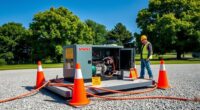
To guarantee ADA compliance around generator installations, you should use clear, high-contrast signage with large, easy-to-read fonts and tactile or braille features, mounted at accessible heights. Keep pathways unobstructed, at least 36 inches wide, and well-lit with slip-resistant surfaces. Incorporate ramps if needed and regularly inspect routes and signage for accessibility and visibility. Continuing this approach helps promote safety and inclusivity—discover more ways to stay compliant and safe around generators.
Key Takeaways
- Install clear, high-contrast signage with tactile and braille features at accessible heights near generators.
- Design emergency access routes that are at least 36 inches wide, obstacle-free, and well-lit.
- Use slip-resistant surfaces and ramps for any raised pathways or barriers around generator areas.
- Conduct regular inspections to ensure signage visibility, route accessibility, and obstacle-free pathways.
- Train staff on ADA standards for signage, emergency routes, and maintenance to ensure ongoing compliance.
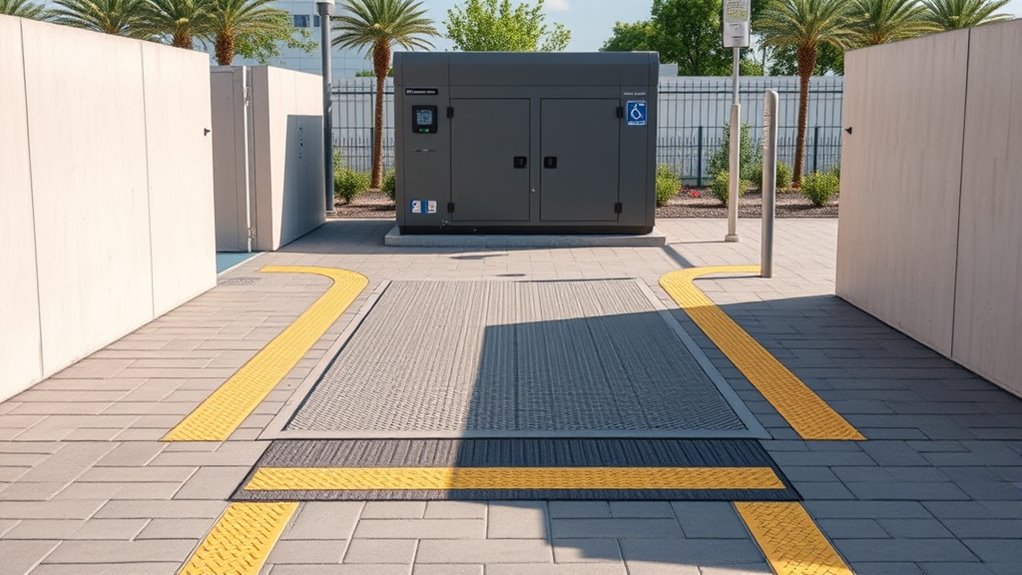
Are you confident that your facility meets the Americans with Disabilities Act (ADA) standards? If you’re installing or maintaining generators, it’s essential to ensure everything complies to avoid penalties and to support all users. ADA compliance isn’t just about the generator itself; it also involves surrounding infrastructure like accessible signage and emergency access routes. These elements guarantee that everyone, including individuals with disabilities, can navigate your facility safely and efficiently during normal operations or emergencies.
Accessible signage plays a crucial role in guiding people around your generator installation. Clear, visible signs should indicate the location of the generator, emergency exits, and access points. These signs need to use high-contrast colors, large, easy-to-read fonts, and include tactile or braille features, so visually impaired individuals can understand them. Proper signage helps prevent confusion and delays, especially during emergencies when every second counts. Make sure signs are mounted at accessible heights and positioned where they’re easily visible from various angles. This not only complies with ADA standards but also demonstrates your commitment to safety and inclusivity.
Clear, high-contrast signage with tactile features ensures accessible guidance during emergencies.
Emergency access routes are equally vital. They must be free of obstructions at all times and designed to accommodate individuals with disabilities. Pathways should be wide enough—generally at least 36 inches—to allow wheelchair access and should have a firm, slip-resistant surface. During generator installation, consider how the equipment might impact these routes; ensure that the placement doesn’t block or hinder access. If your generator is located on a raised platform or behind barriers, include ramps or other accessible features to maintain compliance. Additionally, regularly verifying that your backup power system meets current safety and accessibility standards helps ensure ongoing compliance. Emergency access routes should also be clearly marked with proper signage, and the route itself should be illuminated adequately so that people can use it safely during a power outage or in low-light conditions.
Regularly reviewing your signage and access routes is key to maintaining compliance. As your facility evolves or as regulations change, updates might be necessary. Conduct routine inspections to verify that signs are still visible and legible, and that pathways remain unobstructed and accessible. Training staff on ADA requirements related to emergency routes and signage can further ensure ongoing compliance and safety. Remember, ADA compliance isn’t a one-time checklist; it’s an ongoing commitment to making your facility accessible and safe for everyone, especially during critical moments involving generator use or outages.
Frequently Asked Questions
What Are the Specific ADA Clearance Requirements for Generator Access?
You should maintain at least a 36-inch wide clear path and a 27-inch minimum depth around your generator for ADA access. These requirements promote generator safety and facilitate site planning, guaranteeing everyone can reach and operate the equipment comfortably. Make sure the clearance is free of obstructions, and the surface is level. Following these guidelines helps you stay compliant with ADA standards and ensures safe, accessible generator operation for all users.
How Do ADA Guidelines Address Generator Noise and Vibration Impacts?
ADA guidelines emphasize minimizing generator noise and vibration impacts to guarantee accessible environments. You should implement vibration mitigation measures, like rubber pads or isolators, to reduce vibrations that could hinder accessibility. For noise, consider sound barriers or enclosures to limit disturbance. By actively addressing generator noise and vibration mitigation, you enhance safety and comfort for all users, ensuring your installation complies with ADA standards and promotes an inclusive, accessible space.
Are There Special Signage Requirements for Generator Locations Under ADA?
You know what they say, “A picture is worth a thousand words.” For generator locations, you must install clear accessibility signage that indicates the presence of the generator and any hazards. This signage should be easily visible, durable, and comply with ADA standards, including font size and placement. Proper signage guarantees everyone can navigate safely and understand the generator’s location, promoting inclusive and accessible environments.
How Can I Ensure ADA Compliance During Generator Maintenance and Repairs?
During generator maintenance and repairs, you guarantee ADA compliance by planning maintenance activities carefully to avoid obstructing accessible routes. You should conduct regular inspections, document compliance with ADA standards in maintenance records, and keep clear pathways open. Communicate with maintenance crews about ADA requirements, and include accessibility checks in your maintenance planning. This proactive approach helps you meet ADA standards consistently and maintain compliance documentation for accountability.
What Are the Best Practices for Integrating Generators Into Accessible Pathways?
Think of your accessible pathways as the heartbeat of safety. To integrate generators seamlessly, clear landscaping barriers that could obstruct the route, ensuring they don’t block emergency exits or impede wheelchair access. Keep pathways wide enough for easy navigation and mark them clearly. Regularly inspect for obstacles, and maintain a smooth surface. These practices symbolize your commitment to safety and inclusivity, ensuring everyone can access emergency systems without hesitation.
Conclusion
Believe it or not, ensuring ADA compliance around generator installations isn’t just a legal requirement—it can actually improve safety and accessibility for everyone. Some might think that compliance is just about meeting regulations, but it’s about creating inclusive spaces where all individuals can access essential services. By investigating this, you’ll see that proper planning not only keeps you compliant but also demonstrates your commitment to safety and fairness for all users.