TL;DR

Get backup power and energy gear delivered free with Prime
- Fast, free delivery on millions of items
- Prime Video, Amazon Music and more included
- Member-only deals all year
Energy-Storage.news published an on-demand sponsored webinar with Amphenol Communications Solutions on designing high-current battery module connections. The session covered connector ratings from 160 A to 500 A per contact, thermal and electrical design factors, environmental protection, and cable and flat-flex options; it did not report independent testing or new product performance results.
Energy-Storage.news published an on-demand webinar with connector supplier Amphenol Communications Solutions examining how engineers can design high-current battery module connections for energy storage and other power systems. The sponsored session focuses on connector selection, electrical and thermal considerations, and serviceability, as battery energy storage systems, EV charging and industrial systems require compact, high-power interconnects.
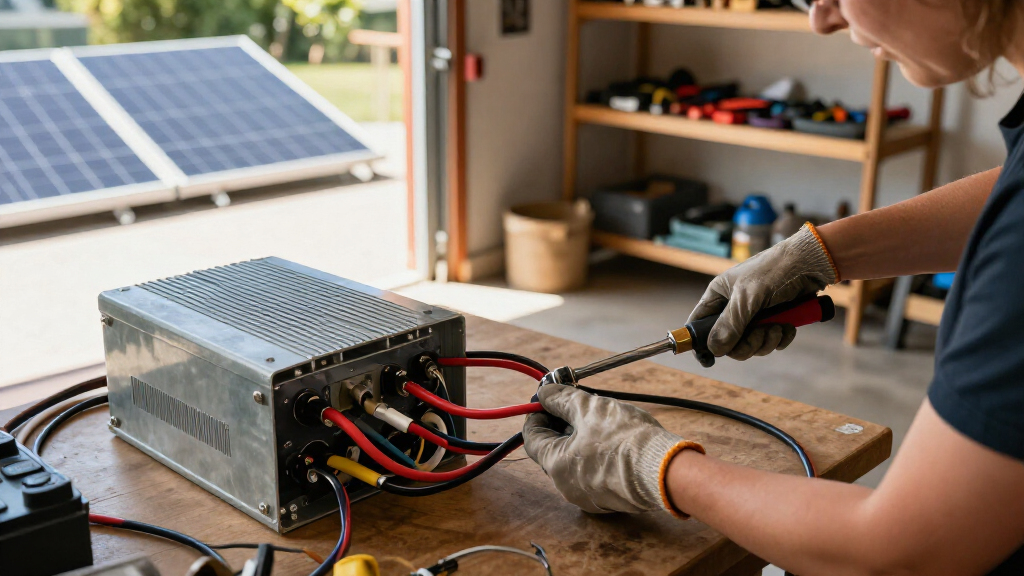
The webinar, titled Designing high-current battery module connections for energy storage systems, uses Amphenol’s EnergyKlip family of high-power industrial battery module connectors as its product example. Energy-Storage.news says the portfolio covers 160 A to 500 A per contact and is intended for battery modules, power distribution, industrial chargers, EV charging power modules, renewable energy storage and battery energy storage systems. These ratings describe the cited product range; they do not establish the operating current of any particular installation.
The session addresses factors that affect connector design and system integration, including current-carrying capability, contact resistance and temperature rise in grid-forming battery energy storage systems. It also discusses current derating, IP67 environmental protection and touch-safe designs. The article presents these as subjects covered in the webinar, not as independent verification of performance or certification for a specific project.
According to the event description, the presentation compares cable and flat-flex cable (FFC) connections as options for compact, space-constrained battery modules and power distribution layouts. It also considers modular designs intended to support installation and maintenance. The webinar was presented by Divya Shukla, product marketing lead at Amphenol Communications Solutions, and moderated by Andy Colthorpe, editor of Energy-Storage.news. The recording is available on demand, with presentation slides accessible through the publication’s webinar section.
Connector Choices Shape System Design
Battery interconnects sit between individual modules and the wider electrical system. Their design can affect heat management, packaging and maintenance access, as well as how power is distributed. For engineers specifying storage equipment, the issues raised in the webinar are practical design constraints: a connector must suit the intended current, physical arrangement and service plan rather than simply fit within a module.
The discussion is relevant across several sectors named by the publisher, including grid-scale storage, battery backup units and EV charging. Higher-power equipment can place greater demands on connections, but the source does not quantify those demands or demonstrate that one connector architecture performs better than another. The value of the session is its focus on design questions that system teams can evaluate when developing or integrating equipment.
Connector choices can also influence how easily a system can be assembled and serviced. The webinar’s attention to cable and FFC configurations, modularity and maintenance reflects the competing needs of compact packaging and accessible connections. Those considerations matter to project teams planning equipment layouts, although the source gives no project-specific cost, reliability or installation-time results.
Products Worth Considering

Levoit EverestAir-P Smart Air Purifier for Large Rooms

Dyson Car+Boat Cordless Handheld Vacuum

Bose SoundLink Max Bluetooth Speaker
As an affiliate, we earn on qualifying purchases.
A Sponsored Engineering Webinar
The announcement is an on-demand educational webinar, not a report of a newly commissioned battery project, a change in regulation or a published test result. Energy-Storage.news identifies Amphenol Communications Solutions as the sponsor and describes the EnergyKlip range as the example used to discuss high-power industrial battery module connectors.
The publication frames the subject around battery energy storage systems, EV charging infrastructure, battery backup units and industrial power systems. It says engineers in these fields face demands for reliable, compact and serviceable interconnects. The webinar’s stated scope is therefore design guidance covering electrical performance, thermal management and system integration, rather than a comparison of suppliers or a general market forecast.
Readers can watch the recording on YouTube or register through the Energy-Storage.news website to access the on-demand session and slides. The listed speakers are Divya Shukla and Andy Colthorpe; the source does not give a separate event date for the webinar itself, beyond the article’s publication date of November 3, 2026.
“Hardware, electrical, power electronics, and systems engineers will gain actionable insights they can immediately apply.”
— Energy-Storage.news, describing the intended audience
Performance Evidence Not Provided
The source describes webinar topics and product specifications but does not include test methods, measured results or independent validation of connector performance. It does not say what conditions support the stated current ratings, how temperature rise varies by configuration, or what derating guidance applies to a particular installation. Those details would need to be checked against the product documentation and system requirements.
It is also unclear from the announcement whether the webinar includes quantified comparisons between cable and FFC designs, or case studies with operating data. No pricing, deployment totals, customer examples, failure rates or service-life figures are provided. The article does not identify specific projects or explain how IP67 protection applies across every connector configuration.
The session is sponsored by Amphenol, whose product family is the central example. That relationship is disclosed in the announcement; readers should distinguish the company’s product information and the publisher’s description from independent evidence about performance across applications.
Watch the Recording and Review Slides
The next step for interested readers is to watch the on-demand webinar and review the presentation slides available through Energy-Storage.news. Engineers considering a connector for a specific design can compare the stated ratings and configuration options with manufacturer documentation, installation conditions and the requirements of their battery system.
The source does not announce a follow-up event, new product launch or further publication date. Any additional technical claims, application examples or performance data would need to come from the recording, associated slides or later material from the publisher or manufacturer.
Key Questions
What is the webinar about?
It discusses high-current battery module connection design, including electrical and thermal factors, environmental protection, touch safety, packaging and maintenance.
What current ratings does the cited connector range cover?
Energy-Storage.news says Amphenol’s EnergyKlip portfolio covers 160 A to 500 A per contact. The announcement does not specify the conditions or derating rules for each rating.
Who presented and moderated the session?
Divya Shukla, product marketing lead at Amphenol Communications Solutions, presented. Andy Colthorpe, editor of Energy-Storage.news, moderated.
Where can viewers access the webinar?
The recording is available on YouTube. Energy-Storage.news also says readers can register through its on-demand webinar section to access the session and presentation slides.
Does the announcement prove the connectors’ performance?
No. It describes product ratings and topics covered in a sponsored webinar, but provides no independent test results or project-specific performance data.
Source: energy-storage.news