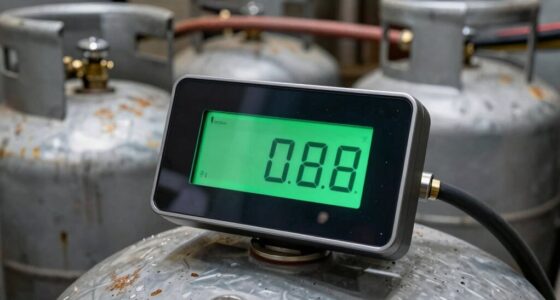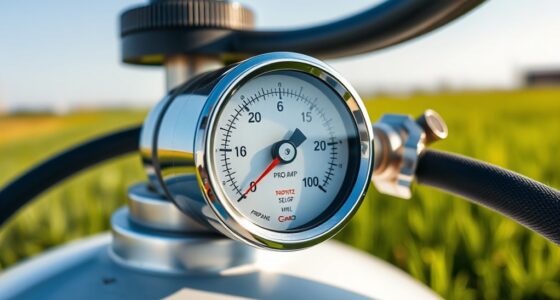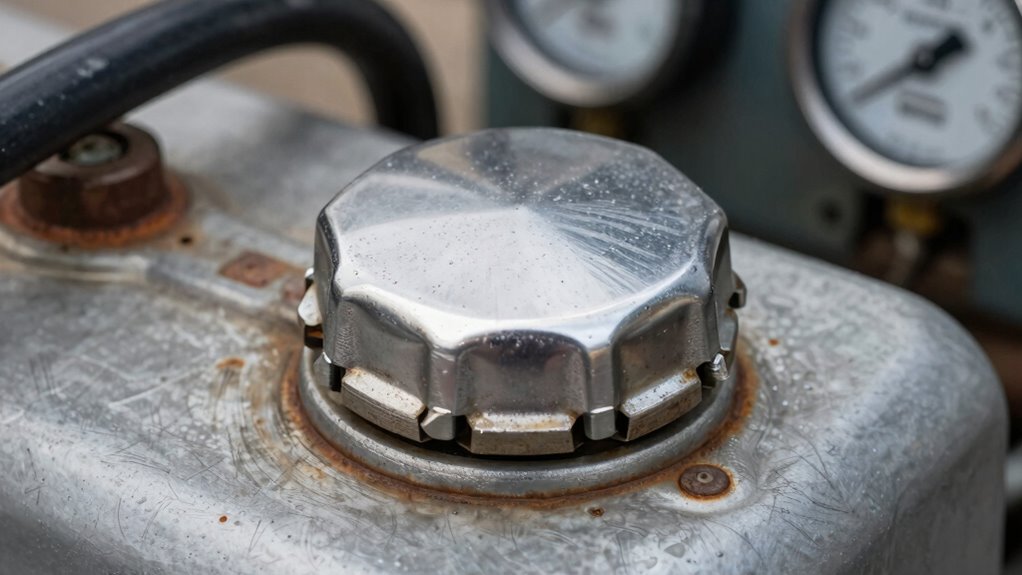

To keep your generator running reliably, you need to manage fuel turnover carefully. This means replacing or topping off fuel regularly based on usage, which prevents chemical changes and sediment buildup that can clog systems. Proper storage practices and fuel management systems help maintain fuel quality and alert you to potential issues early. Keeping up with these routines extends your generator’s lifespan and guarantees it performs when you need it most. Discover more tips to optimize your fuel management practices.

Get backup power and energy gear delivered free — and shop member deals
- Fast, free delivery on millions of items
- Access to Prime Big Deal Days deals on October 6–7
- Prime Video, Amazon Music and more included
Key Takeaways
- Regular fuel turnover prevents chemical degradation and sediment buildup, ensuring fuel remains fresh and effective.
- Maintaining proper fuel management extends generator lifespan and reduces operational failures.
- Routine replacement and top-offs based on usage keep fuel quality consistent and reliable.
- Proper storage practices protect fuel from contamination and impurity accumulation during periods of inactivity.
- Fuel management systems help monitor fuel quality and levels, enabling proactive maintenance and operational efficiency.
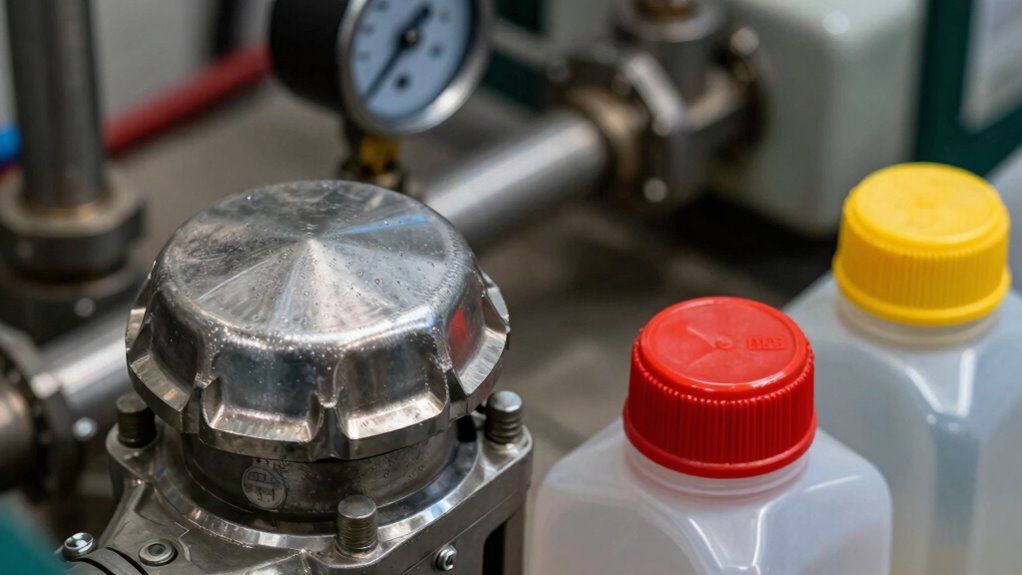
Fuel turnover also involves managing how often you replace or replenish your stored fuel. If you let fuel sit unused for too long, its chemical properties can change, leading to decreased combustibility and increased risk of problems during operation. Establishing a routine for fuel replacement or top-offs based on your generator’s usage cycle helps keep the fuel fresh and reduces waste. This process also helps prevent the accumulation of sediment and other impurities that settle at the bottom of storage tanks over time. By maintaining a disciplined fuel turnover schedule, you minimize the chance of unexpected failures and extend the lifespan of your generator. Proper fuel storage practices are especially crucial in maintaining the integrity of your fuel over extended periods.
Finally, integrating fuel management systems can streamline the process, giving you real-time data on fuel levels, quality, and storage conditions. These systems can alert you to potential issues before they become critical, allowing you to take corrective action. In the end, understanding and managing fuel turnover isn’t just about keeping your generator running; it’s about guaranteeing it performs reliably when you need it most. Proper fuel storage, contaminant prevention, and regular turnover practices work together to keep your generator efficient, safe, and ready to serve during emergencies.
Frequently Asked Questions
How Does Ambient Temperature Affect Generator Fuel Turnover?
Ambient temperature directly affects your generator’s fuel turnover by influencing fuel stability and combustion efficiency. Higher temperatures can cause fuel to evaporate or degrade faster, leading to inconsistent performance. To prevent this, you should focus on fuel stabilization and temperature management, such as storing fuel in cool, sealed containers and maintaining ideal operating temperatures. Managing these factors ensures reliable generator operation and prolongs fuel quality over time.
What Are the Signs of Fuel Degradation in Generators?
You’ll notice signs of fuel degradation in your generator through issues like difficulty starting, rough running, or reduced power output. Check your fuel storage regularly, as improper storage can lead to contamination or evaporation. Chemical stability decreases over time, causing varnish or gum buildup within the system. If you see these signs, it’s essential to replace or treat the fuel promptly to maintain *best* generator performance.
How Often Should Fuel Turnover Be Performed for Optimal Efficiency?
You should perform fuel turnover every 3 to 6 months to maintain ideal efficiency. This process helps refresh fuel quality and reduce the risks associated with long storage durations, such as degradation or contamination. Regular turnover ensures your generator runs smoothly, prevents potential issues caused by stale fuel, and maintains reliable power supply. Keep a schedule aligned with your fuel storage duration to maximize generator performance and lifespan.
Does Using Ethanol-Blended Fuel Impact Turnover Rates?
Using ethanol-blended fuel can affect turnover rates because ethanol impacts fuel stability and can lead to quicker degradation. Ethanol effects include increased moisture absorption, which promotes fuel breakdown and potential engine issues. To maintain ideal generator performance, you might need to perform turnover more frequently with ethanol-blended fuels. Regularly checking fuel quality and stabilizers helps mitigate ethanol effects, ensuring your fuel remains stable and your generator runs smoothly.
Can Fuel Turnover Prevent Generator Failure During Outages?
Fuel turnover acts like a heartbeat for your generator, keeping its essential fluids invigorated. By practicing proper storage techniques and fuel stabilization, you can prevent fuel degradation and contamination that cause failures during outages. Regularly revitalizing and rotating stored fuel ensures your generator stays ready to spring into action, much like a well-tuned engine. This proactive approach helps maintain reliable power, reducing the risk of unexpected breakdowns when you need it most.
Conclusion
Understanding generator fuel turnover helps you keep your backup power reliable and efficient. Regular monitoring guarantees you’re never caught off guard during an outage. Did you know that improper fuel management can cause generator failure in up to 60% of emergency situations? Staying on top of fuel turnover not only prolongs your generator’s lifespan but also guarantees it’s ready when you need it most. Keep these tips in mind, and your backup power will always be dependable.
Fall Picks
fall essentials
As an affiliate, we earn on qualifying purchases.