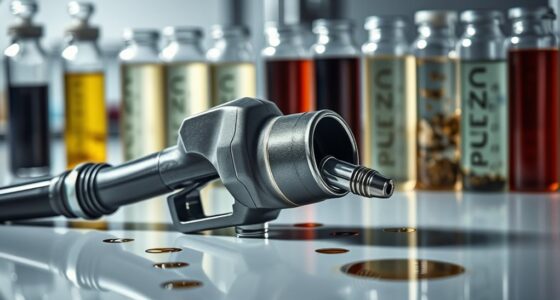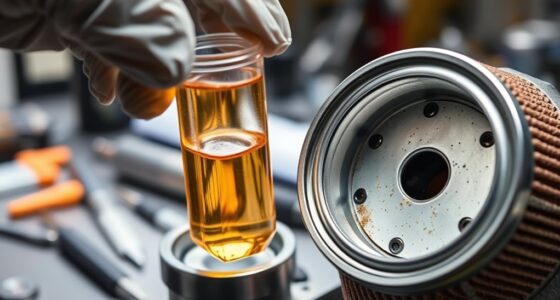
Fuel polishing and filtering systems are essential tools to keep your diesel fuel clean and free of harmful contaminants. They circulate your fuel through filters and separators, removing water, dirt, algae, and sediments that can clog filters and damage engines. This process helps maintain ideal fuel efficiency, reduce emissions, and extend the life of your fuel system components. To discover how these systems protect your engine and improve performance, explore further details below.
Key Takeaways
- Fuel polishing systems circulate fuel to remove water, dirt, algae, and other contaminants, maintaining fuel cleanliness.
- They utilize coarse and fine filters, as well as water separators, to effectively eliminate impurities.
- Sensors and alarms monitor filter condition and water levels, prompting timely maintenance.
- Regular fuel filtration prevents engine issues like clogged injectors, sluggishness, and wear on fuel components.
- Implementing these systems extends fuel system lifespan, improves engine performance, and reduces operational costs.
Fuel polishing and filtering systems are essential for maintaining clean, efficient fuel in your engines. Over time, diesel contamination and fuel degradation can cause serious problems, including clogged fuel injectors, reduced engine performance, and even costly repairs. These systems work by continuously removing impurities, water, and sediments that threaten the quality of your fuel, guaranteeing your engine runs smoothly and reliably. When you neglect proper fuel filtration, you risk allowing contaminants to settle and proliferate, which can lead to fuel deterioration—a process that diminishes the fuel’s combustibility and increases the likelihood of engine issues.
Diesel contamination often comes from environmental factors like water ingress, microbial growth, or dirt entering your fuel tanks. Water is particularly problematic because it separates from diesel and creates an environment where bacteria and fungi thrive, leading to microbial contamination. This microbial growth produces sludge and biofilms that can clog filters and fuel lines, causing sluggish engine response or failures. Fuel degradation occurs when diesel sits unused for extended periods or is exposed to heat, oxygen, or moisture. As fuel deteriorates, its chemical properties change, forming sediments and varnish that can block your fuel system components. Fuel that has degraded also loses its lubricity, increasing wear on fuel pumps and injectors, which accelerates engine deterioration.
Water ingress, microbial growth, and dirt cause fuel contamination and degradation, leading to clogged filters and engine damage.
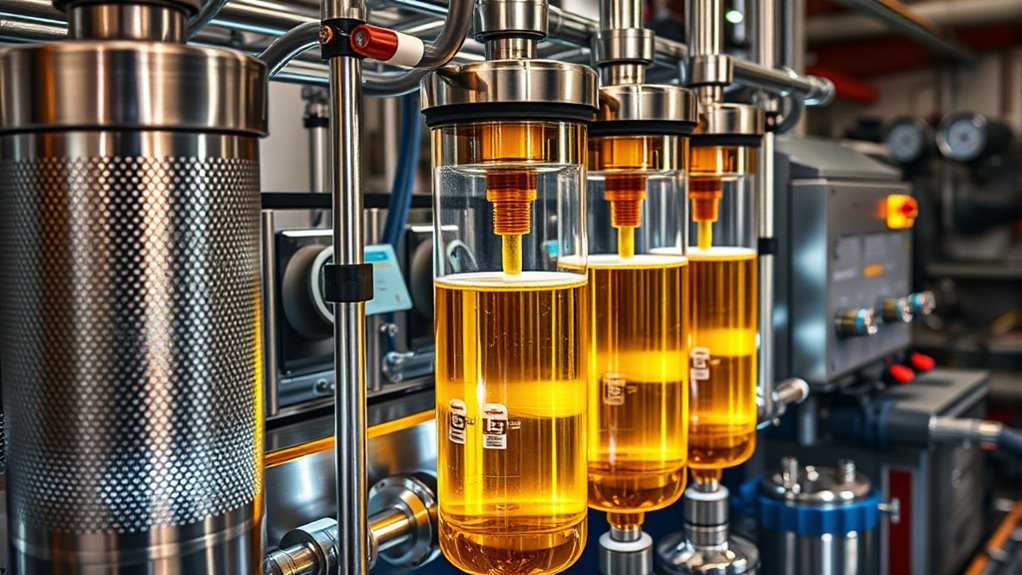
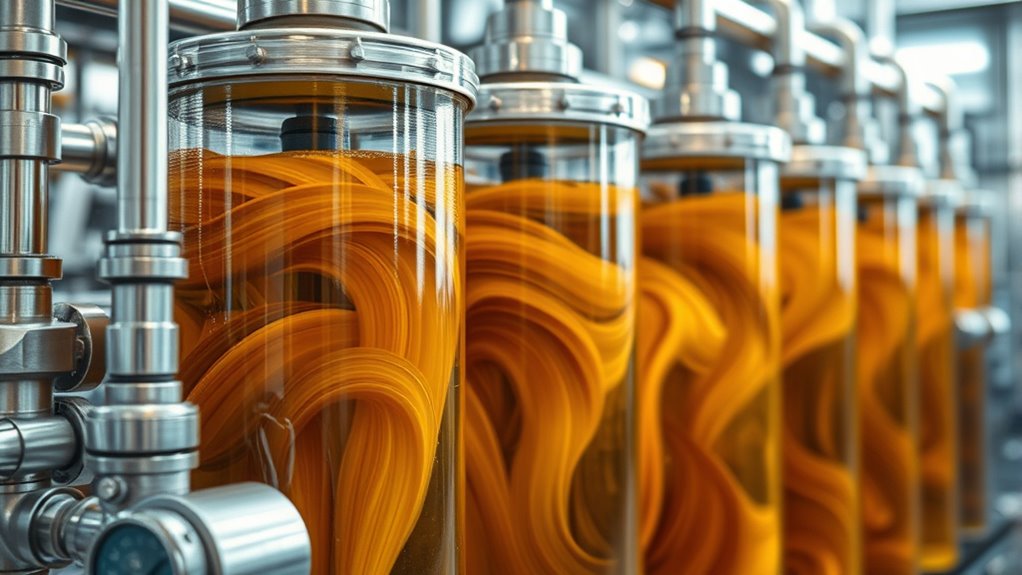
A good fuel polishing system actively circulates fuel through a series of filters and separators, removing water, dirt, algae, and other contaminants before they reach your engine. These systems typically include coarse and fine filters, along with water separators, ensuring that only clean, high-quality fuel enters your engine. By doing so, they prevent the buildup of contaminants that cause fuel deterioration, extending the lifespan of your fuel system components. Many systems are equipped with sensors and alarms that alert you when filters need changing or when water levels are high, giving you a proactive approach to fuel maintenance.
Implementing a fuel filtering system is more than just a maintenance task; it’s a proactive strategy to protect your investment. Regularly polishing your fuel helps maintain ideal combustion, improves fuel efficiency, and reduces emissions. It also minimizes the risk of costly repairs caused by contaminated or degraded fuel. Even if your fuel looks clean, microscopic particles and water can still be present, so using an effective filtering system ensures you’re always feeding your engine the purest fuel possible. Proper filtration technology, such as water separation, plays a crucial role in maintaining fuel quality and protecting your engine’s performance. Ultimately, by investing in fuel polishing and filtering systems, you’re safeguarding your engine’s performance, longevity, and reliability—keeping your machinery running at peak condition with minimal downtime.
Frequently Asked Questions
How Often Should Fuel Polishing Systems Be Maintained?
You should maintain your fuel polishing system every 3 to 6 months to guarantee peak performance and extend its system lifespan. Regular maintenance keeps contaminants at bay, preventing engine issues. Follow your manufacturer’s recommended maintenance schedule closely, especially if you operate in dusty or humid environments. Consistent upkeep helps avoid costly repairs and keeps your fuel system running smoothly. Don’t wait too long, as neglecting maintenance can shorten the lifespan of your system considerably.
Can Fuel Polishing Prevent Engine Damage?
Ever wondered if fuel polishing can prevent engine damage? It definitely can! By maintaining ideal fuel quality, fuel polishing removes contaminants and water that could harm your engine. This proactive approach helps reduce wear and tear, ultimately boosting engine longevity. When you invest in regular fuel system maintenance, you’re protecting your engine from potential issues caused by poor fuel, saving you money and ensuring smooth performance every time.
What Types of Fuel Contaminants Do These Systems Remove?
Fuel polishing and filtering systems remove water separation and particulate contaminants from your fuel. They cut through water, preventing corrosion and engine damage, and trap dirt, rust, and debris that can clog filters and injectors. By continuously cleaning your fuel, these systems guarantee cleaner combustion, improve engine performance, and extend your equipment’s lifespan. Regular use keeps your fuel system in top shape, reducing costly repairs and downtime.
Are Fuel Polishing Systems Suitable for All Engine Sizes?
Fuel polishing systems are suitable for most engine sizes, but you should check their compatibility with your specific fuel system. They improve fuel quality by removing contaminants, guaranteeing ideal engine performance. Larger engines or those with sensitive fuel systems benefit most from these systems. Always verify system compatibility with your engine’s specifications to ensure effective filtration and avoid potential issues caused by incompatible equipment.
How Do I Choose the Right Filtration System for My Needs?
Like choosing a key to open a door, selecting the right filtration system depends on your needs. You should consider fuel additive compatibility to guarantee your engine runs smoothly and check system installation requirements for compatibility with your setup. Focus on your engine size and fuel quality, then tailor your choice accordingly. This way, you guard your engine’s health, just as a lock keeps a treasure safe.
Conclusion
By now, you see how fuel polishing and filtering systems keep your engine running smoothly. Did you know that contaminated fuel costs the average marine vessel over $10,000 annually in repairs? Regular maintenance with these systems can save you money and prevent costly breakdowns. Stay proactive—clean fuel means better performance, longer engine life, and peace of mind on every trip. Don’t wait for trouble; invest in fuel cleaning today and keep your engine in top shape.