To estimate your fuel consumption and run times, track how much fuel you use over specific distances and divide miles traveled by gallons used for an accurate mpg figure. Regularly monitor your vehicle’s performance with diagnostic tools and maintain your engine to maximize efficiency. Consider factors like terrain and driving habits that influence fuel use. Keep an eye on these details, and you’ll better plan trips and avoid surprises—there’s more to discover about optimizing your vehicle’s performance.
Key Takeaways
- Measure fuel used over specific distances to calculate average mpg or L/100 km for accuracy.
- Use the formula: remaining fuel volume divided by average fuel consumption rate to estimate remaining run time.
- Consider factors like driving speed, terrain, and load, which significantly influence fuel consumption.
- Regular engine diagnostics and maintenance improve efficiency, leading to more precise fuel and run time estimates.
- Utilize trip computer data or GPS to refine estimates and plan trips effectively.
Have you ever wondered how to accurately estimate your vehicle’s fuel consumption and run times? Knowing this can help you plan trips better, save money, and avoid unexpected stops. The key lies in understanding your vehicle’s fuel efficiency and performing regular engine diagnostics. Fuel efficiency measures how well your vehicle converts fuel into movement, typically expressed as miles per gallon (mpg) or liters per 100 kilometers. To get a good estimate, start by recording how much fuel you use over a specific distance. For example, if you fill up your tank and then drive a known distance, divide the miles traveled by the gallons used. Doing this consistently over different trips will give you a reliable average fuel efficiency.
Understanding your vehicle’s fuel efficiency helps plan trips, save money, and prevent unexpected stops.
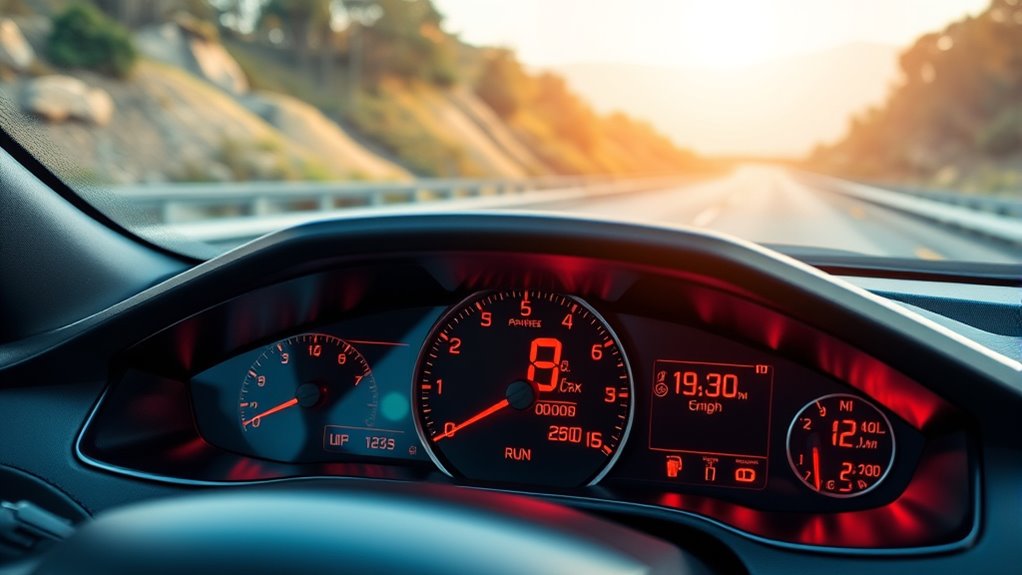
Engine diagnostics play an essential role here. A healthy engine runs more efficiently, consuming less fuel and providing better run times. Modern vehicles often have onboard diagnostic systems (OBD-II) that can be accessed with a scanner. These tools reveal real-time data about your engine’s performance, such as fuel trim levels, air intake, and ignition timing. If your diagnostics indicate issues like dirty fuel injectors, worn spark plugs, or a clogged air filter, your engine may not be running at peak efficiency. Addressing these problems promptly ensures your fuel consumption remains accurate and predictable. Regular maintenance, like oil changes and tune-ups, also contributes to improved fuel efficiency, helping you get the most out of every tank. Additionally, smart home devices can assist in monitoring vehicle systems remotely, ensuring you stay informed about your engine’s health.
Once you know your vehicle’s fuel efficiency, estimating run times becomes straightforward. Divide your remaining fuel volume by your average fuel consumption rate. For example, if you have a full tank of 15 gallons and your vehicle averages 25 mpg, you can multiply 15 gallons by 25 mpg to estimate the total miles you can travel—375 miles in this case. Keep in mind, this is an approximation. Factors like driving speed, terrain, and load can influence actual fuel use. Using GPS or trip computer data can help refine these estimates further.
In addition, monitoring your driving habits can boost your accuracy. Smooth acceleration, maintaining steady speeds, and avoiding rapid braking improve fuel efficiency and extend your run times. Regularly checking engine diagnostics also helps catch issues early, preventing unexpected drops in performance. By combining knowledge of your vehicle’s fuel efficiency with routine diagnostics and mindful driving, you gain better control over your fuel consumption and travel planning. This proactive approach saves money, reduces emissions, and ensures your vehicle runs smoothly for longer distances between fill-ups.
Frequently Asked Questions
How Accurate Are Online Fuel Consumption Calculators?
Online fuel consumption calculators can be quite helpful for trip planning, but their accuracy depends on your vehicle’s fuel efficiency and the data you input. They often provide a good estimate, but factors like driving habits, terrain, and weather can affect actual fuel use. So, while useful for planning, you should treat these calculators as a rough guide and allow extra fuel for unexpected conditions.
What Factors Most Affect Engine Run Time?
You might think engine wear and ambient temperature don’t matter much, but they substantially affect run time. As engine wear increases, efficiency drops, shortening your engine’s duration. High ambient temperatures cause engines to work harder, reducing runtime. Both factors impact how long your engine runs smoothly, so monitor wear levels and ambient conditions closely. This way, you can better predict and optimize your engine’s performance and longevity.
Can Fuel Consumption Estimates Vary Between Different Vehicle Models?
Yes, fuel consumption estimates can vary between different vehicle models because of factors like vehicle maintenance and adherence to fuel economy standards. You might notice that newer models or well-maintained vehicles often have more accurate estimates due to advanced technology and better efficiency. Keep in mind that variations in engine design, weight, and driving habits also influence fuel consumption, making precise estimates a challenge across different vehicles.
How Often Should Fuel Consumption Be Recalculated?
Think of recalculating your fuel consumption as tending a garden—regular checks keep it healthy. You should do it after every maintenance interval or when your fuel tax reports are due. This helps you stay accurate with costs, identify inefficiencies, and plan better. Inconsistent recalculations can lead to misjudging expenses, so make it a habit to update your estimates each time you hit those maintenance or tax milestones.
Are There Apps That Track Real-Time Fuel Efficiency?
Yes, there are fuel efficiency apps that offer real-time tracking. These apps connect to your vehicle’s data system or GPS to monitor fuel consumption as you drive, giving you instant feedback on your driving habits. By using fuel efficiency apps with real-time tracking, you can identify ways to save fuel, optimize routes, and improve your overall driving efficiency. Many popular apps are available for both smartphones and vehicle systems.
Conclusion
By mastering methods to measure fuel, monitor mileage, and estimate run times, you’ll make smarter, safer, and more strategic decisions. Accurate assessments aid in avoiding unexpected shortages and optimize overall operation. With consistent calculations and careful considerations, you’ll conquer challenges, control costs, and confidently command your equipment. Remember, meticulous measurements and mindful monitoring make your machinery more manageable, maximizing efficiency and minimizing mishaps. Stay sharp, stay savvy, and stay in control of your consumption and clocking.