To prevent fuel gelling in cold weather, keep your tank as full as possible to reduce moisture buildup and use winter-specific fuel additives designed to lower the gel point. Store your vehicle in a sheltered area or garage when possible, and regularly check and change filters to keep your fuel system clean. Monitoring these tips can help your engine run smoothly, even in freezing temperatures, and there are more strategies to keep your fuel system ready for winter conditions.
Key Takeaways
- Use cold-weather fuel additives to lower the gel point and keep diesel fuel flowing smoothly.
- Keep your fuel tank as full as possible to reduce moisture buildup and prevent gelling.
- Store your vehicle in a garage or sheltered area to protect the fuel system from extreme cold.
- Regularly inspect and replace fuel filters to avoid blockages caused by gelling or debris.
- Follow manufacturer guidelines for additive use and perform winter maintenance for reliable engine performance.
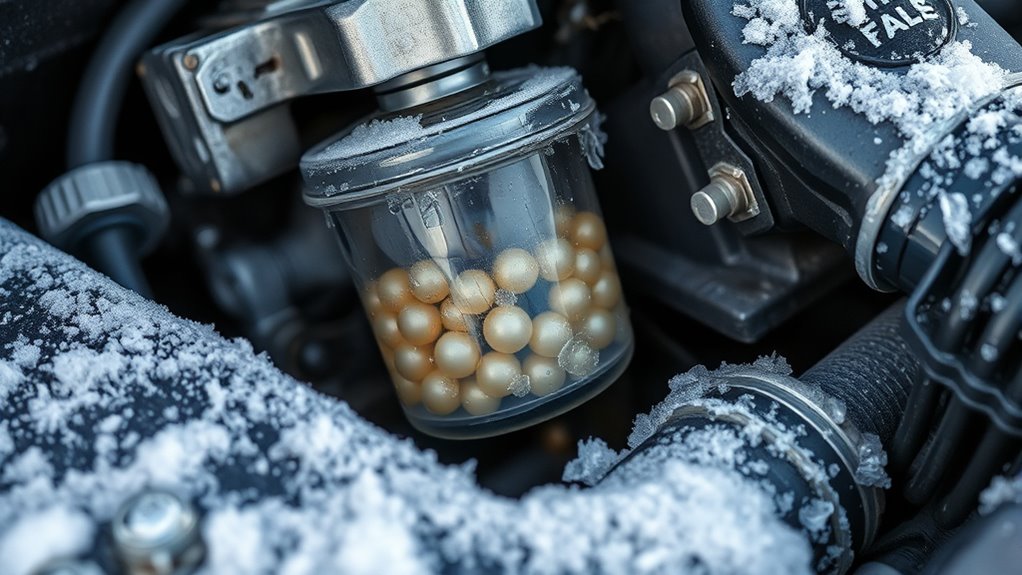
When temperatures drop, fuel systems can encounter problems that threaten your vehicle’s performance. One common issue during cold weather is fuel gelling, which occurs when the diesel fuel thickens and turns into a gel-like consistency. This can clog your fuel lines, filters, and injectors, making it difficult or even impossible for your engine to run smoothly. If you’re not prepared, you might find your vehicle struggling to start or stalling altogether. The key to preventing fuel gelling is understanding how it happens and taking proactive steps to keep your engine functioning at its best.
Using a fuel additive is one of the most effective ways to combat gelling. These additives are specially formulated to lower the gel point of diesel fuel, ensuring it remains fluid even in freezing temperatures. When you add a fuel additive to your tank before the cold sets in, you give your fuel a kind of insurance policy. It helps maintain consistent engine performance by preventing the fuel from becoming too thick when the mercury drops. Be sure to choose an additive that’s compatible with your vehicle and follow the recommended dosage instructions, as overuse can sometimes cause other issues.
Another critical step is to keep your fuel tank as full as possible during cold weather. A full tank reduces the amount of air space that can promote moisture buildup, which can freeze and contribute to gelling. It also ensures there’s always enough fuel to keep the engine running smoothly, especially if you encounter delays or need to let the vehicle warm up longer. Additionally, parking in a garage or sheltered area can help protect your fuel system from extreme cold, reducing the risk of gelling altogether. Regular maintenance, including inspecting and replacing fuel filters, is also essential to prevent blockages caused by gelling or debris buildup. Proper storage and fuel quality play a crucial role in maintaining optimal performance during winter months.
Frequently Asked Questions
How Can I Prevent Fuel Gelling Before Cold Weather Hits?
To prevent fuel gelling before cold weather hits, you should start with proper fuel storage by keeping your tank full to minimize condensation. Add winter fuel additives to improve flow and keep your engine performing smoothly in low temperatures. Regularly check your fuel system for cleanliness, and consider using a fuel heater if you anticipate extremely cold conditions. These steps help maintain engine performance and avoid gelling issues.
What Are the Best Additives to Keep Fuel From Gelling?
Imagine your engine’s heartbeat faltering in freezing weather—that’s why choosing the right additives matters. You should opt for winter fuel blends and fuel stabilizers specially formulated to prevent gelling. These additives keep your fuel flowing smoothly, even in the coldest temperatures. By using high-quality winter blends and stabilizers, you guarantee reliable starts and steady operation, giving you peace of mind when the mercury drops.
How Do I Safely Thaw a Gelled Fuel System?
To safely thaw a gelled fuel system, start by guaranteeing proper fuel system maintenance to prevent future issues. Use a space heater or warm environment to gently increase the temperature around the fuel tank, avoiding direct heat sources like open flames. For emergency thawing, you can use a hairdryer on a low setting, keeping it at a safe distance. Always monitor the process closely to prevent damage and ensure safe operation.
Can Gelling Damage My Vehicle’s Fuel System?
Yes, gelling can cause fuel system damage if not addressed promptly. When fuel gels, it can clog filters, lines, and injectors, leading to restricted flow and potential damage. This impacts your vehicle’s performance by causing hard starts, misfires, or stalling. Regularly using anti-gel additives and maintaining proper fuel levels in cold weather helps prevent gelling and protects your fuel system from costly damage.
What Signs Indicate My Fuel Has Gelled?
You’ll notice your fuel has gelled when your engine struggles to start or stalls shortly after running. You might also see reduced fuel flow or hear sputtering noises. These signs indicate poor fuel stability caused by dropping temperatures below certain thresholds. When temperatures fall, fuel can become thick and clog filters or injectors. Keep an eye on temperature thresholds and consider additives to prevent gelling, ensuring smooth engine performance.
Conclusion
Now that you know how to prevent your fuel from gelling in cold weather, you’re better prepared for winter’s challenges. Keep your tank full, add anti-gel additives, and store fuel properly to avoid costly breakdowns. Isn’t it worth taking a few simple steps to keep your vehicle running smoothly? Don’t let cold weather catch you off guard—stay proactive, stay warm, and enjoy worry-free travels all season long.