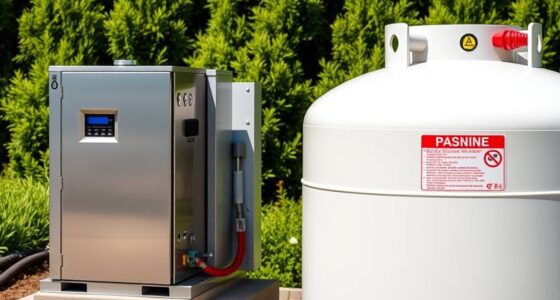
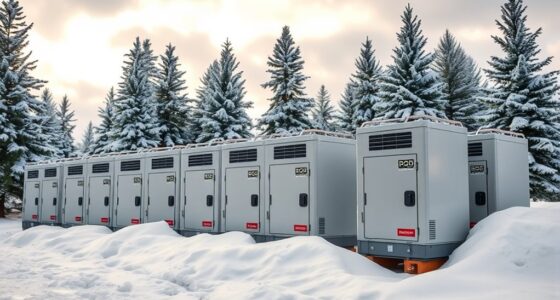
When choosing between above-ground, underground, and vault tanks, consider installation, maintenance, and security. Above-ground tanks are easier and quicker to install, but they need protection from weather and vandalism. Underground tanks save space but require complex installation and professional maintenance. Vault tanks are highly secure with reinforced structures, though more costly and involved to install. Understanding these differences helps you select the right tank; keep exploring to get detailed insights.
Key Takeaways
- Above-ground tanks are easier and quicker to install with minimal disruption but are vulnerable to weather and vandalism.
- Underground tanks save space and are aesthetically discreet but involve complex installation and challenging maintenance access.
- Vault tanks offer high security and durability, suitable for high-traffic or sensitive environments, requiring precise engineering.
- Routine inspections differ: above-ground tanks are straightforward, underground tanks need professional checks, vaults require specialized assessments.
- All tank types require tailored maintenance to ensure safety, prevent leaks, and optimize longevity, considering their specific placement and design.

When choosing between different tank types, understanding their unique features and capabilities is vital. Each option—above-ground, underground, and vault tanks—serves different needs and environments, so you need to consider factors like space, accessibility, safety, and long-term maintenance. Your decision will influence not only how you install the tank but also how you manage ongoing maintenance procedures to guarantee safety and efficiency.
Above-ground tanks are typically the easiest to install because they don’t require extensive excavation or foundation work. During tank installation, you can position these tanks quickly and with minimal disruption to your property. They’re accessible for inspection and maintenance, which simplifies routine maintenance procedures such as cleaning, checking for leaks, or testing the tank’s integrity. Because they are exposed, you need to think about protection against weather, vandalism, or accidental damage, which might involve additional safety features or coverings. Maintenance procedures tend to be straightforward—visual inspections, cleaning, and repairs are more accessible since the tank is above the ground. However, because they are more exposed, they may require frequent checks to prevent corrosion or deterioration, especially if they’re made from metal.
Underground tanks are more discreet, saving space and providing a safer, more aesthetic solution. Installing them involves more complex tank installation procedures, including excavation and proper backfilling to prevent shifting or damage. Once installed, underground tanks are less susceptible to environmental factors like temperature fluctuations and vandalism, but maintenance procedures become more challenging. Access points are limited, often requiring special equipment or excavation for inspections or repairs. Regular maintenance is vital to prevent issues like sediment buildup or leaks, which are harder to detect underground. You’ll need to schedule periodic inspections, sometimes involving professional help, to guarantee the tank remains in good condition. Proper tank installation is essential here to avoid future problems, and routine maintenance procedures should be carefully planned to minimize disruption and cost.
Vault tanks are specialized structures often used in high-security or high-traffic settings. They combine features of underground tanks with reinforced, secure enclosures. Installing a vault tank involves precise engineering, often requiring both tank installation expertise and structural reinforcement. Maintenance procedures include routine checks for structural integrity and security, as well as the standard tasks of cleaning and leak detection. Because vault tanks are enclosed and protected, they tend to require less frequent maintenance but demand more specialized inspections. The initial installation process is more involved than for above-ground tanks, but the durability and security benefits can outweigh the complexity. Regular maintenance is critical to guarantee that the vault remains secure and functional, especially in environments where safety and security are priorities.
Frequently Asked Questions
What Are the Environmental Impacts of Each Tank Type?
You should consider that above-ground tanks generally have a smaller environmental footprint since they’re easier to inspect and maintain, reducing potential leaks. Underground tanks can cause ecosystem disruption if leaks occur, contaminating soil and water sources. Vault tanks offer added protection, but their installation can also disturb surrounding environments. Overall, each tank type impacts the environment differently, so choosing the right one depends on balancing safety, maintenance, and minimizing ecosystem disruption.
How Do Installation Costs Compare Among Tank Options?
You’ll find that installation expenses vary widely depending on your choice. Above-ground tanks typically have a lower initial investment and are quicker to install, saving you time and upfront costs. Underground tanks often require more extensive work, increasing initial investment and installation expenses. Vault tanks tend to fall somewhere in between, with costs influenced by their complexity and location. Consider your budget and site conditions to choose the best fit for your needs.
Which Tank Type Offers the Best Long-Term Durability?
You’ll find vault tanks offer the best long-term durability because they’re made from robust materials like reinforced concrete or fiberglass, which resist corrosion and harsh conditions. They also require less space for maintenance compared to underground tanks. Their sturdy tank material guarantees longevity, making them a reliable choice, especially if space is limited or you want a durable solution that withstands environmental factors over time.
Are There Specific Regulations for Underground Tank Installation?
Yes, there are specific regulations for underground tank installation. You need to guarantee regulation compliance by following local, state, and federal safety standards. This includes obtaining permits, adhering to proper installation procedures, and conducting regular inspections. You should also meet environmental protection requirements to prevent leaks and contamination. Staying current with these regulations helps you maintain safety standards and avoid penalties, ensuring your underground tank remains compliant and safe over time.
How Do Maintenance Requirements Differ Between Tank Types?
Think of your tanks as guardians of your fuel supply. For underground tanks, you must focus on corrosion prevention since moisture and soil can cause damage, requiring regular inspections and protective coatings. Access maintenance for above-ground tanks is easier, allowing quicker inspections and repairs. Vault tanks demand careful access considerations to guarantee safety and containment. Your maintenance routine should adapt to each tank’s environment, ensuring longevity and reliable performance.
Conclusion
Choosing between above-ground, underground, and vault tanks is like picking the right tool for a job—you need the one that fits your needs best. Above-ground tanks are easy to access, underground tanks save space, and vault tanks offer added security. Consider your budget, space, and safety needs carefully. By understanding each type, you can confidently select the tank that’s perfect for your situation, ensuring efficient and safe storage just like a well-organized toolbox.