TL;DR

Get backup power and energy gear delivered free with Prime
- Fast, free delivery on millions of items
- Prime Video, Amazon Music and more included
- Member-only deals all year
Portable inverter generators can provide temporary electricity during an outage for selected household essentials such as a refrigerator, lights, and router. Choose by continuous wattage and appliance startup needs, plan a safe connection and fuel supply, and operate the generator outdoors at the clearance specified by its maker.
A storm can leave your kitchen dark while the refrigerator keeps clicking in the silence. A portable inverter generator can bring back power for selected essentials, but choosing one by its biggest headline wattage can leave you with a machine that still cannot start the appliance you need.
This guide explains how to size a generator around your actual household loads, what inverter power means, and how to connect and operate the unit safely. You’ll also get practical ways to plan fuel, noise, and maintenance before an outage turns a quiet evening into a scramble.
Think of a portable generator as a short-term tool with a clear job: keeping a chosen set of appliances running. The right setup can make a dark, warm room more manageable; the wrong placement or connection can put people at serious risk.
List the appliances you need and compare their combined running watts and largest startup surge with the generator’s continuous and starting ratings.
Treat an inverter’s steadier output as useful for many electronics, then check the generator and device specifications for compatibility.
Operate the generator outdoors at the manufacturer’s specified clearance and keep working CO alarms inside the home.
Use suitable outdoor cords for individual appliances or have a qualified electrician install and check a transfer switch or interlock for selected circuits.
Compare runtime at a stated load, plan approved fuel storage, and maintain and test the generator before an outage.
Choose a generator that can start your essential appliances
Portable inverter generators for home backup should be sized around the appliances you want to run at the same time and the brief surge needed to start motor-driven equipment. Add the running watts of your planned loads, then check that the generator’s continuous rating and starting capacity can handle the largest startup demand.
For example, a refrigerator, a few LED lamps, a router, and phone chargers may fit a smaller unit, while a sump pump or window air conditioner can change the calculation. A refrigerator might use modest power once running but draw more for a moment when its compressor kicks on. Read the appliance label or manual; don’t treat a generator’s peak rating as power it can provide all day.
Running watts describe ongoing demand. Starting watts describe a short surge, often from a motor. If your generator sits at its limit, another appliance starting at the wrong moment can overload it or trip its protection. Leave some room for variation, and stagger loads where practical: let the refrigerator start before you switch on another motor.
A simple paper list helps. Imagine a summer outage: you decide the refrigerator, one fan, kitchen lights, and a router matter most, while the electric range and central air can wait. That clear priority list gives you a more useful shopping target than choosing a generator based on the square footage of your house.
Products Worth Considering

Dyson Car+Boat Cordless Handheld Vacuum

Blueair Blue Pure 511i Max Smart Air Purifier

Philips Hue Festavia Globe Outdoor String Lights, 8 Bulbs, 22 ft
As an affiliate, we earn on qualifying purchases.
Understand what inverter power does for electronics
An inverter generator makes electrical power internally, then converts it to AC output with controlled voltage and frequency. That design can provide steadier power for many modern electronics, while allowing the engine to slow down when demand falls. The result can mean less noise and fuel use at light loads compared with a conventional portable generator.
That steadier output is useful when your outage setup includes a laptop, television, or router, but the word inverter is not a promise that every device will work with every model. Check the generator’s electrical specifications and the appliance maker’s advice, especially for sensitive equipment. A surge protector may be appropriate for some electronics, but it does not fix an undersized generator.
Consider a family using a laptop for work while the refrigerator cycles on and off. The generator may run quietly while the laptop charges, then adjust as the compressor starts. If the household also switches on a high-demand appliance, that extra load may exceed capacity. Stable output and sufficient output are separate questions; check both.
Portable inverter generators are often quieter than open-frame conventional models, but “quiet” depends on the model, load, and measurement distance. Compare published sound ratings under similar conditions. A unit that sounds gentle on a product page may still be a noticeable engine near a patio at night.
Keep carbon monoxide away from your home and family
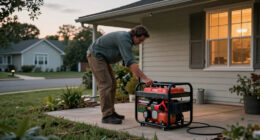
Run a portable generator outdoors, well away from doors, windows, vents, and attached garages, following the manufacturer’s clearance instructions and local fire-safety guidance. Generator exhaust contains carbon monoxide (CO), an odorless gas that can be fatal. An open garage door does not make a garage a safe operating location.
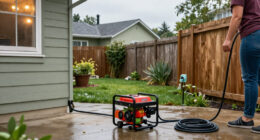
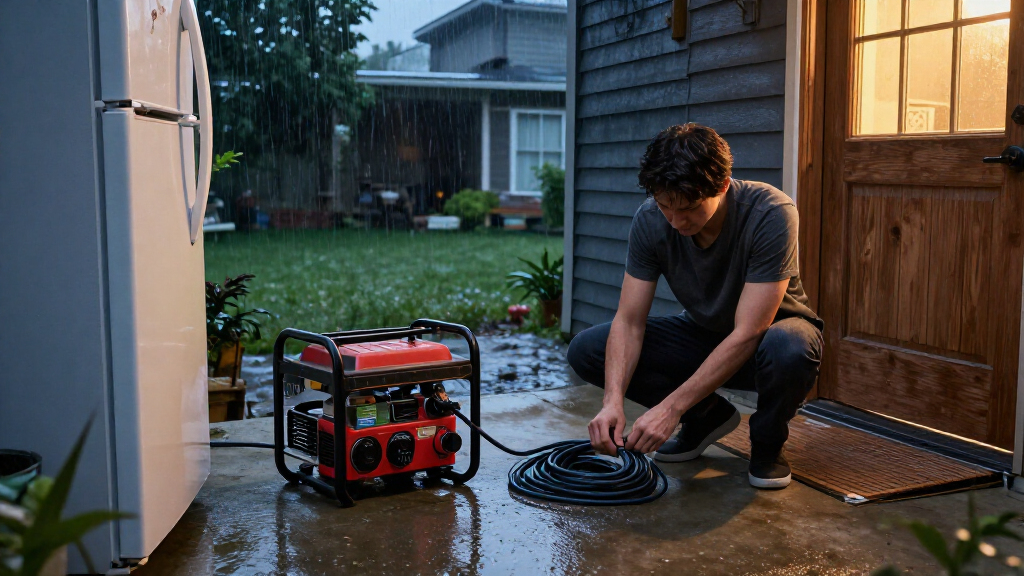
Picture a generator humming beside the kitchen door during a rainy outage. Exhaust can enter through an opening or travel toward another part of the house, even if you cannot smell it. Put working CO alarms inside the home, especially near sleeping areas, and test them before storm season rather than waiting for a warning beep in the dark.
Keep the machine dry using a cover or setup designed for generator operation that does not trap exhaust or block ventilation. Never improvise an enclosure that turns the unit into a running engine inside a small box. Follow the maker’s placement and operating instructions, and use local safety guidance when rain or wind complicates the setup.
Never run a generator indoors, in a garage, or in another enclosed or partly enclosed space. CO alarms add protection, but they do not make unsafe placement safe.
For example, if the wind shifts while the generator is running near a doorway, move it only according to the manual’s safe shutdown and handling instructions. Give placement the same attention as wattage: a generator that powers the lights is no help if exhaust puts occupants at risk.
Connect appliances without creating a dangerous backfeed
You can power individual appliances by plugging them directly into the generator with outdoor extension cords rated for the load. To power selected household circuits through your electrical panel, use a properly installed transfer switch or interlock fitted and checked by a qualified electrician. Never plug a generator into a wall outlet to energize house wiring.
Backfeeding can send electricity into utility lines and endanger workers or neighbors; it can also damage equipment. A homemade arrangement does not become safe because you switch off a breaker or because the neighborhood has lost power. Electrical connections to a panel require the right equipment and professional installation.
For a direct-cord setup, check that each cord is in good condition, has the correct gauge and length for the load, and is intended for outdoor use. Keep connections protected from moisture without covering the generator or restricting its ventilation. For instance, a long, thin cord to a refrigerator can cause problems under load; use a cord selected for the appliance’s demand and the run length.
Before an outage, decide which approach fits your home. If you only need to run a fridge and a lamp, cords may be enough. If you want to power selected circuits such as a furnace fan or kitchen lighting, ask a qualified electrician about a transfer switch or interlock and the generator capacity that matches it. That conversation turns a vague backup plan into a defined, safe connection.
Plan fuel and runtime before the lights go out
A generator’s runtime depends on its model, tank size, fuel, operating conditions, and the load it carries. Compare advertised runtime figures with the stated load percentage, because a maximum-runtime claim at a light load may not reflect an evening spent running a refrigerator and several other appliances.
Gasoline is common, and some models also support propane or dual-fuel operation. Neither fuel is right for every household: gasoline is widely available but needs careful storage and can degrade, while propane may suit someone who already stores it for other uses. Output and runtime can differ by fuel, so check the specifications for each mode.
Imagine a family that expects a short outage but gets through the night. Their generator plan should include how they will store approved fuel containers, where they can keep them under local rules, and when they will refuel. Turn the generator off and let it cool before adding fuel. Keep refueling instructions in the manual handy; a hot engine and hurried decisions are a poor combination.
For long-term storage, follow the maker’s directions for fuel treatment or draining the system. Write down the last maintenance date and test-start the unit outdoors on the recommended schedule. If you buy a dual-fuel model, try the intended fuel setup in advance so that a propane regulator, hose, or connection does not become a surprise during an outage.
Compare a direct-cord setup with a panel connection
Direct cords suit a short list of individual appliances, while a transfer switch or interlock lets a professionally installed setup serve selected household circuits. The best fit depends on what you need during an outage, your generator’s capacity, and whether you want to manage individual cords or use designated circuits.
Take a household that wants a refrigerator, a lamp, and a phone charger. A few correctly rated outdoor cords may meet that need without connecting to the panel. A household that also wants a furnace blower or several fixed circuits should ask an electrician to design and install an appropriate transfer setup.
| Connection method | Best suited to | What to check |
|---|---|---|
| Outdoor extension cords | A few standalone appliances | Outdoor rating, cord condition, gauge, length, and load |
| Transfer switch or interlock | Selected household circuits | Professional installation, compatibility, capacity, and local requirements |
| Plugging into a wall outlet | Not a safe connection method | Do not use; it can backfeed the grid |
The table helps clarify the choice, but it cannot size your generator or inspect your wiring. For example, a panel connection may offer convenience, yet it only helps if the generator can supply the circuits you select. Ask an electrician to match the connection equipment to the intended loads and follow applicable code and permit requirements.
Make portability, noise, and maintenance part of the buying decision
A generator is portable only if you can move it safely to the right outdoor location and maintain it. Compare weight, handles, wheel kits, and lifting guidance, along with sound ratings measured at a stated distance and load. These details matter when the unit must cross a gravel drive or sit outside a bedroom window during a long outage.
Consider a homeowner who chooses a heavier model for more capacity, then discovers it takes two people to move from storage to its operating spot. A wheel kit may help on pavement, but it may not roll easily over grass or stairs. Think through the actual route and storage location before buying.
Routine care may include oil changes, air-filter cleaning, spark-plug checks, and safe test runs, all on the maker’s schedule. A generator that has sat untouched in a shed may fail to start just when a storm knocks out power. Keep the manual, maintenance notes, and any required accessories together so you do not hunt for a wrench in the dark.
Newer options include electric start, monitoring displays, approved parallel operation, and CO detection that can shut a unit down under certain conditions. These features can help, but they do not replace safe placement, a working CO alarm, or the correct connection. Confirm current specifications, recall information, warranty terms, and local requirements before you buy.
Frequently Asked Questions
What size inverter generator do I need for my house?
There is no single size for every home. List the appliances or circuits you plan to use, add their running watts, and account for the largest startup surge; compare those figures with the generator’s continuous and starting ratings. An electrician can help size a unit for a transfer-switch connection.
Can a portable inverter generator run a refrigerator?
Often, if the generator has enough continuous output and capacity for the refrigerator’s compressor startup surge. Check the appliance label or manual and the generator specifications. Leave capacity for other loads that may run at the same time.
Can I run a generator in my garage with the door open?
No. A garage is not a safe operating location, even with the door open, because generator exhaust contains odorless carbon monoxide. Operate the unit outdoors at the clearance specified by the maker and follow local safety guidance; keep working CO alarms inside the home.
Can I plug a generator into a wall outlet?
No. That can backfeed electricity through household wiring into utility lines, endangering workers and neighbors and potentially damaging equipment. Plug individual appliances into suitable outdoor cords or have a qualified electrician install an appropriate transfer switch or interlock.
Is propane better than gasoline for backup power?
Neither fuel is universally better. Gasoline is widely available but needs careful storage and may degrade; propane may suit households that already store it for other uses. On a dual-fuel model, check how output and runtime change with each fuel.
How long will a portable generator run on one tank?
Runtime varies with the model, fuel, tank size, operating conditions, and load. Compare the manufacturer’s runtime figures at a stated load percentage instead of relying on a single maximum-runtime claim. Heavier loads generally use fuel faster.
Conclusion
Choose a portable inverter generator by the appliances you need, the surge they demand, and the safe way you will connect them. Write down your essential loads, confirm the ratings, and plan where the unit will run and how you will fuel it before the next storm arrives.
A good backup plan is more than a quiet engine in the shed. It is a refrigerator still humming, a lamp glowing, and exhaust staying far from the people sleeping inside.