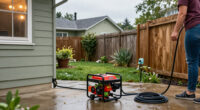
Use this guide to prepare a portable inverter generator for an outage, connect selected household loads safely, and shut the unit down correctly. It is for homeowners who can follow appliance manuals and basic electrical instructions; the planning and setup take about 1–2 hours, with refueling time depending on the model and outage length.

Get backup power and energy gear delivered free with Prime
- Fast, free delivery on millions of items
- Prime Video, Amazon Music and more included
- Member-only deals all year
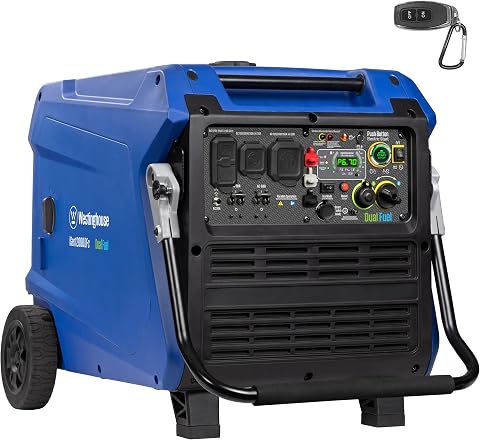
Westinghouse iGen12000DFc Dual Fuel Portable Inverter Generator
- ✔ Fuel: Gasoline or propane
- ✔ Running output: 9,000 watts gasoline; 8,100 watts propane
- ✔ Peak output: 12,000 watts gasoline; 11,000 watts propane

Oxseryn 4400-Watt Gasoline Inverter Generator
- ✔ Fuel: Gasoline
- ✔ Running output: 3,400 watts
- ✔ Peak output: 4,400 watts

PowerSmart 4000W Portable Inverter Generator
- ✔ Fuel: Gasoline
- ✔ Running output: 3,200 watts
- ✔ Starting output: 4,000 watts
A portable generator can power selected appliances, but it does not automatically supply a whole home. The right setup depends on the generator’s rated output, the appliances’ starting loads, and an approved connection method. Always follow the generator and transfer equipment manuals, plus local electrical and fuel rules.
Difficulty: Intermediate | Time: 1–2 hours for planning and a first practice run
What You’ll Need
Tools & Materials:
- Portable inverter generator with user manual
- Fresh fuel specified by the generator manufacturer
- Outdoor-rated, correctly sized extension cords with intact insulation, if using cord-connected appliances
- Approved inlet and transfer switch installed by a qualified electrician, if powering household circuits
- Flashlight and basic outage supplies
Knowledge:
- How to read an appliance nameplate or manual for running and starting watts
- How to operate the generator’s controls as described in its manual
- Which appliances and circuits you intend to power
Check local requirements and your generator’s manual before use. Do not connect a generator to a home outlet or wiring by plugging it into a wall receptacle. A transfer switch or approved interlock and inlet must be installed and used as specified. Carbon monoxide can be fatal; operate the generator outdoors, far from doors, windows, and vents, with exhaust directed away from the building. Never run it in a home, garage, basement, shed, or other enclosed or partly enclosed area.
Westinghouse iGen12000DFc Dual Fuel Portable Inverter Generator
For households that want to cover more than a few essential devices, the Westinghouse iGen12000DFc is the clear output leader here. Its 9,000 gasoline running watts and 8,100 propane running watts are well above the Oxseryn and PowerSmart, making it better suited to a broader set of planned loads. It also provides 120/240-volt output and transfer switch ready outlets, features that can support a more integrated backup setup when the installation is compatible.Fuel flexibility is its other major advantage. We can use gasoline or propane, which gives outage planning more options than either single-fuel alternative. Electric and remote start, an LED display, and a CO sensor add useful convenience and safety features. The listed less-than-3% THD is also relevant for sensitive electronics, though we should still follow equipment guidance.The tradeoff is scale: its 457 cc engine and high output make it a much bulkier proposition than the 50- to 56-pound smaller models, and a 7.9-gallon tank means it still needs fuel storage and refueling logistics. The supplied runtime is up to 19 hours at 25% load on gasoline, so it should not be read as a full-load estimate. Choose it when output and fuel choice justify the size; skip it if easy solo handling is the priority.
Pros:
- 9,000 gasoline running watts and 8,100 propane running watts
- Dual-fuel operation provides a choice of fuel
- 120/240-volt output and transfer switch ready outlets
- Remote and electric start, display, and CO sensor
Cons:
- Large engine and high output make it bulky to move and store
- Listed 19-hour runtime applies at 25% load on gasoline, not heavy demand
Best for: Households seeking higher-capacity backup for several planned loads and who can accommodate a large wheeled generator.
Not ideal for: Buyers who need a lightweight unit for frequent lifting, only need a few small devices powered, or lack space for a larger generator.
Bottom line: We rank the Westinghouse first for home backup because its running output, dual-fuel choice, and 120/240-volt capability offer the broadest coverage in this lineup, provided its size fits the plan.
“We rank the Westinghouse first for home backup because its running output, dual-fuel choice, and 120/240-volt capability offer the broadest coverage in this lineup, provided its size fits the plan.”
Oxseryn 4400-Watt Gasoline Inverter Generator
The Oxseryn 4400 is the middle ground for buyers who want more running capacity than the PowerSmart without moving up to the Westinghouse’s much larger platform. Its 3,400 running watts give it a modest edge over PowerSmart’s 3,200, which can help when a backup plan includes several smaller loads. The four outlets include AC, DC, and an RV port, so it has some flexibility beyond basic household plug-in use.Its strongest case is the combination of 56-pound weight and a listed runtime of up to 14 hours at 25% load in ECO mode. That runtime exceeds the PowerSmart’s listed up to 8 hours, although the Oxseryn figure is tied to a low load and neither number guarantees outage-long operation. A 2-gallon tank with a gauge also makes fuel monitoring straightforward.There are compromises. It uses gasoline only, lacks the Westinghouse’s much higher output and dual-fuel option, and its open-frame design is listed under 72 dBA at 23 feet. That noise figure is notably higher than PowerSmart’s under-59 dBA listing. For essential loads where portability and longer light-load operation matter, Oxseryn makes sense; buyers wanting quiet operation or a more extensive backup capacity should compare the other two closely.
Pros:
- 3,400 running watts, the highest of the two smaller models
- Up to 14 hours at 25% load in ECO mode
- AC, DC, and RV outlets with a fuel gauge
- 56-pound frame is lighter to handle than the large Westinghouse
Cons:
- Open-frame design with listed noise under 72 dBA at 23 feet
- Gasoline-only fueling and much less output than the Westinghouse
Best for: Buyers who want a portable gasoline generator with slightly more running output than PowerSmart and a longer stated light-load runtime.
Not ideal for: Those prioritizing quiet operation, propane fueling, or capacity for larger home loads.
Bottom line: We recommend the Oxseryn for portable, modest backup loads where its extra 200 running watts over PowerSmart and longer stated light-load runtime matter more than quietness or fuel choice.
“We recommend the Oxseryn for portable, modest backup loads where its extra 200 running watts over PowerSmart and longer stated light-load runtime matter more than quietness or fuel choice.”
PowerSmart 4000W Portable Inverter Generator
When generator noise and manageable size are high priorities, the PowerSmart 4000W stands apart from the other compact pick. Its listed noise level is under 59 dBA at 23 feet, well below the Oxseryn’s under-72 dBA figure. At 50.7 pounds, it is also the lightest of the three, though it still requires sensible placement and safe outdoor operation during an outage.PowerSmart supplies 3,200 running watts and less than 3% THD, with six AC, DC, and USB outlets. That makes it a useful fit for selected essentials and electronics, but it sits just below the Oxseryn in running output and far below the Westinghouse. The small 1.3-gallon tank and listed up to 8-hour runtime are the main operational constraint: extended outages may mean more frequent fuel planning than with Oxseryn’s 2-gallon tank and longer stated runtime.Parallel capability offers a path to more capacity, but the connection kit is sold separately, so the advertised option requires an additional compatible unit and accessory. For a buyer who values lower stated noise, lighter weight, and direct USB access, PowerSmart is more appealing than Oxseryn. For longer operation between refills, the Oxseryn is the better match; for larger backup loads, the Westinghouse is in another class.
Pros:
- Under 59 dBA listed noise at 23 feet
- Lightest model here at 50.7 pounds
- Less than 3% THD and AC, DC, and USB outlets
- Parallel-ready design and lifetime technical support
Cons:
- 1.3-gallon tank and up to 8-hour stated runtime
- Parallel connection kit is sold separately
Best for: Buyers with modest backup needs who value lower listed noise, lighter weight, and USB outlets.
Not ideal for: Households needing extended runtime between refueling, substantially higher output, or a ready-to-use parallel setup.
Bottom line: We place the PowerSmart third overall but first for compact, quieter operation, making it a sensible essential-load choice when its shorter listed runtime is acceptable.
“We place the PowerSmart third overall but first for compact, quieter operation, making it a sensible essential-load choice when its shorter listed runtime is acceptable.”
As an Amazon Associate we earn from qualifying purchases.
Before You Start
Choose the appliances you need most, such as a refrigerator, lights, phone chargers, or a small heating control system. Add their running watts and check the highest starting load; motors in refrigerators and pumps can briefly draw much more power when starting. Keep the combined demand within the generator’s rated output, not just its advertised peak output. If the manual does not give the needed figures, check the appliance documentation or ask the manufacturer.
Install working battery-powered carbon monoxide alarms on every level of the home and near sleeping areas. Keep the generator dry and protected from rain as the manufacturer directs, while maintaining open airflow around it. Do not operate it in wet conditions unless the manual permits the setup and the unit is protected as specified. Keep fuel in approved containers, away from living areas and ignition sources.
Step-by-Step Instructions
Step 1: Read the generator and appliance instructions
Read the generator’s starting, grounding, fueling, outlet, and shutdown instructions. Review the manuals for each appliance you plan to power, including any warning about generator use. Confirm the generator’s rated wattage and the output limits for each receptacle.
Tip: If a manual calls for a particular grounding or neutral arrangement, follow it. Do not add a ground rod or change bonding based on guesswork; ask a qualified electrician when the approved setup is unclear.
Check: You can identify the generator’s rated capacity, correct fuel, starting procedure, and the manufacturer’s requirements for connecting loads.
Step 2: Make a load plan
Write down each appliance, its running watts, and its starting watts when available. Add the running loads you expect to use at the same time, then compare them with the generator’s rated output. Check that the largest likely startup does not exceed the generator’s surge capacity. Plan to start large motor-driven appliances one at a time and switch off lower-priority loads if the generator approaches its limit.
Tip: Watts may be listed on a nameplate or in the manual. For equipment marked in amps and volts, watts are approximately amps multiplied by volts; starting demand can still be higher than that estimate.
Check: Your written list names the appliances to power and stays within the generator and outlet ratings, including likely startup demand.
Step 3: Choose an approved connection method
For a few portable appliances, use outdoor-rated extension cords with the correct wire size and plug rating. Connect each appliance directly to a generator receptacle as the manuals allow. For selected home circuits, have a qualified electrician install a compatible transfer switch or approved interlock and generator inlet, then use that equipment exactly as instructed.
Tip: Never feed home wiring through a dryer outlet, range outlet, or other receptacle using a homemade cord. This can energize utility lines and put household members and line workers at risk.
Check: Every planned load has a suitable connection, and any connection to household circuits uses approved transfer equipment.
Step 4: Position the generator outdoors
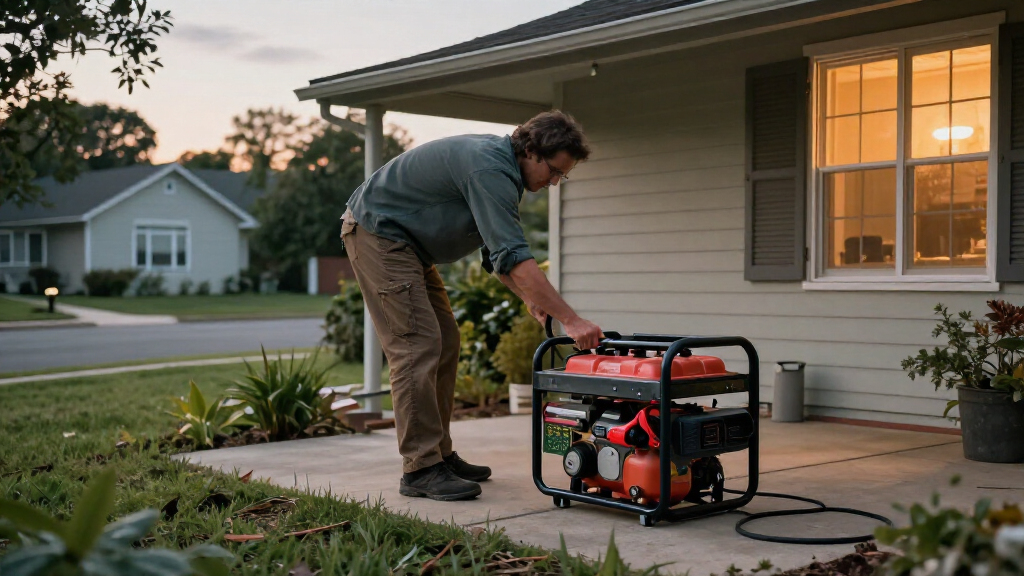
Place the generator outside on a stable, level surface, following the manufacturer’s minimum clearances. Keep it well away from doors, windows, vents, and other openings, and point the exhaust away from the home and occupied spaces. Keep it clear of dry vegetation and materials that could catch fire. Protect it from weather only with a setup allowed by the manual; do not enclose it.
Tip: Wind can carry exhaust back toward the building. Recheck the direction if wind changes, and stop the generator if fumes enter the home or an alarm sounds.
Check: The generator has open airflow around it, exhaust directed away from buildings, and a dry, stable operating position.
Step 5: Inspect and fuel the generator
With the engine off and cool, inspect the housing, cords, plugs, and fuel system for damage or leaks. Confirm that the generator is on a level surface. Add only the fuel specified by the manufacturer, using an approved container and avoiding spills. Tighten the fuel cap and move the container away before starting.
Tip: Do not refuel a running or hot generator. Let it cool for the period specified in its manual, and clean up any spilled fuel before restarting.
Check: There are no visible leaks or damaged connections, and the correct fuel is in the tank with the cap secured.
Step 6: Start the generator with loads disconnected
Turn off or unplug the appliances and switch off generator output controls as directed in the manual. Start the engine using the specified choke, switch, or electric-start sequence. Let it warm up for the recommended time, then enable the outlets or economy mode as the manufacturer directs.
Tip: If the engine does not start, use the troubleshooting steps in the manual. Avoid repeated long cranking attempts, which can drain a starter battery or damage equipment.
Check: The engine runs steadily without warning lights, unusual noise, smoke, or a fuel smell.
Step 7: Connect and add loads in stages
Connect appliances one at a time, or energize household circuits using the approved transfer equipment in the sequence its installer or manual specifies. Start with essential low-demand loads. Then add larger appliances one by one, allowing each motor to start before adding another. Keep the total load within the plan and switch off an appliance before connecting another if capacity is limited.
Tip: Use cords that are intact, fully uncoiled, and rated for the load and outdoor use. Keep connections dry and out of standing water; do not run cords through doors where they can be pinched.
Check: The selected appliances operate normally, and the generator does not overload, stall, or repeatedly trip a breaker.
Step 8: Monitor operation and manage fuel
Check the generator periodically for stable operation, warning indicators, fuel level, and signs of overheating or leakage. Keep the load within its ratings as appliances cycle on and off. Refuel only after shutting the unit down and letting it cool as the manual directs. Maintain clear access to the generator while it runs.
Tip: If you smell fuel, see a leak, hear abnormal knocking, or feel unsafe, disconnect loads if safe, stop the generator, and address the problem before restarting.
Check: The generator remains stable, loads continue to work, and no alarms, leaks, or overheating signs appear.
Step 9: Disconnect loads and shut down
Turn off or unplug appliances, or switch off the supplied household circuits using the approved transfer equipment. Follow the manual’s sequence for disabling output and stopping the engine. Let the unit cool before covering, storing, or refueling it. If the outage continues, restart later by repeating the inspection, placement, and startup steps.
Tip: Do not store fuel in an attached container unless the manufacturer allows it. Follow the manual and local rules for fuel storage and generator maintenance.
Check: The engine is off, connected loads are disconnected, and the generator has cooled before storage or refueling.
Common Mistakes to Avoid
- Exceeding generator capacity when a refrigerator or pump starts. — Include starting demand in the load plan, add motor loads one at a time, and turn off lower-priority appliances when needed.
- Running the generator in a garage, near an open window, or under an enclosed cover. — Operate it outdoors in an open area with exhaust directed away from the home, following the required clearances in the manual.
- Connecting the generator to home wiring through a wall outlet. — Use cord-connected appliances or a properly installed transfer switch or approved interlock and inlet.
- Refueling while the generator is hot or running. — Stop the engine and wait for the cooling period specified by the manufacturer before adding fuel.
Troubleshooting
Problem: The generator will not start.
Solution: Disconnect loads, check the fuel level and fuel shutoff, and follow the manual’s choke and starting sequence. Inspect for a warning condition or stale fuel. Stop if you find a leak or damaged part.
Problem: The generator stalls or an overload indicator appears.
Solution: Turn off or disconnect loads, especially motor-driven appliances. Restart according to the manual and reconnect fewer loads in stages, staying within rated output and startup limits.
Problem: A connected appliance does not run or a breaker trips.
Solution: Turn off the appliance and inspect the cord and plug for damage or a loose connection. Check the generator’s outlet and breaker instructions. Reduce the load before resetting a breaker once; if it trips again, stop and consult the manual or a qualified technician.
Problem: A carbon monoxide alarm sounds or exhaust enters the home.
Solution: Move people and pets outside to fresh air immediately and contact emergency services if anyone feels ill. Do not re-enter to shut down the generator. Once responders say it is safe, relocate the generator farther away and correct the exhaust direction before use.
What Success Looks Like
The chosen appliances operate normally within the generator’s rated capacity. The generator remains outdoors with open airflow and exhaust directed away from occupied spaces. No overload indicators, tripped breakers, fuel leaks, or carbon monoxide alarms occur. Any household circuits are supplied through approved transfer equipment, and the generator shuts down and cools before storage or refueling.
Next Steps
After use, follow the manual’s maintenance schedule for oil, filters, spark plugs, battery care, and fuel handling. Store the generator clean and dry, and store fuel only in approved containers in a location allowed by local rules. Before storm season, perform a brief practice run outdoors, inspect cords and transfer equipment, test carbon monoxide alarms, and refresh your load plan as appliances or household needs change. Arrange service if the generator shows repeated starting, output, or fuel system problems.
Frequently Asked Questions
Can a portable inverter generator power my whole house?
Some larger units may support many household loads, but capacity and connection requirements vary. Most portable units are best used for selected appliances or circuits. Compare running and starting demand with rated output, and use an electrician-installed transfer setup for household circuits.
Can I plug the generator into a regular home outlet?
No. Do not use a cord to connect a generator output to a wall receptacle. Use cords directly to appliances or approved transfer equipment installed for the purpose.
How far from the house should the generator be?
Follow the clearance in the generator manual and local fire guidance. Place it outdoors, away from doors, windows, and vents, with exhaust directed away from the building. Never operate it in an enclosed or partly enclosed space.
Can I run a refrigerator and a space heater at the same time?
Only if their combined running demand and the refrigerator’s starting demand fit within the generator’s ratings and outlet limits. Check each appliance’s nameplate or manual, and add loads in stages. Many space heaters draw substantial power, so they may leave little capacity for other appliances.
Can I leave the generator running overnight?
Follow the manufacturer’s limits for continuous operation, refueling, and maintenance. Keep it outdoors and monitored, with working carbon monoxide alarms in the home. Never refuel it while hot or running, and do not run it if weather protection or placement blocks airflow.
Fall Picks

Philips Hue Essential Starter Kit with Bridge and 4 E26 Smart Bulbs
As an affiliate, we earn on qualifying purchases.