
NEC Article 702 guides how you install and operate optional standby systems that supply backup power to critical loads during outages. It guarantees your systems are safe, reliable, and properly transferred without overloads or hazards. You need to follow rules on wiring, protective devices, labeling, and segregation of circuits. Proper capacity planning and regular testing are also essential. Keep exploring, and you’ll discover how to implement these standards effectively for your emergency power solutions.
Key Takeaways
- NEC Article 702 specifies installation, wiring, and safety standards for optional standby emergency power systems.
- It mandates seamless, safe load transfer between normal and backup power sources using listed transfer equipment.
- Proper wiring methods, protective devices, and clear labeling are required for system safety and reliability.
- Emergency circuits must be segregated from normal circuits and remain accessible for maintenance and emergency use.
- Backup systems must be adequately rated, tested regularly, and maintained to ensure reliable operation during power outages.

NEC Article 702 is a critical section that addresses the installation and safety requirements for emergency systems in electrical wiring. If you’re contemplating or managing an optional standby system, understanding this article is indispensable. These systems provide backup power, guaranteeing critical loads remain operational during power outages. Whether for a commercial building, hospital, or data center, proper installation and adherence to NEC standards help prevent hazards and guarantee reliable operation.
One key aspect of NEC 702 is the emphasis on load transfer. When switching from the utility supply to backup power, the transfer must be seamless and safe. This process, called load transfer, involves disconnecting the normal power source and connecting the emergency or standby source. The code mandates that transfer equipment must be listed and installed correctly to prevent backfeeding or electrical faults. You need to make certain that transfer switches are properly rated for the load they serve and are capable of handling the transfer without causing overloads or damage.
Load transfer must be seamless, safe, and properly rated to prevent backfeeding and electrical faults.
The code also emphasizes the importance of proper wiring methods to prevent accidental energization of circuits. You should use approved connectors, wiring methods, and protective devices designed for emergency systems. This not only protects personnel but also guarantees that the backup power source can reliably supply the intended loads without interference or risk. When installing backup power sources like generators or batteries, it’s essential to follow manufacturer instructions and NEC guidelines to avoid potential safety hazards.
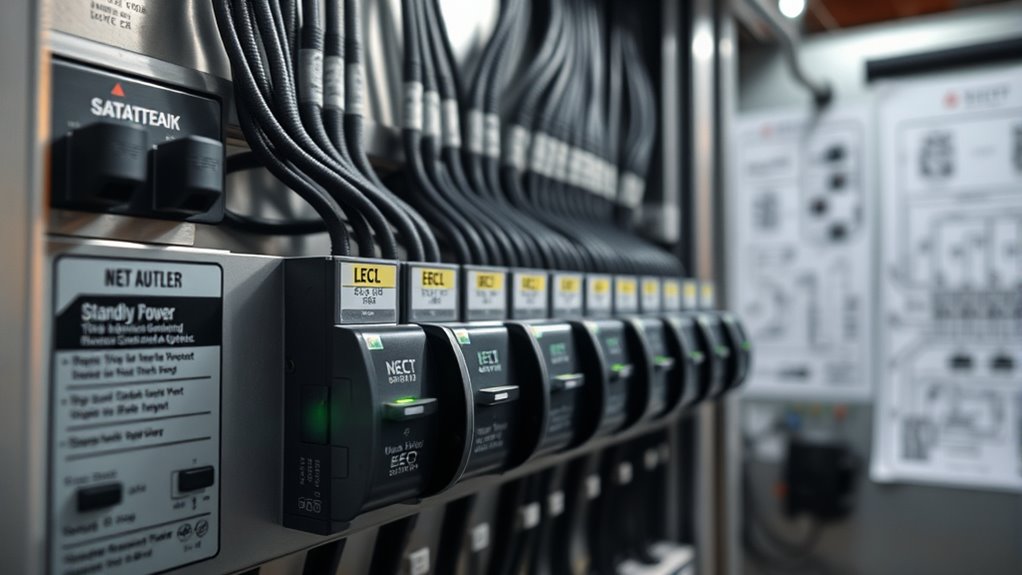
Another important point is that the transfer switch and associated wiring must be readily accessible and clearly labeled. This facilitates maintenance and guarantees that during an emergency, personnel can quickly identify and operate the system correctly. Proper segregation of emergency circuits from normal circuits is also required to prevent accidental energization of critical loads when not needed. Additionally, understanding the load capacity requirements is crucial to ensure the backup system is adequate for the critical loads it is designed to support.
Furthermore, you need to take into account the capacity of your backup power system relative to the load it supports. The system must be capable of handling the entire designated emergency load during outages. Overloading the backup power source can lead to failures or dangerous conditions. Regular testing and maintenance are mandated by NEC to verify that the system can perform load transfer reliably when needed.
Frequently Asked Questions
How Often Should Optional Standby Systems Be Inspected and Tested?
You should inspect and test your optional standby systems at least annually, following the recommended inspection frequency. Regular testing procedures make certain your system operates reliably during an outage. Make sure to check all components, including transfer switches and controls, according to manufacturer instructions. Document your inspections and tests, and promptly address any issues found, to maintain system readiness and compliance with safety standards.
Are There Specific Requirements for Outdoor Versus Indoor Standby Systems?
You might think outdoor and indoor standby systems follow the same rules, but they actually have distinct requirements. Outdoor enclosures need to withstand environmental conditions, so they require weatherproofing and corrosion resistance. Indoor systems must comply with space and ventilation standards. Always verify outdoor enclosures are rated for the environment and that indoor setups meet compliance standards. These differences help keep your standby systems safe and reliable in any location.
Can an Existing System Be Retrofitted to Meet NEC Article 702?
Yes, you can retrofit an existing system to meet NEC Article 702, but you’ll face retrofit challenges like ensuring system compatibility with current codes and infrastructure. You need to evaluate whether your existing setup can accommodate new components and wiring requirements. Proper planning and possibly upgrading parts of your system will help you achieve compliance, but it’s essential to consult a professional to navigate the complexities and avoid safety issues.
What Are the Common Causes of System Failure in Standby Setups?
Like a ship without a rudder, your standby system can fail unexpectedly. Common causes include generator malfunctions, which might be due to worn parts or lack of maintenance, and wiring faults, such as loose connections or damaged insulation. These issues disrupt power flow, leaving you in the dark when you need backup most. Regular inspections and maintenance help keep your system sailing smoothly through any storm.
How Does NEC Article 702 Impact System Maintenance Procedures?
NEC Article 702 impacts your system maintenance procedures by setting requirements for maintenance protocols and testing frequency. You need to regularly inspect, test, and maintain the standby system to guarantee compliance and reliability. Following these guidelines, you’ll keep your system operational during power outages and prevent failures. Adhering to the code ensures safety, efficiency, and readiness, making your maintenance routine more structured and effective.
Conclusion
By understanding NEC Article 702, you guarantee your optional standby systems are installed safely and compliant. Remember, “Forewarned is forearmed,” so staying informed helps you avoid costly mistakes and hazards. Keep up with code updates and always prioritize safety. When you know the rules, you’re better equipped to make smart choices. In the end, understanding these standards isn’t just about compliance; it’s about protecting your property and loved ones.