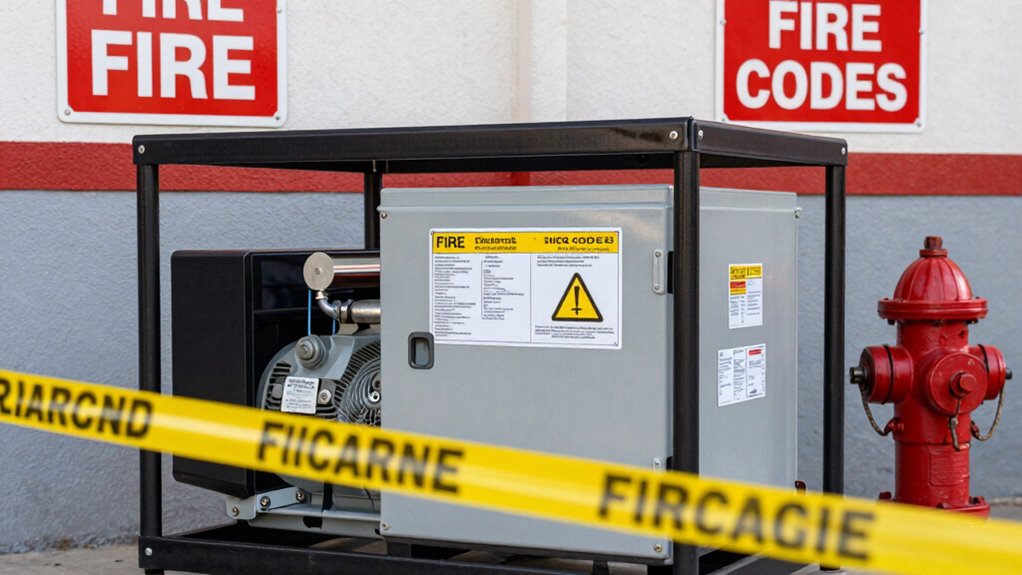

Local fire codes influence your generator installation by setting specific requirements for fuel storage, exhaust vent placement, and safe distances from buildings. You need to follow these regulations to prevent fire hazards and ensure compliance with regional safety standards. Proper setup helps reduce the risk of ignition from sparks, heat, or fumes. Staying within these guidelines is essential for safety and legality, and there’s more to discover about how these codes can impact your installation and safety measures.

Get backup power and energy gear delivered free with Prime
- Fast, free delivery on millions of items
- Prime Video, Amazon Music and more included
- Member-only deals all year
Key Takeaways
- Local fire codes specify safe distances for fuel storage and generator placement to prevent fire hazards.
- Regulations mandate proper venting of exhaust systems away from windows and combustible materials.
- Compliance with regional standards ensures safe installation and reduces legal risks.
- Fire safety guidelines influence landscaping practices to minimize fire spread around generators.
- Adhering to local codes ensures proper safety practices, reducing the risk of ignition and fire incidents.
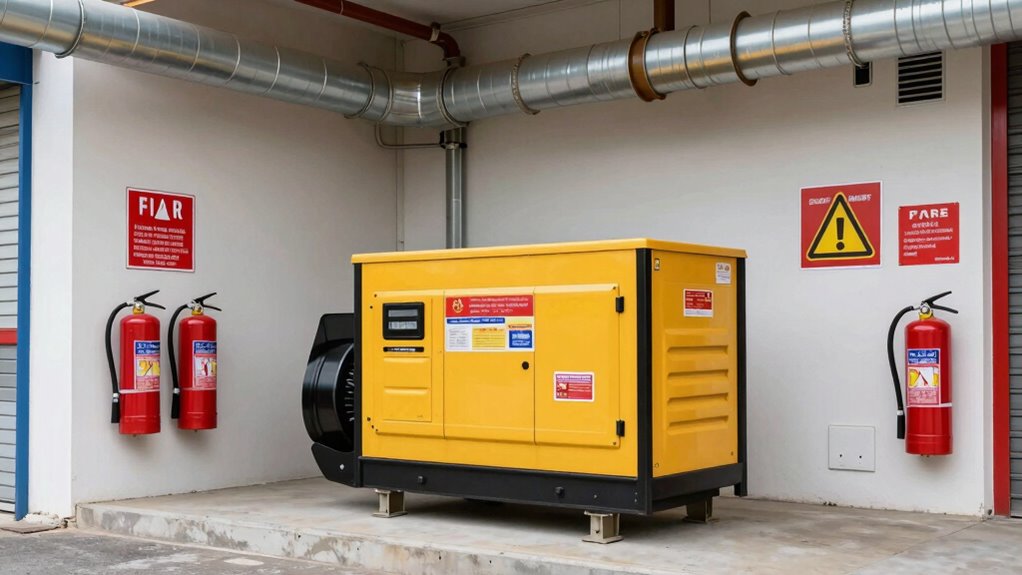
Fire codes also influence how you manage fuel storage and exhaust systems. For example, fuel tanks must be placed at a safe distance from buildings, and exhaust vents need to direct fumes away from windows and ventilation intakes. These rules aren’t arbitrary; they’re based on extensive research into fire behavior and safety practices. Proper installation ensures that any sparks or heat generated by the generator won’t ignite combustible materials nearby. Understanding fire behavior and safety practices is crucial in designing your installation to meet these standards effectively. Additionally, adherence to regional safety standards helps prevent incidents that could result from improper venting or fuel storage. Following landscaping guidelines can also reduce fire hazards around your setup.
Frequently Asked Questions
Are There Different Fire Code Requirements for Residential vs. Commercial Generator Installs?
Yes, there are different fire code requirements for residential versus commercial generator installs. You need to prioritize generator safety and fire prevention measures specific to each setting. Commercial installations often have stricter rules, including larger clearance zones, fire-rated enclosures, and specialized wiring. Residential codes typically focus on safe placement and proper ventilation. Adhering to these codes ensures your generator operates safely, reducing fire risks and promoting effective fire prevention in both environments.
How Often Do Fire Codes for Generator Installations Typically Change?
Fire codes for generator installations typically change every few years, depending on updates to safety standards and local regulations. You should stay informed by reviewing maintenance schedules and inspection procedures regularly, as these updates often influence code revisions. It’s crucial to consult local authorities or fire departments periodically to ensure your generator setup complies with current fire codes, helping you maintain safety and avoid potential violations.
Do Fire Codes Vary Significantly Between Local Jurisdictions?
Fire codes do vary considerably between local jurisdictions due to jurisdictional differences and fire code history. You’ll find that some areas enforce stricter safety standards, while others may have more lenient rules. These differences impact generator installation requirements, meaning you need to check with local authorities to guarantee compliance. Understanding jurisdictional differences helps you avoid potential fines or safety issues, making your installation safer and code-compliant.
Are There Exemptions or Special Permissions for Certain Generator Types?
Did you know that some generator exemptions and special permissions exist? You might qualify for generator exemptions if your unit meets specific safety standards or falls into a designated category, like portable or emergency generators. Local fire codes sometimes grant special permissions, allowing you to bypass certain restrictions. It’s crucial to check with your local authority to understand these exemptions and permissions, ensuring your installation remains compliant while meeting your power needs.
How Do Fire Codes Impact the Cost of Generator Installation?
Fire codes can increase your generator installation costs by requiring strict fuel safety measures, such as specialized fuel storage or containment systems, and mandated clearance zones. You’ll also need to navigate permit processes, which may involve inspections and additional fees. These codes guarantee safety but can add to your expenses, so planning for potential costs related to permits and safety upgrades helps you avoid surprises during installation.
Conclusion
Understanding fire codes is like tending a flame—if you ignore them, the risk of disaster grows. When you follow the guidelines, you’re not just complying; you’re building a shield of safety around your home and loved ones. Think of fire codes as the steady hand guiding your generator’s placement, ensuring it’s a beacon of power, not a spark of danger. Respecting these rules keeps your safety flame burning bright and strong.
Columbus Day / Indigenous Peoples' Day Picks
long weekend sales
As an affiliate, we earn on qualifying purchases.