
TL;DR

Get backup power and energy gear delivered free with Prime
- Fast, free delivery on millions of items
- Prime Video, Amazon Music and more included
- Member-only deals all year
A Livingetc report explains task lighting as focused illumination that supports a specific activity, rather than a particular fixture style. Designers say it can be incorporated throughout the home and should be planned around residents’ routines alongside ambient and accent lighting.
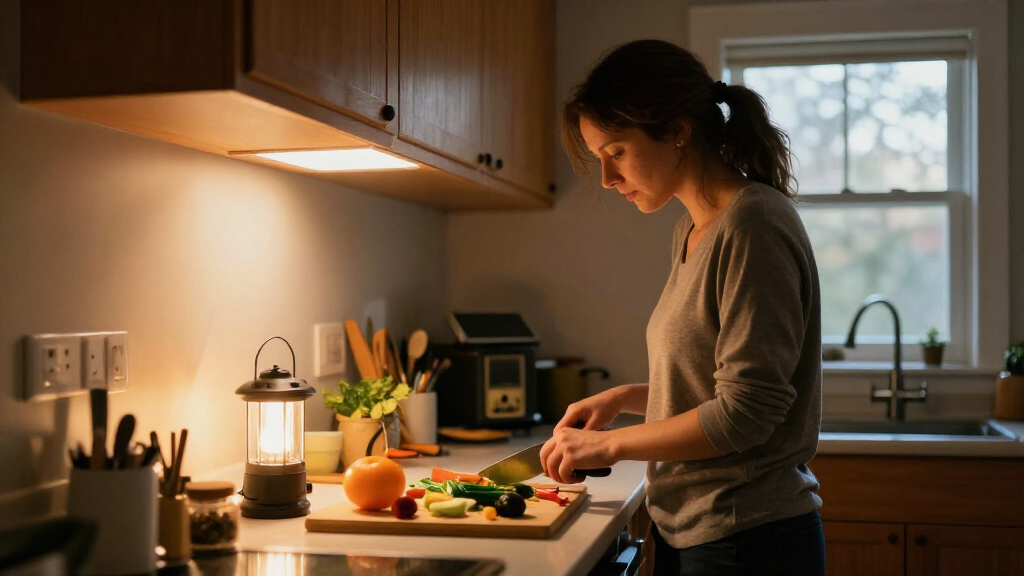
Task lighting is light aimed at a specific activity, such as cooking, reading or working, according to an explainer published by Livingetc that quotes lighting designers. The report says its purpose is to make everyday tasks more comfortable and practical, and that the approach can involve many fixture types—not only bright ceiling lights or LED strips.
Vanessa Macedo, an associate lighting designer at John Cullen Lighting, defines task lighting as focused illumination directed where it is needed for an activity. She says the goal is to support the task without making it uncomfortable or causing eye strain. Examples in the report include a reading light beside a bed, illumination over a kitchen work surface, or a light for applying makeup.
The term describes a function, not a fixture style, according to Kiersten Hoiland, founder of Hoiland Studios. A pendant can count as task lighting if it directs enough light onto the surface below, she says; a linear LED fitting can serve the same purpose. The fixture’s appearance alone does not determine whether it is task lighting.
The report says planning should begin with how people use each room. Someone who reads in bed may want a bedside reading light, while a person who regularly works at a dining table may need suitable illumination there. A floor lamp beside an armchair can provide a simple reading light in a living room. The relevant requirement differs by activity: hallways need comfortable light for moving through, while kitchen work surfaces call for more deliberate illumination.
Lighting That Supports Daily Routines
Task lighting matters because general room illumination may not put enough light where a particular activity happens. A well-placed source can make a work surface, book or vanity easier to use. The report frames this as a practical planning issue, not just a choice between attractive fixtures: the lighting plan needs to account for what residents actually do in each space.
That distinction also gives homeowners more design options. Task lighting does not have to look like a purely utilitarian fitting, the designers say. A decorative pendant or floor lamp may serve a functional purpose if it delivers light to the intended area. The report recommends treating task, ambient and accent lighting as complementary layers: task lighting supports activities, ambient lighting establishes the room’s general mood, and accent lighting highlights features such as artwork or architectural details.
From Fixture Style to Function
The Livingetc article responds to a common use of the phrase “task lighting” without a clear explanation of what makes a light fit the category. Its central distinction is between what the light does and what it looks like. Focused illumination for a defined activity is the key criterion; a particular product type or visual style is not.
The report also challenges the idea that task lighting belongs only in kitchens and bathrooms. Those rooms have obvious work areas, but the designers say other spaces may need focused light too, depending on residents’ habits. The article does not prescribe a single layout or fixture specification; it presents a routine-led approach to deciding where focused light may be useful.
“Task lighting is lighting designed to support a specific activity, providing focused illumination exactly where it is needed.”
— Vanessa Macedo, associate lighting designer at John Cullen Lighting, as quoted by Livingetc
Choosing the Right Light Level
The source material does not provide technical recommendations for brightness, color temperature, fixture height or spacing. It also does not offer room-by-room product specifications or compare the performance of particular lamps. The designers’ examples are general guidance, not a guarantee that one fitting will suit every room or task.
Whether a light is sufficient depends on the activity, the surface being illuminated and the room setup; the report does not quantify those factors. Readers seeking a precise lighting plan will need advice tailored to their home and requirements. The source gives no publication date, so the timing of the article cannot be established from the supplied material.
Plan Around How Rooms Are Used
The report’s practical next step is to identify the activities that need focused light in each room before choosing fixtures. Homeowners can note where they read, prepare food, work, or get ready, then consider whether light reaches those areas directly. They can also plan how those sources will work alongside the room’s ambient and accent lighting, rather than treating each fitting as an isolated purchase.
The article supplies general design guidance, not a formal standard or a prescribed product list. Any specific choices remain dependent on the home, its layout and the residents’ routines. The designers’ advice is to build the scheme around those needs while allowing functional fittings to contribute to the room’s appearance.
Key Questions
What does task lighting mean?
Task lighting is focused illumination intended to support a specific activity, such as reading, cooking, working at a desk or applying makeup.
Does task lighting have to be a desk lamp or LED strip?
No. The Livingetc report quotes designer Kiersten Hoiland saying that a pendant or another fixture can provide task lighting if it directs sufficient light onto the area where it is needed. The function matters more than the fixture’s style.
Where can task lighting be used at home?
It can be used wherever a household activity benefits from focused light. Examples include kitchen work surfaces, a bedside reading spot, a dining table used for work, a vanity, or an armchair where someone reads.
How does task lighting differ from ambient and accent lighting?
Task lighting supports a specific activity. Ambient lighting supplies the room’s general light and mood, while accent lighting draws attention to features such as artwork or architectural details, according to lighting designer Vanessa Macedo.
Source: rss
Halloween Picks
halloween
As an affiliate, we earn on qualifying purchases.