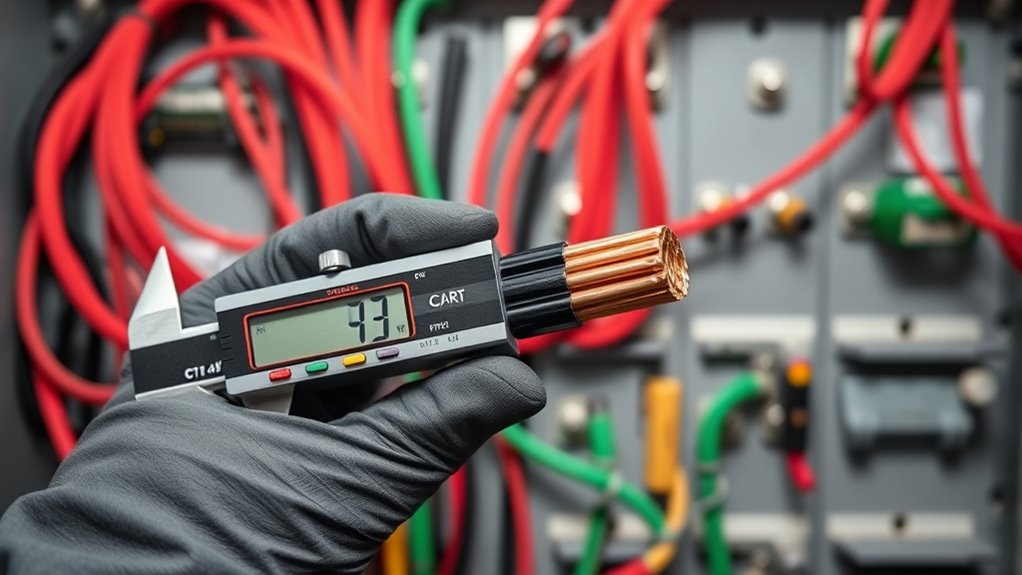

According to NEC 2023, sizing generator feeders depends on the load current, insulation type, and installation environment. You must select conductors that can handle the maximum current with appropriate insulation, considering factors like conduit fill and ambient temperature. Grounding conductors must meet minimum size requirements based on the feeder size to ensure safety during faults. If you want to understand specific rules and tables, keep exploring the detailed guidelines that guarantee your system remains safe and compliant.
Key Takeaways
- NEC 2023 specifies minimum conductor sizes based on the generator’s rated current and load conditions.
- Conductor sizing must consider insulation type, ambient temperature, and conduit fill according to NEC tables.
- Grounding conductor sizes are determined by feeder size, with minimum requirements outlined for safety and code compliance.
- Overcurrent protection and allowable voltage drop influence the selection of appropriate conductor gauge.
- Proper sizing ensures efficient generator operation, minimizes electrical losses, and enhances system safety per NEC guidelines.
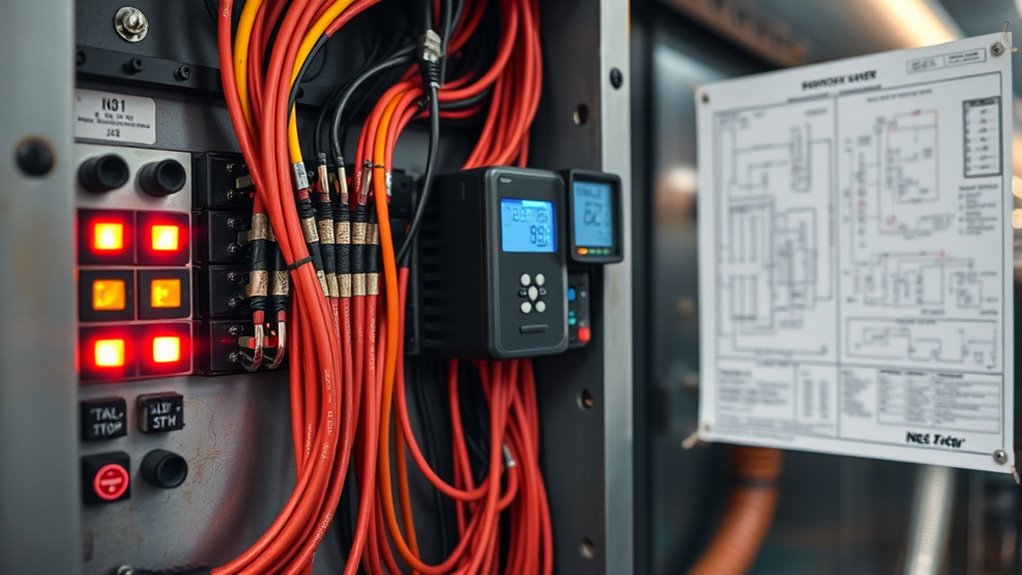
When designing a generator feeding a distribution system, selecting the proper conductor size is essential to guarantee safety, reliability, and code compliance. The right conductor ensures that the generator operates efficiently, minimizing voltage drops and reducing the risk of overheating. An appropriately sized conductor also plays a key role in maintaining generator efficiency by limiting electrical losses, which is necessary for peak performance. Additionally, it helps safeguard personnel and equipment through proper safety grounding, a fundamental aspect of electrical safety standards outlined in NEC 2023.
Generator efficiency depends heavily on the conductor’s ability to carry current without excessive resistance. If the conductor is too small, it will cause increased voltage drops and heat buildup, reducing the generator’s overall efficiency. Conversely, choosing a conductor that’s too large might lead to unnecessary material costs, but it ensures minimal energy loss and stable operation. The NEC 2023 emphasizes balancing these factors, recommending conductor sizes based on the generator’s maximum current and the length of the run. This approach minimizes power loss and enhances efficiency, which is especially critical in systems where energy conservation and operational costs matter.
Safety grounding is another key aspect influenced by conductor sizing. Proper grounding conductors are essential to protect personnel from electric shocks and prevent damage to equipment during faults. NEC 2023 specifies minimum sizes for grounding conductors based on the feeder conductor size and system voltage. Undersized grounding conductors can compromise safety grounding, increasing the risk of dangerous voltages during a fault. Therefore, you must guarantee that the grounding conductor is adequately sized to handle fault currents safely and reliably. This not only protects your system but also ensures compliance with the latest code provisions, avoiding potential penalties or safety violations.
In addition to sizing, proper installation practices are fundamental. You need to think about factors like conductor insulation, ambient temperature, and conduit fill to prevent overheating and maintain safety grounding integrity. When selecting conductors, always refer to NEC 2023 tables, which provide detailed sizing guidelines based on conductor material, load current, and installation conditions. Proper conductor installation practices are crucial to ensure the longevity and safety of the entire system. Remember, the goal isn’t just to meet code but to maximize your system’s safety, efficiency, and longevity. Proper conductor sizing ensures that your generator feeds the distribution system safely and effectively, supporting reliable power delivery while safeguarding all connected equipment and personnel.
Frequently Asked Questions
How Do Ambient Temperatures Affect Conductor Sizing?
Ambient temperature affects conductor sizing because higher temperatures reduce conductor capacity, requiring you to select a larger size for adequate current flow. Cooler temperatures allow for smaller conductors, but as ambient temperature rises, you must consider the conductor insulation’s temperature rating and derate the conductor accordingly. Always account for ambient temperature changes to make certain your wiring remains safe and compliant, preventing overheating and potential failures.
What Are the Specific Rules for Oversized Generator Feeders?
Imagine your generator capacity skyrocketing, demanding oversized feeders that could handle a tornado! You’ll size your feeders larger than the standard to prevent overheating, considering the actual generator capacity and overcurrent protection needs. The rules specify using conductors rated above the calculated load, ensuring safety and reliability. Follow NEC guidelines precisely, and don’t forget to account for potential future loads—oversizing isn’t just a suggestion; it’s a lifesaver.
How Should Grounding Be Considered When Sizing Conductors?
When sizing conductors, you should consider grounding methods and grounding conductors to guarantee safety and compliance. Use appropriately sized grounding conductors based on the main conductor size and grounding requirements, following NEC guidelines. Proper grounding methods, such as grounding rods or mats, help prevent electrical shock and equipment damage. Always verify that the grounding conductors are rated for the system’s fault current and are properly connected to maintain an effective grounding system.
Are There Special Requirements for Underground Generator Feeders?
Yes, underground generator feeders have special requirements. You need to select appropriate conduit material, like PVC or metallic, based on environment and code. Make sure to follow proper installation methods, including burial depth, conduit support, and sealing to prevent water ingress. Also, guarantee wiring is rated for underground use, and use properly rated connectors and fittings to maintain system safety and compliance with NEC standards.
How Do Different Generator Types Influence Conductor Sizing Rules?
Your generator type influences conductor sizing because different generators have varying capacities and startup currents. Larger capacities demand thicker conductors with appropriate insulation to handle the increased load safely. For example, standby generators may require conductors with higher insulation ratings due to prolonged operation, while portable units might need less. Always consider the generator’s capacity and verify the conductor insulation matches the electrical demands to maintain safety and code compliance.
Conclusion
By following the NEC 2023 rules for generator feeder conductor sizing, you guarantee safety and code compliance. It’s interesting how the right conductor size can prevent unexpected outages, almost like a coincidence that proper sizing aligns so perfectly with reliable power delivery. When you pay attention to these guidelines, you’re not just avoiding penalties—you’re safeguarding your system’s longevity. So, trust the rules; they’re there to keep your generator running smoothly when you need it most.