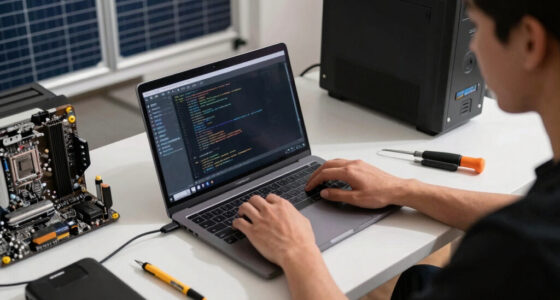
A generator commissioning checklist should guide you through verifying proper component installation, including engine, alternator, and safety devices, while ensuring all connections meet manufacturer specs. You’ll need to test the fuel system for leaks and flow, check oil, filters, and coolant, and confirm the stability of the foundation. Conduct initial operations by starting the generator, monitoring outputs, and testing automatic switches. Don’t forget to document everything and review safety protocols—if you want to know the full details, keep exploring.
Key Takeaways
- Verify proper installation, alignment, and secure mounting of all generator components per manufacturer specifications.
- Conduct fuel system testing for leaks, proper flow, and fuel quality assurance.
- Perform initial operational tests, checking voltage, frequency, and stability of power output.
- Set up maintenance schedules and control system alarms for early detection of irregularities.
- Document test results, review safety procedures, and ensure team understanding of shutdown protocols.
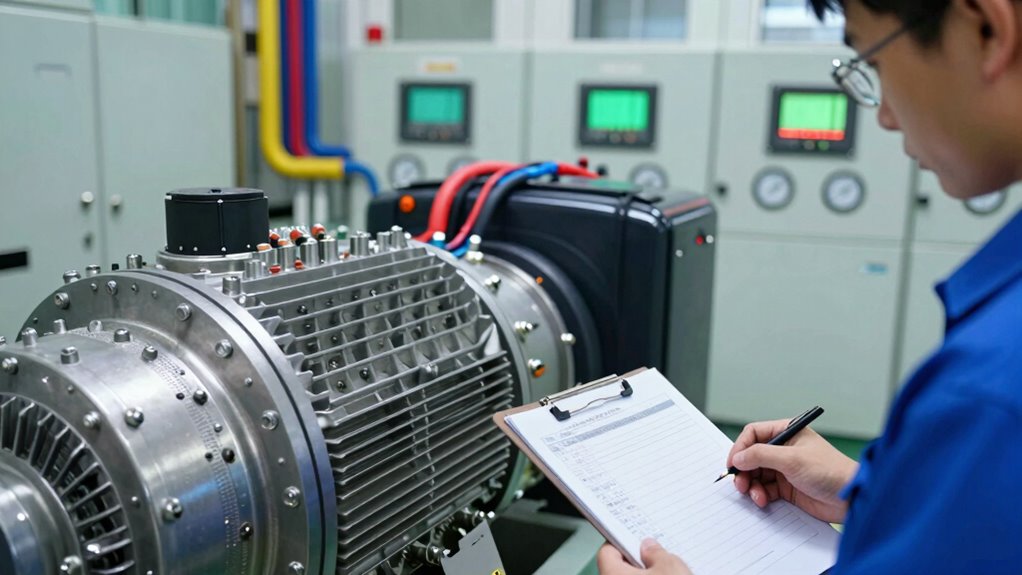
Are you ready to guarantee your generator is fully prepared for operation? A thorough generator commissioning checklist is essential to ensure everything runs smoothly from the first start-up onward. The initial step involves verifying that all components are properly installed and meet manufacturer specifications. This includes checking the engine, alternator, control panels, and safety devices. Ensuring correct installation sets the foundation for peak performance and safety.
Next, you need to focus on fuel efficiency. Your checklist should include testing the fuel system for leaks or blockages, confirming proper fuel flow, and inspecting fuel filters. Efficient fuel consumption not only saves money but also reduces emissions and prolongs engine life. Make sure the fuel tank is clean and filled to the recommended level, and that fuel lines are secure and free of debris. Proper fuel management during commissioning helps you identify potential issues early, preventing costly repairs later. Additionally, inspecting fuel quality can prevent contamination that might cause engine problems. Regularly reviewing these aspects contributes to a comprehensive understanding of your generator’s performance metrics.
A key part of the process is conducting initial operational tests. Start the generator and observe its startup behavior. Watch for abnormal sounds or vibrations that could indicate underlying problems. Monitor essential parameters such as voltage, frequency, and current output, comparing them to the manufacturer’s specifications. This step helps you confirm that the generator is producing clean, stable power. Additionally, test automatic transfer switches if your setup includes them, ensuring they operate correctly during power failure scenarios.
Your checklist must also emphasize establishing a maintenance schedule. During commissioning, identify maintenance tasks like oil and filter changes, coolant checks, and belt inspections. Proper maintenance scheduling ensures your generator remains reliable and reduces the risk of unexpected breakdowns. It’s also an opportunity to program alarms and shutdowns to alert you of any irregularities, further protecting your investment. Incorporating color accuracy checks can also be beneficial if your setup involves visual monitoring or control interfaces that depend on precise color representations. Ensuring the correct installation of all components is critical for overall system safety and efficiency. In addition, verifying the accuracy of control systems and display units ensures reliable operation and troubleshooting.
Finally, document everything. Record test results, adjustments made, and any anomalies encountered. This documentation helps create a clear record of the commissioning process and provides a reference for future maintenance routines. It’s critical to review safety procedures with your team, ensuring everyone understands emergency shutdown protocols and safe operation practices. Proper documentation and safety awareness are vital for long-term generator health and operational safety.

Porch Shield Waterproof Universal Generator Cover 38 x 28 x 30 inch - for Most Generators 5500-15000 Watt, Black
- Compatible - More sizes for 5500w -15000w gas...
- Upgrade Material - Made of 600D polyester fabric...
- Tear Resistant & Waterproof - The high-level double...
As an affiliate, we earn on qualifying purchases.
Frequently Asked Questions
How Often Should Generator Commissioning Be Performed?
You should perform generator commissioning annually or as recommended by your manufacturer, aligning with your maintenance schedules. Regular commissioning guarantees your generator operates reliably, especially before peak usage seasons. Include fuel testing during these checks to verify fuel quality and prevent issues. Consistent commissioning and fuel testing help identify potential problems early, maintain efficiency, and extend your generator’s lifespan, ensuring it’s always ready when you need it most.
What Safety Precautions Are Necessary During Commissioning?
You’d think safety precautions during commissioning are optional, but don’t be fooled. You need proper safety gear—gloves, goggles, ear protection—and clear emergency protocols in place. Imagine a sudden spark or leak; without these measures, you risk injury or worse. Always double-check safety equipment and make certain everyone knows emergency procedures. Ironically, neglecting safety now could turn a routine test into a disastrous incident. Stay vigilant, stay safe.
Who Should Be Responsible for Conducting the Checklist?
You should guarantee that qualified personnel, trained in maintenance scheduling and safety protocols, conduct the checklist. They need to have proper personnel training to accurately verify each step and identify issues. This responsibility often falls on your maintenance team or specialized technicians. By assigning trained professionals, you guarantee thorough inspection, proper documentation, and compliance with safety standards, ensuring reliable generator operation from the start.
Are There Specific Tools Required for Commissioning?
You’ll need a toolbox packed with testing procedures and calibration tools—think of them as your ship’s compass and navigation charts during a storm. These tools guarantee your generator’s performance is precise and reliable. Calibration tools verify measurements, while testing procedures guide you through start-up, load testing, and safety checks. Without these, you risk sailing blind, so gather your essential gear to navigate the commissioning process smoothly and confidently.
How Long Does the Commissioning Process Typically Take?
The commissioning process usually takes a few days to a week, depending on the generator’s size and complexity. During this time, you’ll focus on maintenance planning to guarantee all systems operate smoothly and meet regulatory compliance standards. You’ll verify that safety protocols are followed, perform tests, and document performance. Proper planning reduces delays, guaranteeing that your generator is reliable and ready for emergency or operational use efficiently.
Porch Shield Waterproof Universal Generator Cover 32 x 24 x 24 inch - for Most Generators 5000-10000 Watt, Black
- Compatible - More sizes for 5000w -10000w gas...
- Upgrade Material - Made of 600D polyester fabric...
- Tear Resistant & Waterproof - The high-level double...
As an affiliate, we earn on qualifying purchases.
Conclusion
By following this generator commissioning checklist, you’re laying the foundation for a reliable power source that’ll serve you well. Think of it as tuning a fine instrument—you want everything in perfect harmony before the first note plays. Skipping steps can lead to unexpected outages, so take your time and double-check each item. When done right, your generator will be the steady heartbeat of your operation, ready to kick in whenever the power lines go silent.

Generator Cover Portable Waterproof,Generator Rain Cover for Outside,Universal Generator Cover for Most Portable Generators 5000-10000 Watt(32"L x 24"W x 24"H)
- 【Dimensions】Generator Covers for outside 32x24x24 inch Fits Most...
- 【Windproof Design】This generator covers for outside features an...
- 【Side Ventilation Openings】This portable generator cover features side...
As an affiliate, we earn on qualifying purchases.

Portable Solar Generator 300W Portable Power Station with 60W Solar Panel
- Portable Generator with 60W Solar Panel Included: with a big battery pack,...
- Multiple Charging outlets for camping gear with SOS Flashlight: with 2* 300W Max AC...
- Multiple Charging Optional, Solar Panel Charger 60W Included: ZeroKor portable power bank generator...
As an affiliate, we earn on qualifying purchases.