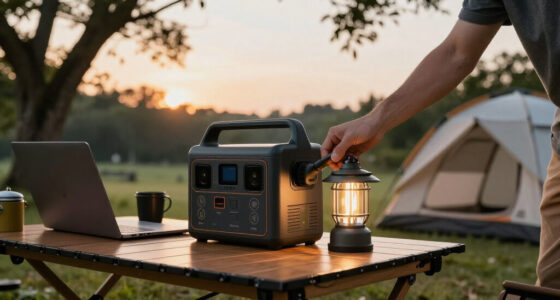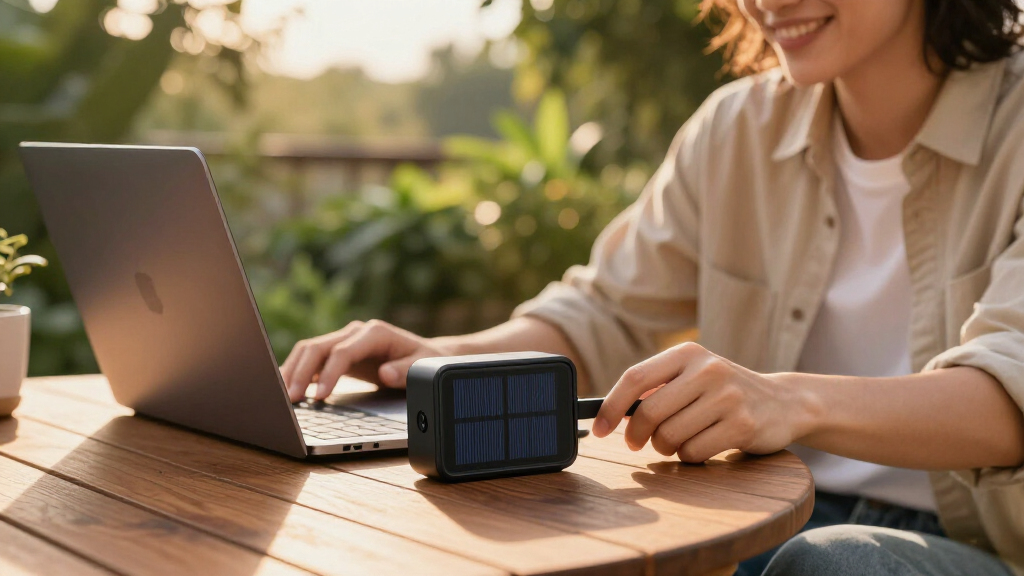
Finding a reliable solar-powered laptop charger can be challenging due to varying power outputs, portability, and build quality. The best overall pick offers a balanced mix of power and portability, while some models excel in outdoor durability. Comparing these options reveals key tradeoffs: higher power often means less portability, and cheaper models may lack fast charging or durability. Continue reading to see how these chargers stack up and which one suits your needs best.

Get backup power and energy gear delivered free with Prime
- Fast, free delivery on millions of items
- Prime Video, Amazon Music and more included
- Member-only deals all year
Complete the kit


Key Takeaways
- The top overall pick balances high power output with portability for versatile use.
- Many affordable options sacrifice charging speed or durability for lower prices.
- Compact models are best for casual or emergency use but may not power larger devices continuously.
- Premium models often include fast charging and multiple outputs but come at a higher cost.
- Battery capacity and solar panel wattage are critical factors that influence charging efficiency and runtime.



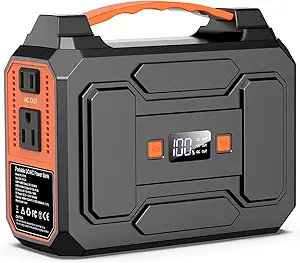


| solar-powered laptop charger | Battery Capacity | Wattage |
|---|---|---|
| Portable Solar Generator 300W | — | 300 watts |
| Jackery Explorer 300 Portable | — | — |
| Portable Power Station with 40 | 88.8 Wh | 100 watts |
| Takki Solar Generator 120W Pea | — | 88.8 Wh |
| Portable Solar Power Bank with | 24000mAh | — |
| Portable Power Station | 39600mAh | — |
| 300W Solar Power Station Gener | 300W | 300 watts |
| Daran Portable Power Station 8 | 89.6Wh | — |
| Portable Power Station 300W | 220Wh | 300W |
| Anker SOLIX C200 DC Portable P | 192Wh | — |
More Details on Our Top Picks
Portable Solar Generator 300W with 60W Solar Panel
This portable solar generator stands out for its powerful 300W capacity, making it capable of running most small devices and even some mid-sized appliances. Compared with the Jackery Explorer 300, it offers similar output but includes a foldable 60W solar panel, which enhances its renewable recharging options without needing separate accessories. The multiple outlets and safety features like overload and short circuit protection make it suitable for outdoor adventures and emergency backup. However, its performance diminishes if not regularly charged and it isn’t designed for high-power devices over 300W. The junction box isn’t waterproof, so dry conditions are essential. Overall, this generator makes the most sense for users who need reliable, portable power in remote locations, accepting the tradeoff of limited high-wattage support.
Pros:- Powerful 300W capacity suitable for most small devices
- Includes a 60W foldable solar panel for renewable charging
- Multiple charging outlets and safety protections
- Compact and portable design for outdoor use
Cons:- Not suitable for devices over 300W or high power demands
- Junction box not waterproof, requires dry conditions
Best for: Outdoor enthusiasts or emergency preppers needing a versatile, portable power source with renewable charging options.
Not ideal for: Users who require high-power appliances over 300W or plan to use it in wet, unpredictable weather conditions.
- Wattage:300 watts
- Fuel Type:Electric
- Power Source:Battery-Powered, Solar Powered, AC/DC
- Voltage:110 volts
- Output Wattage:300W
- Included Solar Panel:60W foldable solar panel
- Additional Features:Overload Protection, Short Circuit Protection, Built-in BMS, Cooling Fan
Our verdict“This solar generator is ideal for outdoor lovers and emergency users who prioritize portability and renewable recharging, with some limitations on high-wattage devices.”
Jackery Explorer 300 Portable Power Station, 292Wh
The Jackery Explorer 300 offers a lightweight, durable solution with a 292Wh capacity, making it highly portable at just 7.5 lbs. It features multiple outlets—AC, USB-C, USB-A, and a car port—providing flexibility for diverse devices. Unlike the Portable Solar Generator 300W, it doesn’t include a solar panel, but it supports fast solar charging with an appropriate panel, offering an efficient off-grid power option. Its LiFePO4 chemistry ensures over 4,000 charge cycles, providing long-term reliability. The main tradeoff is its limited to a 300W rated output, which can restrict use with high-wattage appliances. Overall, this pick makes the most sense for those seeking a durable, long-lasting power station that balances capacity and portability.
Pros:- Lightweight and portable at only 7.5 lbs
- High capacity with durable LiFePO4 chemistry
- Multiple versatile charging options
- Supports fast solar charging with compatible panels
Cons:- Solar panel not included, requiring extra purchase
- Limited to 300W rated output, restricting high-watt appliances
Best for: Campers or emergency prepper who want a reliable, long-lasting portable power station without the need for a solar panel included.
Not ideal for: Users needing a built-in solar charging solution or planning to run devices over 300W, as it lacks an integrated solar panel.
- Capacity:292Wh
- Weight:7.5 lbs
- Outlets:2 AC, 1 USB-C PD, 2 USB-A, 1 car port
- Rated Output:300W
- Peak Surge:600W
- Charge Cycles:over 4,000
- Charging Time:approximately 2.8 hours with 100W solar panel
Our verdict“This power station is perfect for users who prioritize portability and long-term durability over integrated solar charging or high-wattage support.”
Portable Power Station with 40W Solar Panel, 100W Solar Powered Generator
This compact power station packs a 100W lithium-ion battery and a 40W foldable solar panel, making it an excellent choice for minimal power needs during outdoor activities. Unlike the larger units like the Jackery Explorer 300, its 100W capacity limits it to powering smaller devices, such as smartphones, small tablets, and LED lights. Its lightweight design at just 3.3 lbs enhances portability, ideal for quick trips and emergency kits. The inclusion of a 40W solar panel enhances its renewable recharging capability, yet it isn’t suited for high-power appliances or extended use. It’s a solid pick for casual outdoor users who require lightweight, renewable energy but not for those with higher power demands or needing long runtime.
Pros:- Lightweight and easy to carry at 3.3 lbs
- Includes foldable 40W solar panel for renewable recharging
- Multiple output options including AC, USB, and DC
- Built-in BMS for safety
Cons:- Supports devices only up to 80W, limiting high-power appliances
- Runtime is limited for power-hungry devices
Best for: Hikers or minimalists needing a small, renewable power source for phones, small gadgets, and emergency lighting.
Not ideal for: Users with high-power devices or expecting to run appliances over 80W for extended periods.
- Wattage:100 watts
- Battery Capacity:88.8 Wh
- Power Source:Solar Powered
- Voltage:110V
- Output Wattage:88.8 Wh
- Total Power Outlets:2
- Engine Power Maximum:120 W
Our verdict“This small, lightweight power station suits casual outdoor users needing portable, renewable energy for low-wattage devices.”
Takki Solar Generator 120W Peak Portable Power Station with 21W Solar Panel and 88.8Wh Battery
The Takki Solar Generator offers a compact 88.8Wh capacity with a small 21W foldable solar panel, making it ideal for short-term outdoor use or emergency backup. Unlike larger units like the Jackery Explorer 300, its lower wattage limits it to powering devices up to 80W, but its lightweight design at just over 2 pounds makes it highly portable. The inclusion of a built-in LED flashlight with SOS mode adds to its emergency appeal. Compared to the Portable Solar Generator 300W, it’s less suited for prolonged or high-demand usage but excels in quick, portable power needs. Its limited runtime and low wattage output make it best for emergency kits or brief outdoor outings, not continuous power.
Pros:- Very lightweight and portable at just over 2 lbs
- Includes foldable 21W solar panel for recharging
- Built-in LED flashlight with SOS mode
- Supports devices up to 80W
Cons:- Limited to 80W devices, not suitable for high-power appliances
- Runtime is very short for high-consumption devices
Best for: Emergency preparedness or short outdoor excursions where minimal, quick power is needed.
Not ideal for: Users who want to run high-watt devices or need extended power supply for camping or work sites.
- Wattage:88.8 Wh
- Power Source:Solar Powered
- Voltage:110V
- Output Wattage:88.8 Wh
- Total Power Outlets:2
- Engine Power Maximum:120 W
- Runtime:2 hours
Our verdict“This compact, emergency-focused power station is best for quick, low-wattage power needs in critical situations or short trips.”
Portable Solar Power Bank with AC Outlet 65W 110V
This power bank features a 24,000mAh battery with a 65W AC outlet, making it suitable for charging laptops, phones, and tablets during outdoor adventures. Unlike larger units like the Jackery Explorer, its compact size and 65W output focus on portability and convenience. It supports multiple recharging options, including solar, wall, and car, providing flexibility in various scenarios. While it offers a handy AC outlet, activating it requires manual operation, and it’s limited to devices under 65W. Its small size makes it ideal for quick, on-the-go charging, but it isn’t suited for powering high-watt or high-amp devices for long durations.
Pros:- Powerful 65W AC outlet suitable for laptops
- Multiple recharging options, including solar
- Compact and lightweight for portability
- Built-in BMS for safety and protection
Cons:- AC outlet requires manual activation
- Limited to devices under 65W
Best for: Outdoor travelers or emergency users needing a portable, all-in-one device for charging small to medium electronics.
Not ideal for: Power users who require high-wattage devices or continuous, high-demand operation over extended periods.
- Battery Capacity:24000mAh
- AC Output:65W
- DC Output:9V~12.6V/10A MAX
- USB Ports:5V/2.4A Max, 5V/3A 9V/2A Max
- Solar Panel Power:30W
- Size:6.89×3.98×1.89 inches
- Folded Solar Panel Size:12.7×8.4×0.3 inches
Our verdict“This power bank is best for users needing a compact, versatile charging option for laptops and small devices in outdoor or emergency settings.”
Portable Power Station, 146Wh 100W Solar Powered Power Bank with AC Outlet
This power station offers a compact, lightweight design perfect for outdoor activities like camping or emergency kits, standing out for its portability compared to larger options like the 300W Solar Power Station Generator. Its 146Wh capacity and 100W output make it suitable for charging small devices, but it struggles with high-demand appliances and lacks an included solar panel, unlike the 300W Solar Power Station which offers higher capacity at the expense of size and weight. The multiple outlets and integrated LED flashlight enhance its outdoor utility, while safety features add peace of mind. However, the absence of a solar panel limits its renewable energy use, and the battery capacity may fall short during extended outings.
Pros:- Lightweight and portable, ideal for outdoor use
- Multiple charging options including solar, AC, and car
- Includes LED flashlight with SOS mode
- Advanced safety features for peace of mind
Cons:- Solar panel not included, adding extra cost
- Limited to 100W output, unsuitable for high-power devices
- Battery capacity may be insufficient for long-term use without recharging
Best for: Hikers, campers, or emergency prepper households needing a lightweight, multi-device power source.
Not ideal for: Users requiring to power high-wattage appliances or seeking a solar panel included kit for off-grid charging.
- Battery Capacity:39600mAh
- Weight:3.3 lbs
- Output Wattage:100W
- Number of Outlets:7
- Voltage:110V
- Power Source:AC/DC/USB-C/Solar
Our verdict“This model suits outdoor enthusiasts and emergency kits needing a portable, multi-device charger without high power demands.”
300W Solar Power Station Generator with Foldable 60W Solar Panel Charger, 110V Portable Solar Power Bank for Camping and Outdoor Use
This generator delivers a robust 300W capacity, making it the best choice for those needing to run larger or multiple small appliances in outdoor settings, outperforming the Portable Power Station 220Wh in wattage. Its included foldable 60W solar panel supports renewable recharging, but with a maximum output of 300W, it cannot power high-wattage appliances or heavy tools. The multiple outlets and LED flashlight with SOS mode make it versatile for emergencies, yet the need for a long recharging time with solar—about 4 hours—may be a drawback in quick-turnaround situations. Its weight and size might be less ideal for ultra-light backpackers but excellent for car-based adventures.
Pros:- Powerful 300W capacity suitable for most small devices
- Includes foldable 60W solar panel for renewable charging
- Multiple outlets and USB ports for versatile device connection
- Built-in LED flashlight with SOS mode for emergencies
Cons:- Limited to 300W, not suitable for larger appliances
- Long press needed to turn on DC port can be inconvenient
- Battery capacity may restrict extended use without sunlight
Best for: Campers and outdoor enthusiasts seeking to run small appliances or multiple devices simultaneously with renewable power.
Not ideal for: Individuals who need to power high-wattage tools or require ultra-light portable gear for backpacking.
- Wattage:300 watts
- Battery Capacity:300W
- Output Outlets:3
- Maximum Power:300 watts
- Running Wattage:300 watts
- Charge Cycles:7 hours
Our verdict“This generator is ideal for campers and outdoor users who need reliable, renewable power for multiple small devices but not high-wattage equipment.”
Daran Portable Power Station 89.6Wh LiFePO4 Battery 100W (200W Peak) Solar Power Bank, Portable Charger Small Generator with AC Outlets & PD Fast Charging for Home, Laptop, Camping
This small yet capable power station features a 89.6Wh LiFePO4 battery, making it perfect for short outings or backup home power, especially compared to bulkier options like the Portable Power Station 220Wh. Its fast charging and multiple ports—including USB-C PD—offer quick recharges and flexible device connections, while the long cycle life of over 3500 cycles promises durability. However, its limited capacity constrains usage to devices under 100W, and the lack of a solar panel means you rely on external sources for recharging, unlike the larger units that often include panels. It’s best suited for those who prioritize portability and long-term battery health over extended power supply.
Pros:- Compact and lightweight, easy to carry
- Fast charging with multiple input options
- Long-lasting LiFePO4 battery with over 3500 cycles
- Quiet operation suitable for sleep environments
Cons:- Limited to 100W device power draw
- No included solar panel, additional purchase needed
- Battery capacity may be too small for extended use
Best for: Outdoor adventurers or emergency users needing a lightweight, durable power source for small devices and quick recharges.
Not ideal for: People needing to run larger appliances or requiring a solar panel included for off-grid recharging.
- Battery Capacity:89.6Wh
- Battery Type:LiFePO4
- Weight:2.54 pounds
- Output Power:100W (200W peak)
- Number of Ports:7
- Cycle Life:3500+ cycles
Our verdict“This power station fits users seeking a durable, portable backup for small devices and quick recharges, especially in emergency scenarios.”
Portable Power Station 300W, 220Wh Solar Generator Backup Battery Pack
This power station offers a slightly larger capacity of 220Wh, making it a practical choice for users who need to run multiple devices but not high-wattage appliances, outperforming smaller units like the Daran 89.6Wh. Its 300W power output supports several devices at once, including a mix of AC outlets and USB ports, while the inclusion of multiple recharging options—AC, car, and solar—adds flexibility. However, it’s less suitable for long-term power needs without frequent recharges and doesn’t include a solar panel, which would be a valuable addition for off-grid use. Its moderate weight makes it portable but less so than smaller models, positioning it as a good middle ground.
Pros:- 220Wh capacity supports several devices simultaneously
- Multiple output options including AC and USB
- Rechargeable via AC, car, or solar (panel not included)
- Bright LED light for dark environments
Cons:- Limited to devices under 300W, excluding high-power tools
- Solar panel must be purchased separately
- Battery capacity may be insufficient for extended off-grid use
Best for: Campers and outdoor users needing to power multiple small devices with flexible recharging options.
Not ideal for: Power users who need to run high-wattage appliances or those seeking an all-in-one solar generator with panel included.
- Wattage:300W
- Battery Capacity:220Wh
- Weight:5 lbs
- Output Ports:2x110V AC, 3 USB, 1 DC
- Recharging Options:AC, car, solar
- Battery Type:Lithium-ion
Our verdict“This station works well for users needing moderate power and device versatility during outdoor trips or emergencies.”
Anker SOLIX C200 DC Portable Power Station and 60W Solar Panel, 192Wh, 200W
The Anker SOLIX C200 combines a compact 192Wh capacity with a high 200W output, making it ideal for travelers who need quick recharge times and multiple ports, including USB-C and USB-A. Compared to the Portable Power Station 220Wh, it’s smaller and lighter, enhancing portability for on-the-go use. Its ability to recharge via solar, wall, or car provides flexibility, but the weight and the need for a compatible solar panel can be drawbacks for ultra-light travelers. The fast recharge times—about 50 minutes for 80%—are particularly appealing for those who need quick turnaround between uses, although the solar panel is sold separately, adding to total costs.
Pros:- Compact and travel-friendly, 39% smaller than similar units
- Fast recharge time from wall outlet
- Multiple ports including high-watt USB-C
- Supports solar recharging for sustainable energy
Cons:- Shoulder strap sold separately, affecting portability
- Not compatible with all solar panels or high-wattage devices
- Weight not specified, which could impact portability assessment
Best for: Travelers and remote workers seeking a compact, quick-recharging power source with versatile ports.
Not ideal for: Users who require a solar panel included or need to power devices over 200W regularly.
- Battery Capacity:192Wh
- Power Output:200W
- USB-C Ports:3 (100W, 140W, 15W)
- USB-A Ports:2 (12W each)
- Solar Panel Input:60W
- Recharge Time (wall):50 minutes
Our verdict“This device suits travelers wanting fast, versatile charging with quick recharges and a compact form factor, provided they add a solar panel separately.”

How We Picked
I evaluated these solar-powered laptop chargers based on key criteria that matter most to users: power output, portability, build quality, recharge speed, and value. Products were compared for their ability to reliably charge laptops and other devices off-grid, with an emphasis on ease of use and durability. Ranking reflects a balance of performance, versatility, and user convenience, ensuring options for different budgets and needs. Features like fast charging, multiple ports, and solar panel efficiency played a significant role in shaping the final lineup.Factors to Consider When Choosing Solar-powered Laptop Chargers
Choosing the right solar-powered laptop charger requires understanding several important factors beyond just wattage and capacity. These devices must be usable in real-world scenarios, balancing portability with enough power to meet your needs. Considering these factors carefully helps avoid common pitfalls like overestimating solar input or selecting a unit too bulky for your intended use.Power Output and Capacity
For reliable laptop charging, look for chargers with at least 100W power output, which can handle most laptops’ power requirements. Higher wattage models can simultaneously charge multiple devices or power larger laptops, but they tend to be heavier and less portable. Capacity, measured in watt-hours, determines how many times you can recharge your device; larger batteries provide more runtime but add size and weight to the charger.
Portability and Size
Portability is vital if you’re planning to carry your charger on outdoor adventures or travel frequently. Compact models with foldable solar panels or lightweight batteries are easier to pack but often have lower capacity or fewer ports. Conversely, larger units may provide more power but can be cumbersome to transport, so consider your typical use case to find the right balance.
Solar Panel Efficiency and Wattage
The solar panel wattage directly impacts how quickly your device can recharge in sunlight. Higher wattage panels, like 60W or more, can replenish the battery faster, reducing downtime. However, larger panels may also mean increased size and reduced portability. Panel efficiency, or how well it converts sunlight into usable energy, varies between models and influences overall charging speed in different environments.
Build Quality and Durability
Since many users will rely on these chargers in outdoor or rugged settings, durability matters. Look for models with robust casing, water resistance, and sturdy solar panels that can withstand rough handling. Cheaper options may lack these features, risking damage over time, which can compromise your ability to stay powered in critical moments.
Additional Features and Compatibility
Features like multiple output ports, fast charging, and integrated batteries can greatly enhance usability. Ensure the charger is compatible with your laptop’s charging port and supports standard charging protocols like PD (Power Delivery). Some models also offer AC outlets, making them more versatile but often adding weight and cost. Prioritize features based on your specific device needs and usage scenarios.
Frequently Asked Questions
Can a solar-powered charger fully replace a wall charger for my laptop?
In most cases, a solar-powered charger will not fully replace a wall charger, especially if you need rapid, continuous power. Solar chargers depend on sunlight, which can be inconsistent, and their charging speed is generally slower than mains power. They are best used as backup or for off-grid scenarios rather than daily replacements, unless paired with a large capacity battery and high-wattage solar panels.
How long does it take to charge a solar-powered charger fully in sunlight?
The recharge time varies based on solar panel wattage, sunlight intensity, and the battery’s capacity. For example, a 60W panel can typically replenish a 100Wh battery in about 2-3 hours under ideal conditions. Keep in mind that cloudy weather or indirect sunlight can significantly extend this time, so planning for slower recharging is wise when relying solely on solar energy.
Are solar-powered chargers safe for my laptop?
Yes, provided the charger is properly designed with suitable voltage regulation and compatible ports, it can safely power your laptop. Many models support standard charging protocols like PD, which protect devices from power surges. Always check specifications to ensure the output matches your laptop’s requirements, and consider models with built-in safety features to prevent any risk of damage.
What is the best size of solar panel for reliable charging?
For consistent charging, a panel rated at 60W or higher is recommended, especially if you plan to recharge the battery regularly or power larger devices. Smaller panels may suffice for emergency backups or occasional use but will require more sunlight and longer charging times. The size should align with your typical outdoor conditions and portability needs to avoid overburdening your setup.
Should I prioritize capacity or wattage when choosing a solar charger?
Both factors matter, but your choice depends on your needs. Capacity determines how many times you can recharge your device, while wattage affects how quickly the charger can replenish itself in sunlight. If you need to power multiple devices or larger laptops, prioritize higher wattage and capacity. For light, occasional use or emergency backup, smaller, lower-wattage models may suffice and be easier to carry.
Conclusion
For those seeking an all-around reliable solution, the best overall pick offers a balanced mix of power, portability, and features. The best value options suit budget-conscious travelers who need basic functionality without extras. If you prefer a premium experience with fast charging and rugged design, the best premium models are worth the investment. Beginners or casual users will find the best for beginners models straightforward and easy to operate, while outdoor enthusiasts should focus on durability and solar efficiency. Matching your specific use case to these strengths ensures you choose the right solar-powered laptop charger for 2026.
Halloween Picks
halloween
As an affiliate, we earn on qualifying purchases.