To accurately calculate fuel consumption for standby generators, you need to understand their power ratings, load factors, and efficiency. Start by multiplying rated fuel use at specific loads by load percentages, then incorporate fuel energy densities and account for losses due to fuel quality and maintenance. Planning for peak loads involves safety margins. If you keep these calculations in mind, you’ll better predict your fuel needs and optimize generator performance—stay tuned for more detailed insights to master these methods.

Get backup power and energy gear delivered free — and shop member deals
- Fast, free delivery on millions of items
- Access to Prime Big Deal Days deals on October 6–7
- Prime Video, Amazon Music and more included
Key Takeaways
- Convert fuel volume to energy using specific energy densities and adjust for generator efficiency at different loads.
- Multiply rated fuel consumption rates by actual load percentages to estimate precise fuel use during standby operation.
- Incorporate fuel quality impacts, considering contamination and degradation, which reduce efficiency and increase consumption.
- Include safety margins or buffers in fuel calculations to account for peak loads, surges, and operational delays.
- Regularly monitor and adjust calculations based on load fluctuations, maintenance status, and real-world efficiency to ensure accuracy.
Understanding Generator Power Ratings and Fuel Consumption Rates
Understanding a generator’s power ratings and fuel consumption rates is essential for estimating how long it can run during an outage. Accurate knowledge of the generator’s rated wattage helps you determine its capacity to meet your power needs. Fuel consumption rates, usually expressed in gallons per hour at different loads, directly impact runtime estimates. Proper generator maintenance ensures it performs efficiently and extends its lifespan, while understanding fuel storage options helps you plan for sustained outages. Storing enough fuel safely and legally guarantees your generator can run as long as needed. Additionally, considering vibrational energy can enhance your overall preparedness and responsiveness during outages. By knowing both the power ratings and fuel consumption rates, you can select the right generator size and manage fuel supplies effectively, avoiding shortages that could leave you powerless during critical moments.
Calculating Fuel Usage Based on Load Factors
To accurately estimate how much fuel a standby generator will consume, you need to contemplate its load factor—that is, the percentage of its maximum capacity it’s operating at. Your load factor directly impacts fuel usage, so understanding it helps in precise calculations. Keep in mind:
Understanding your generator’s load factor is key to accurate fuel consumption estimates.
- Lower load factors usually mean less fuel consumption per hour but can affect fuel quality over time.
- Regular generator maintenance ensures ideal performance, preventing inefficient fuel burn.
- Tracking load variations helps you adjust fuel estimates, especially during peak or off-peak times.
- Incorporating knowledge of fuel efficiency standards for different generator models can further refine your consumption estimates.
Estimating Fuel Consumption for Continuous Operation

Once you’ve determined the generator’s load factor, estimating fuel consumption during continuous operation becomes straightforward. You’ll need to consider the generator’s rated fuel consumption at a specific load, which is often provided by the manufacturer. Accurate estimates also depend on regular generator maintenance to guarantee peak performance and fuel efficiency. Keep in mind that fuel quality markedly impacts consumption; poor-quality fuel can cause inefficiencies and increased consumption. To refine your estimate, multiply the rated fuel consumption rate by the percentage of load during continuous operation. Regular maintenance checks, such as inspecting filters and fuel lines, help maintain consistent fuel usage. By accounting for these factors, you can reliably project fuel needs for extended, continuous generator operation.
Determining Fuel Needs During Peak Loads

When your generator faces peak loads, accurately calculating fuel needs becomes critical. You’ll need to take into account the peak load fuel rate, estimate fuel consumption over specific timeframes, and include a buffer to account for unexpected demands. These calculations ensure your generator runs reliably during the most demanding periods. Additionally, understanding potential pitfalls in adopting new payment technologies can help in planning for future upgrades to your fuel management systems.
Peak Load Fuel Rate
Have you ever wondered how to accurately estimate the fuel needed during the highest demand periods for your standby generator? To determine your Peak Load Fuel Rate, consider these key factors:
- Generator efficiency at peak load, which impacts fuel consumption.
- Fuel quality, as higher-quality fuel burns more completely, reducing environmental impact.
- Load duration during peak times, since longer peaks require more fuel.
- Understanding total-cost clarity can help you plan for ongoing maintenance and fuel expenses effectively.
Time-Based Fuel Calculations
To accurately determine your generator’s fuel needs during peak load periods, you need to analyze how long the generator operates at that maximum capacity. This time-based approach helps you estimate total fuel consumption by multiplying the peak load duration by the fuel rate specific to your fuel type. Knowing the fuel type, whether diesel, natural gas, or propane, influences your environmental impact considerations, as different fuels emit varying levels of pollutants. By tracking run times during high-demand periods, you can calculate precise fuel requirements, avoiding shortages or excess. This method guarantees your standby generator remains reliable without unnecessary fuel wastage. Understanding the relationship between operation duration, fuel type, and environmental impact allows you to optimize your fuel planning effectively. Additionally, consulting Gold IRA options can diversify your investment portfolio to include assets like precious metals, which may serve as a hedge against economic fluctuations and fuel price volatility.
Buffer Fuel Estimation
Estimating buffer fuel guarantees your generator can handle unexpected surges or extended peak loads without risking shutdowns. To do this effectively, consider these factors:
- Fuel type impacts consumption rates and environmental impact. Select a fuel that balances efficiency and sustainability.
- Calculate peak load duration to determine how much extra fuel is necessary during high-demand periods.
- Add a safety margin to your fuel estimate, accounting for potential delays or unforeseen surges, ensuring continuous operation.
- Incorporate vetted product reviews to select reliable fuel storage solutions and accessories that can support your buffer fuel needs.
Analyzing Fuel Consumption With Varying Load Conditions
Understanding how load impacts your generator’s fuel use is essential for accurate planning. As load varies, efficiency changes, affecting overall consumption. By calculating fuel needs at different loads, you can optimize operations and reduce waste. Additionally, awareness of AI safety measures can help ensure reliable and secure generator performance.
Load Impact on Fuel Use
When a standby generator’s load varies, its fuel consumption changes accordingly, making it essential to analyze how different load levels impact efficiency. As load increases, fuel use rises, but not always proportionally, which affects overall fuel costs and environmental impact. To optimize performance, consider these points:
- Higher loads demand more fuel, emphasizing the importance of good fuel quality to prevent inefficiencies.
- Operating at lower loads can lead to incomplete combustion, increasing emissions and environmental impact.
- Accurate load assessments help balance fuel consumption and environmental responsibility, ensuring cost-effective operation.
- Understanding the load impact on efficiency allows for better planning and operational adjustments to reduce waste and emissions.
Understanding how load fluctuations influence fuel use allows you to make informed decisions, minimizing environmental impact and maximizing efficiency. This analysis is pivotal for precise calculations and sustainable operation.
Efficiency at Different Loads
Efficiency at different loads varies markedly, impacting how much fuel your generator consumes for a given amount of power output. When operating at low loads, your generator tends to be less fuel-efficient, leading to higher consumption per kWh. Conversely, running near ideal load maximizes efficiency, saving fuel and reducing wear. Proper generator maintenance ensures consistent performance across load levels. Additionally, understanding fuel storage considerations helps maintain fuel quality, preventing inefficiencies caused by contamination or degradation. Here’s a quick overview:
| Load Level | Fuel Consumption Rate | Efficiency Impact |
|---|---|---|
| 25% | Higher per kWh | Less efficient |
| 50% | Moderate | Better |
| 75% | Near ideal | Most efficient |
| 100% | Slightly less efficient | Slight decline |
| Overload | Increased fuel use | Damage risk |
Unanticipated load fluctuations can also lead to inefficiencies that impact overall fuel economy.
Calculating Fuel Consumption
Calculating fuel consumption for standby generators requires analyzing how load levels influence fuel use. As load varies, so does fuel efficiency, making it essential to take into account these fluctuations. To accurately estimate consumption, you should:
- Monitor your generator’s load patterns regularly, especially during peak and off-peak times.
- Ensure proper generator maintenance, which optimizes fuel efficiency across different loads.
- Use high-quality fuel, as poor fuel quality can increase consumption and cause maintenance issues.
- Consider the impact of headphone usage on noise levels, especially in residential or sensitive environments, to ensure compliance and comfort.
Understanding these factors helps you predict fuel needs more precisely and avoid unexpected shortages. Remember, fluctuations in load and neglecting maintenance or fuel quality can lead to inaccurate calculations. This approach ensures you’re always prepared and running your standby generator efficiently.
Converting Fuel Volume to Energy Output
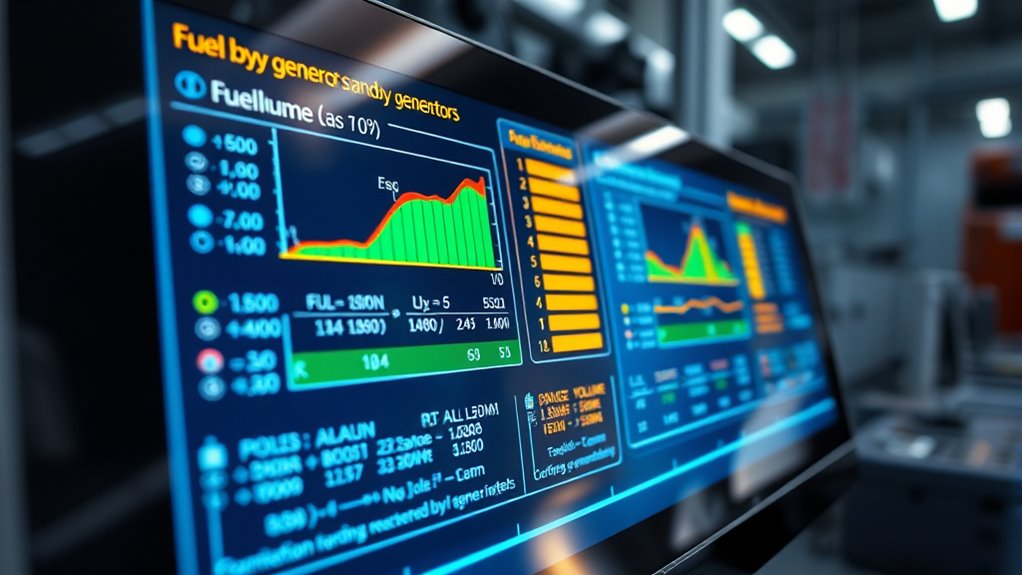
Have you ever wondered how to determine the energy output from a given volume of fuel? It starts with understanding fuel chemistry and combustion efficiency. First, you need to convert fuel volume into mass, then use the energy density specific to that fuel type. This process accounts for fuel’s chemical composition and how efficiently it burns. Here’s a simple breakdown:
| Fuel Type | Energy Density (MJ/L) | Combustion Efficiency (%) |
|---|---|---|
| Diesel | 35.8 | 85 |
| Gasoline | 34.2 | 80 |
| Propane | 25.3 | 90 |
Accounting for Fuel Efficiency and Losses

Once you’ve converted fuel volume into energy potential, the next step is to account for real-world factors that reduce usable energy. These include:
After converting fuel volume to energy, adjust for real-world factors like quality, maintenance, and conditions.
- Fuel quality: Lower-quality fuel can decrease efficiency and increase losses, so always choose high-grade fuel.
- Maintenance schedules: Regular upkeep ensures your generator runs at its best, minimizing inefficiencies and fuel wastage.
- Operational conditions: Heavy loads or extreme temperatures can reduce fuel efficiency, leading to higher consumption than estimated.
Planning Fuel Reserves for Extended Backup Periods

Planning fuel reserves for extended backup periods requires careful estimation of your generator’s daily fuel consumption and the total duration you need backup power. To guarantee reliable operation, determine the amount of fuel storage needed by multiplying daily consumption by the number of days you’ll require backup. Consider safety protocols when storing fuel; use approved containers, keep storage in well-ventilated areas away from heat sources, and regularly inspect for leaks. It’s vital to account for potential fuel losses during storage, such as evaporation or contamination, to avoid shortages. Proper planning not only guarantees continuous power but also minimizes risks associated with fuel handling and storage. By accurately calculating your reserves, you keep your generator ready for extended outages without compromising safety.
Monitoring and Adjusting Fuel Consumption Metrics Over Time

To guarantee your generator’s fuel management remains accurate over time, it’s essential to regularly monitor its consumption metrics and make adjustments as needed. Keep an eye on fuel quality, as contaminants can affect efficiency and skew consumption data. Regularly review your maintenance schedules to ensure components operate effectively, which directly impacts fuel use. To effectively monitor and adjust, consider these steps:
- Track fuel consumption against your baseline calculations to identify deviations.
- Reassess fuel quality periodically to prevent inefficient burning or engine issues.
- Adjust your maintenance schedules based on actual fuel use trends to maintain peak performance.
Frequently Asked Questions
How Do Temperature Fluctuations Affect Fuel Consumption Calculations?
Temperature effects considerably influence your fuel consumption calculations because they alter fuel density. When temperatures drop, fuel becomes denser, meaning you get more energy per volume, which can reduce your overall fuel needs. Conversely, higher temperatures decrease fuel density, causing you to consume more fuel for the same energy output. Always account for temperature fluctuations to guarantee accurate fuel calculations, adjusting your data based on current temperature conditions for precise generator operation.
What Impact Does Altitude Have on Generator Fuel Efficiency?
When it comes to altitude effects on your generator, you need to realize that higher elevations can decrease fuel efficiency. As you go higher, thinner air means the engine has to work harder, using more fuel. This is like trying to run uphill with a heavy pack. To keep your generator running smoothly, account for these altitude effects in your fuel consumption calculations, ensuring accurate estimates and peak performance.
How Can I Incorporate Fuel Additives Into Consumption Estimates?
You should factor in fuel additive effects by adjusting your consumption estimates based on the additive mixing techniques used. To do this, determine how much additive you’re adding per gallon of fuel, then consider its impact on efficiency—some additives improve combustion, reducing fuel needs, while others might have the opposite effect. Incorporate these adjustments into your calculations to make sure accurate fuel consumption estimates for your standby generator.
What Are the Safety Considerations When Storing Large Fuel Reserves?
Think of storing fuel reserves like guarding treasure—you must prioritize safety. You should guarantee fuel container safety by choosing approved, clearly labeled containers, and keep them away from heat sources and ignition points. Leak prevention is vital; regularly inspect containers for cracks or leaks. Store fuel in well-ventilated areas, and follow local regulations to minimize risk. Proper safety measures protect you and your environment from potential hazards associated with large fuel reserves.
How Does Generator Maintenance Influence Fuel Consumption Accuracy?
Generator maintenance directly impacts fuel consumption accuracy by ensuring peak performance. When you keep up with maintenance scheduling, you maintain high fuel quality and prevent issues like clogged filters or worn parts that can lead to increased fuel use. Regular checks help you identify and fix problems early, so your generator runs efficiently, conserving fuel and providing reliable power when you need it most.
Conclusion
Mastering these fuel consumption calculations is like wielding Da Vinci’s precision—your backup power becomes a work of art. By understanding load factors, efficiency, and reserves, you guarantee your generator’s performance is as reliable as the steady hand of history’s great innovators. Keep refining your approach, and you’ll navigate extended outages with the confidence of a seasoned strategist. In this game, knowledge isn’t just power—it’s your secret to staying ahead.
Fall Picks
fall essentials
As an affiliate, we earn on qualifying purchases.