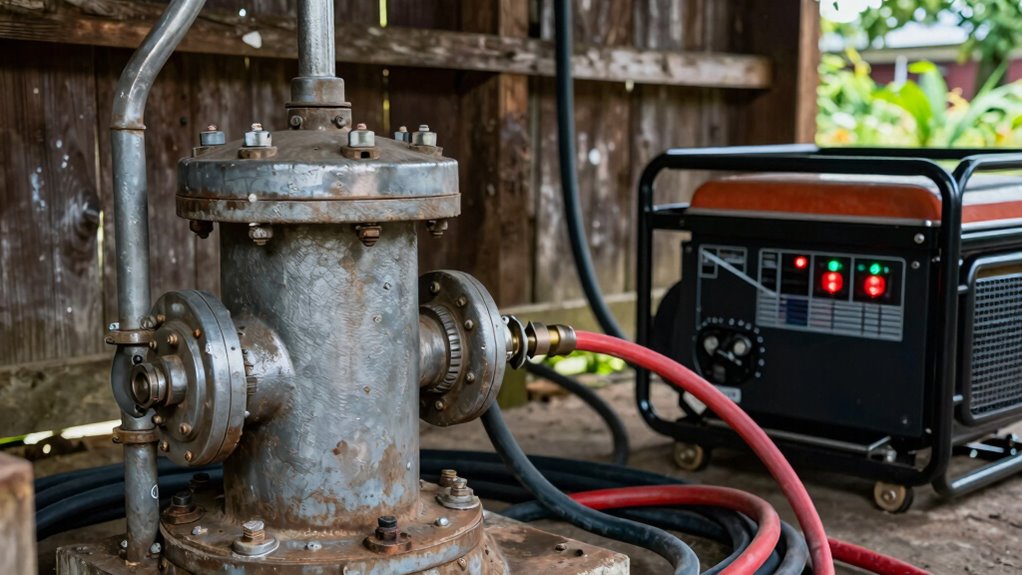

One common mistake is not accurately calculating your pump’s power needs, which can cause your backup system to fail or be too costly. You need to find the wattage and amperage on your pump’s label and add a margin for cloudy days or winter months. Proper wiring, matching voltage, and handling startup surges are also essential. Get these details right, and you’ll guarantee reliable operation without overspending—stay with us to learn exactly how to do it.
Key Takeaways
- Incorrectly estimating pump wattage or start-up current leads to inadequate or oversized backup systems.
- Failing to include margin for cloudy days and winter daylight hours causes system shortfalls.
- Using wiring gauges that are too thin results in voltage drops and equipment damage.
- Not matching inverter or transfer switch capacity with pump startup surges causes system trips.
- Overlooking system component compatibility and safety standards risks failure and non-compliance.
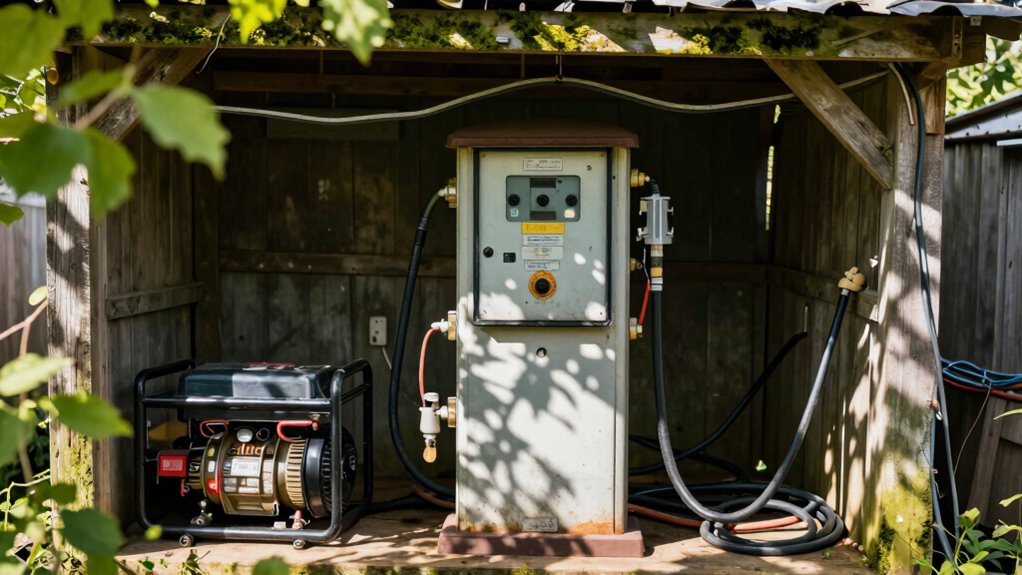
Have you ever experienced a power outage and suddenly found yourself without running water? If so, you know how disruptive it can be, especially when your well pump stops working. A reliable backup power system can make all the difference, but sizing it correctly is where many people trip up. One key aspect is understanding how to properly incorporate solar energy and electrical wiring into your backup setup. Without proper sizing, your system might fall short when you need it most, leaving you frustrated and still without water.
When considering solar energy as a backup power source, it’s essential to determine your well pump’s power requirements. You need to know the wattage and amperage of your pump, which usually can be found on the pump’s label or in its manual. Once you have those figures, you can calculate the size of the solar panel system required to generate enough power. Keep in mind that solar energy systems are weather-dependent, so you should plan for some margin to guarantee your well pump remains operational during cloudy days or shorter winter days. An oversized solar array might seem like a good idea, but it can be costly and unnecessary if your calculations are off. Proper sizing assures you get enough energy without overspending.
Calculate your well pump’s wattage and amperage to properly size your solar backup system and ensure reliable water during outages.
In addition to solar panels, you must address electrical wiring. It’s vital that all wiring from the solar panels to the inverter and then to the well pump is properly rated for the voltage and current involved. Incorrect wiring can cause safety hazards, reduce efficiency, or damage your equipment. When sizing your backup system, consider the length of wiring runs, as longer distances might require thicker gauge wiring to prevent voltage drop. Properly sized wiring not only safeguards your investment but also guarantees your well pump gets the reliable power it needs during outages. Paying attention to system components ensures your backup power setup is both safe and efficient. Additionally, consulting electrical code requirements can help you ensure compliance and safety standards are met.
Another factor often overlooked is how your backup system integrates with your existing electrical wiring. You may need a transfer switch or an inverter designed for your specific setup. These components must be correctly sized so that they can handle the start-up current of your well pump, which can be substantially higher than its running current. Failing to account for this can cause your system to trip or fail to start altogether when power is restored. Additionally, understanding solar energy system sizing is crucial to ensure your backup setup is both effective and economical.

Porch Shield Waterproof Universal Generator Cover 38 x 28 x 30 inch - for Most Generators 5500-15000 Watt, Black
- Compatible - More sizes for 5500w -15000w gas...
- Upgrade Material - Made of 600D polyester fabric...
- Tear Resistant & Waterproof - The high-level double...
As an affiliate, we earn on qualifying purchases.
Frequently Asked Questions
How Long Should My Backup Power Last During Outages?
You should aim for your backup power to last at least 24 hours during outages. Consider your pump’s power capacity and how much battery life you’ll need to keep it running reliably. If your power capacity is high, you might need a larger battery or additional backup. Remember, the longer your battery life, the more peace of mind you’ll have, especially during extended outages.
Can I Use a Generator for My Well Pump?
Think of your well pump as a trusty horse that needs the right feed to keep running smoothly. Using a generator is like providing that feed during a storm. Make sure your generator is properly maintained and provides enough power for your pump’s needs, focusing on pump maintenance and power efficiency. This way, you keep your water flowing without overloading your system, making backup power both reliable and efficient.
What Safety Precautions Are Necessary With Backup Power Systems?
You should prioritize safety protocols, like turning off the power before maintenance and avoiding contact with water or metal parts. Regularly check your backup power system’s battery maintenance to guarantee it’s functioning properly. Always wear protective gear, and keep the area dry. If unsure, consult a professional. These precautions help prevent electrical shocks, fires, or system failures, keeping you safe while maintaining reliable backup power for your well pump.
How Often Should I Test My Backup Power Setup?
Think of your backup power system as a trusted ship ready for stormy seas. You should test your setup at least once every three to six months to guarantee seaworthiness. During these tests, focus on battery maintenance and power efficiency to prevent surprises during an actual emergency. Regular checks keep the system reliable, so you’re prepared when you need it most, avoiding unexpected breakdowns that could leave you stranded.
Will a Larger Backup System Increase My Electricity Costs?
A larger backup system can increase your electricity costs because it has a higher battery capacity and consumes more power when in use. When your backup system is bigger, it draws more energy to operate, which can lead to higher energy bills over time. To manage costs, consider the power consumption of your system and choose a size that balances backup needs with efficient energy use.
Porch Shield Waterproof Universal Generator Cover 32 x 24 x 24 inch - for Most Generators 5000-10000 Watt, Black
- Compatible - More sizes for 5000w -10000w gas...
- Upgrade Material - Made of 600D polyester fabric...
- Tear Resistant & Waterproof - The high-level double...
As an affiliate, we earn on qualifying purchases.
Conclusion
Choosing the right backup power for your well pump isn’t just a small detail—it’s the difference between a calm, dry home and a flooded disaster waiting to happen. Get the sizing right, and you could save yourself from a mountain of headaches, ruined belongings, and endless frustration. Don’t let the wrong backup power turn your peaceful oasis into a chaotic mess overnight. Think big, plan smart, and never underestimate the power of proper sizing—your home depends on it!

Portable Solar Generator 300W Portable Power Station with 60W Solar Panel
- Portable Generator with 60W Solar Panel Included: with a big battery pack,...
- Multiple Charging outlets for camping gear with SOS Flashlight: with 2* 300W Max AC...
- Multiple Charging Optional, Solar Panel Charger 60W Included: ZeroKor portable power bank generator...
As an affiliate, we earn on qualifying purchases.

Generator Cover Portable Waterproof,Generator Rain Cover for Outside,Universal Generator Cover for Most Portable Generators 5000-10000 Watt(32"L x 24"W x 24"H)
- 【Dimensions】Generator Covers for outside 32x24x24 inch Fits Most...
- 【Windproof Design】This generator covers for outside features an...
- 【Side Ventilation Openings】This portable generator cover features side...
As an affiliate, we earn on qualifying purchases.