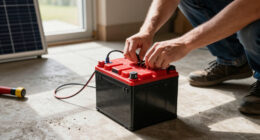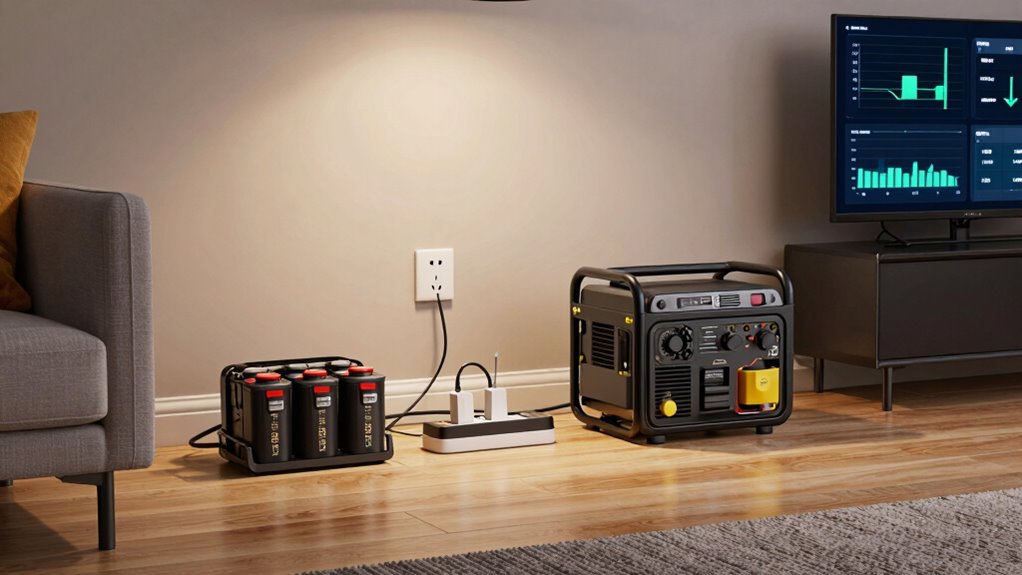

To choose a sensible backup power strategy, first assess your household’s essential appliances and total power needs. Consider different options like portable or standby generators, or renewable sources like solar panels with batteries. Think about fuel availability, storage, and efficiency to avoid overspending. Balance capacity, cost, and long-term sustainability to keep your home running smoothly during outages. If you want to explore smarter options and tailored solutions, there’s more useful info ahead.

Get backup power and energy gear delivered free — and shop member deals
- Fast, free delivery on millions of items
- Access to Prime Big Deal Days deals on October 6–7
- Prime Video, Amazon Music and more included
Key Takeaways
- Assess your home’s essential appliances and total power needs to determine the appropriate generator size.
- Consider the types of backup power sources—portable, standby, or renewable—based on budget and sustainability goals.
- Evaluate fuel options, storage limitations, and the feasibility of renewable energy solutions for long-term reliability.
- Prioritize energy efficiency and targeted power to conserve fuel and reduce environmental impact.
- Develop a comprehensive plan balancing cost, reliability, and sustainability to maintain home function during outages.
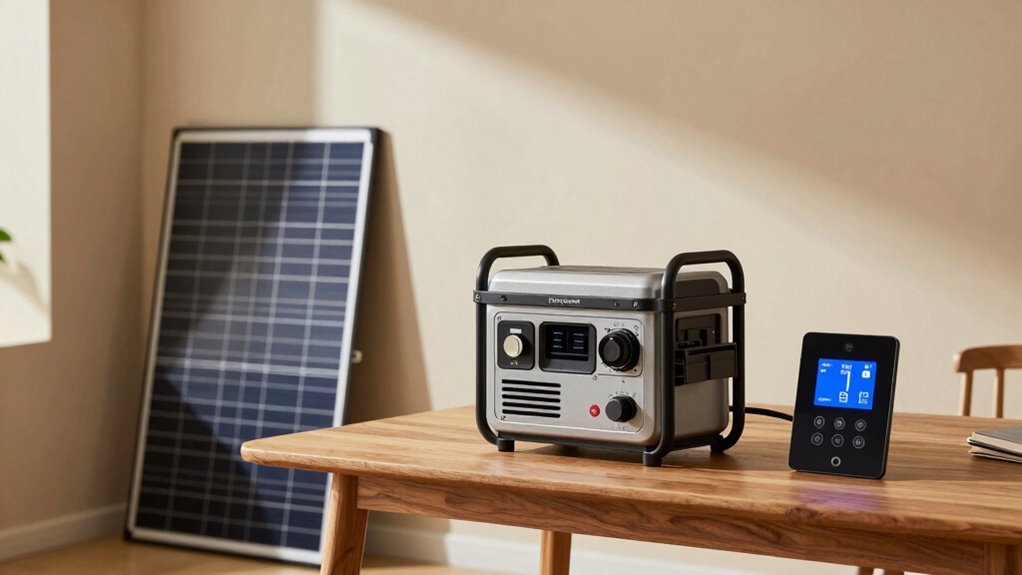
Have you ever experienced a power outage that left your home in darkness or disrupted your daily routine? If so, you already know how important it is to have a backup power strategy. When choosing the right solution, you need to think about your power outage preparedness and how to make the most of your energy resources. A sensible backup power plan isn’t just about having electricity during outages; it’s about doing so efficiently and cost-effectively. That means considering your energy efficiency considerations, making certain you don’t waste resources or run up unnecessary costs.
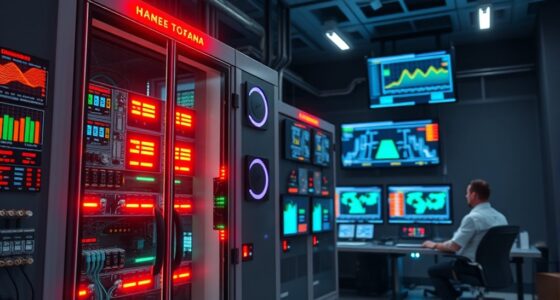
Start by evaluating your power needs. Do you only want to keep your essential appliances running—like your refrigerator, heating system, and lights—or do you want to power more of your home? This assessment helps you determine whether a smaller generator will suffice or if you need a larger, more robust system. Remember, the goal is to avoid overspending on capacity you don’t need, but also to guarantee you’re prepared for extended outages. Knowing what you need will streamline your decision-making process.
Assess your essential power needs to choose the right generator size and avoid overspending during outages.
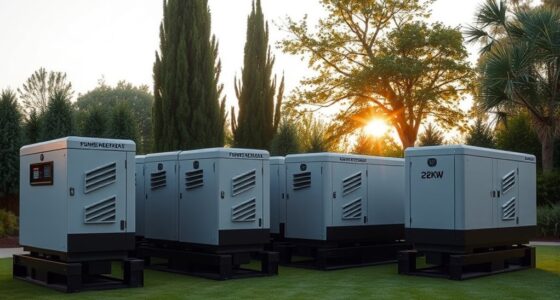
Next, consider the type of backup power source that aligns with your home’s energy efficiency considerations. Portable generators are affordable and flexible, but they tend to be less efficient and require fuel refills during longer outages. Standby generators, installed permanently, can automatically activate when the power goes out and often connect directly to your home’s electrical system. They tend to be more energy-efficient in the long run and can be tailored to power only the most critical circuits, conserving fuel and reducing emissions. This targeted approach not only saves you money but also minimizes your environmental impact. Additionally, understanding fuel storage limitations can help you plan for longer outages more effectively. Exploring renewable energy solutions, like solar panels combined with battery storage, is also worth considering for a cleaner, more sustainable backup power option.
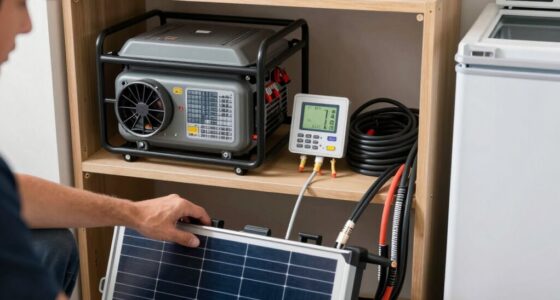
Another key factor is fuel availability and storage. Gasoline and propane are common options, but they have limitations in terms of storage time and safety. Some homeowners are exploring renewable energy solutions, like solar panels combined with battery storage systems, which can provide cleaner, more energy-efficient backup power. These systems often require a higher upfront investment but can offer long-term savings and independence from fuel supplies.
Ultimately, your choice should balance your household’s power needs with energy efficiency considerations and your budget. A well-planned backup power system ensures that you’re not only prepared for outages but also operating in a way that’s mindful of energy consumption and environmental impact. By carefully evaluating these factors, you can develop a reliable, efficient, and sustainable backup power strategy that keeps your home running smoothly, no matter what surprises come your way.
Frequently Asked Questions
How Long Should My Backup Power Last During an Outage?
Your backup power should last as long as you need it during an outage, which depends on your energy needs and the battery capacity. Consider how long essential appliances or devices, like your fridge or medical equipment, must run. To determine the right power duration, evaluate your typical outage length and verify your system offers enough battery capacity to cover those hours, giving you peace of mind until power is restored.
What Is the Most Cost-Effective Backup Power Solution?
Think of your backup power as a well-tended garden—cost-effective solutions bloom with the right choices. Opt for renewable sources like solar panels paired with sufficient battery capacity, which lower long-term costs and environmental impact. While upfront investments might be higher, you save on energy bills over time. This combination offers a reliable, budget-friendly backup, ensuring your home stays powered through outages without draining your wallet.
How Often Should I Test My Backup Power System?
You should test your backup power system at least once every three to six months. Regular testing guarantees your battery maintenance is up to date and your system monitoring is effective. During these tests, check for any signs of battery wear or system malfunctions. This routine helps confirm your backup power will work reliably when you need it, giving you peace of mind during power outages.
Can I Install a Backup Power System Myself?
Yes, you can install a backup power system yourself, but you need to take into account installation requirements and safety. Make certain you understand local codes, proper wiring, and environmental impact, especially if installing solar batteries or generators. If you’re comfortable with electrical work and adhere to safety standards, DIY installation is possible. However, for complex systems or if you’re unsure, hiring a professional guarantees safety, compliance, and peak performance.
What Safety Precautions Are Necessary for Backup Power Systems?
Did you know that improper generator use causes thousands of accidents annually? Safety precautions are vital for your backup power system. Always guarantee proper generator safety by keeping it outdoors, away from windows, and using certified extension cords. Regularly check and maintain batteries to prevent leaks or failures. Never overload your system, and always follow manufacturer instructions to protect yourself and your home during outages.
Conclusion
A well-planned backup power strategy keeps your home running smoothly during outages. Think about the fact that over 60% of power outages last more than an hour—imagine the inconvenience of losing heat, lights, or essential appliances during that time. By choosing the right solution now, you guarantee peace of mind and safety for your family. Don’t wait until the next storm hits—prepare today to stay powered, protected, and connected when it matters most.
Fall Picks
fall essentials
As an affiliate, we earn on qualifying purchases.