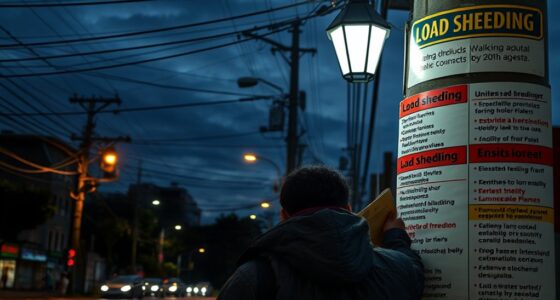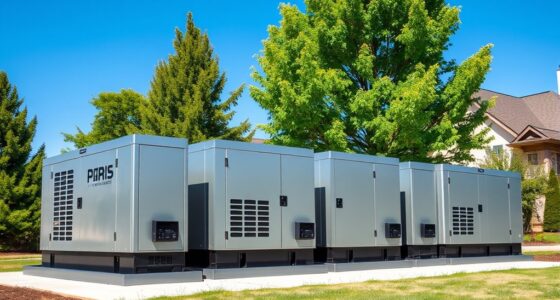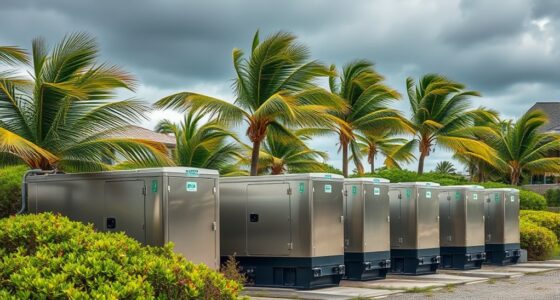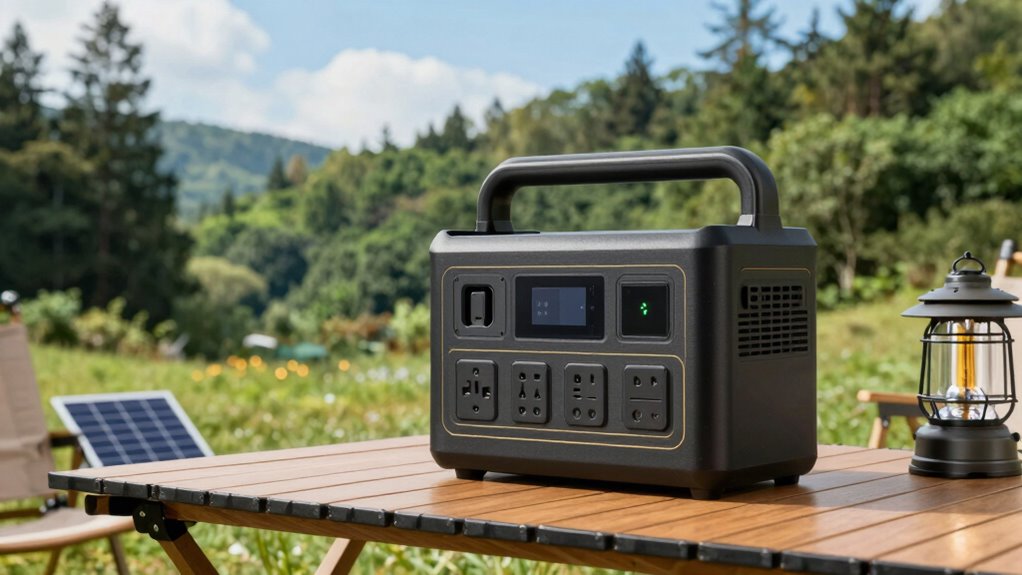

Portable power stations can keep your essential devices, like phones, tablets, and small appliances, running during short outages or outdoor activities. However, they cannot replace large appliances such as refrigerators, air conditioners, or power tools for extended use. Their limited capacity makes them unsuitable for long-term backup needs. To fully understand when and how to use them effectively, you’ll find helpful insights below.

Get backup power and energy gear delivered free — and shop member deals
- Fast, free delivery on millions of items
- Access to Prime Big Deal Days deals on October 6–7
- Prime Video, Amazon Music and more included
Key Takeaways
- Can replace small appliances and charging devices during outages or outdoor activities.
- Cannot replace full-scale generators or power grids for large appliances or continuous high-demand use.
- Suitable for emergency lights, medical devices, and communication tools, but limited for long-term, heavy-duty power needs.
- Depend on battery capacity and solar input, making them unsuitable for prolonged, high-energy consumption scenarios.
- Require proper planning and understanding of their technical limits to effectively support emergency and outdoor power needs.
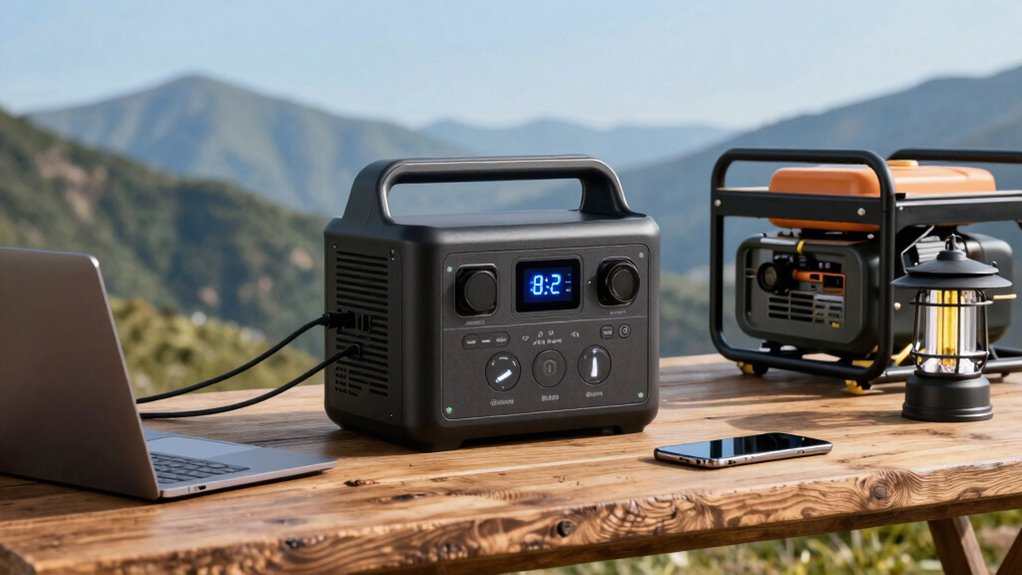
Have you ever been caught without power when you needed it most? It’s a frustrating experience, especially during storms, outages, or emergencies. That’s where portable power stations come into play. These devices can provide a reliable source of electricity for essential devices, making them valuable tools for emergency preparedness. They’re powered by rechargeable batteries and can be charged through wall outlets, solar panels, or vehicle adapters. While they’re versatile and convenient, it’s important to understand what they can and cannot replace.
Portable power stations offer reliable emergency energy but have limitations; they complement, not replace, full preparedness plans.
Portable power stations are excellent for running small appliances, charging phones, tablets, and laptops, and even powering lights or small medical devices. They’re especially useful in situations where access to the grid is limited or unavailable, such as camping trips, outdoor events, or during power outages. Because many models incorporate renewable energy options like solar charging, they align well with sustainable practices and can help reduce reliance on fossil fuels. This makes them a smart choice for those who prioritize renewable energy and want to be better prepared for emergencies.
However, despite their usefulness, portable power stations have their limits. They can’t replace a full-scale power generator or the electrical grid entirely. For example, they’re not designed to power large appliances like refrigerators, air conditioners, or electric stoves for extended periods. Their battery capacity is finite, and running heavy-duty equipment will quickly drain their power. Additionally, they don’t generate electricity on their own — they store it — so they depend on a charged battery or solar input for continuous use. During prolonged outages, you might find yourself running out of power faster than expected. The efficiency of conversion and energy storage is a key factor in their performance, which is influenced by the contrast ratio of the device. Understanding these limitations is crucial for effective emergency planning and ensuring your power needs are adequately met.
Furthermore, portable power stations are not a substitute for all-encompassing emergency preparedness plans. They are one piece of a larger strategy that should include backup water supplies, food storage, communication devices, and safety measures. Relying solely on a portable power station could give a false sense of security if you don’t have enough backup options or fail to plan for long-term outages. It’s also important to consider the energy capacity of your station to ensure it can meet your specific needs during an emergency. Proper power management and understanding their capabilities can help maximize their usefulness during critical times. Additionally, considering the energy efficiency of your devices can help extend the life of your power station during use. Being aware of the storage capacity and how it affects your energy availability can further enhance your preparedness.
Frequently Asked Questions
Can Portable Power Stations Charge Electric Vehicles?
Portable power stations generally can’t charge electric vehicles efficiently due to electric vehicle compatibility issues and charging speed limitations. While some high-capacity models might provide a trickle charge, they usually lack the power output needed for quick, full charges. If you need reliable EV charging, dedicated chargers or charging stations are your best bet. Portable power stations are better suited for smaller devices and emergency backup, not as a primary EV charging source.
How Long Do Portable Power Stations Typically Last?
Most portable power stations last about 3 to 5 years, with some high-quality models reaching up to 10 years. The battery lifespan is vital, as it determines how long your device will serve you well. Proper maintenance, like keeping the unit charged and avoiding extreme temperatures, extends this lifespan. You should also monitor the battery’s health regularly to guarantee peak performance and prevent premature failure.
Are They Safe to Use Indoors?
Yes, portable power stations are generally safe to use indoors if you follow proper indoor safety and ventilation requirements. Make sure to use them in well-ventilated areas to prevent buildup of fumes or heat. Keep them away from water and flammable materials. Always read the manufacturer’s instructions, and avoid overloading the station to guarantee safe indoor operation. Proper precautions make these devices safe for indoor use.
Do They Work During a Power Outage?
Yes, portable power stations work during a power outage, making them great for outdoor camping and emergency backup. You can rely on them to power essential devices when the grid goes down. They’re easy to use indoors or outdoors, providing a versatile energy source. Just make certain you select a model with enough capacity for your needs, and you’ll stay connected and comfortable during unexpected outages.
Can They Power Large Household Appliances?
You probably think a portable power station can run your entire house, but it’s more like powering a tiny outdoor camping setup with renewable energy. These stations can handle small appliances and essential devices, but giant household appliances like refrigerators or air conditioners are out of reach. They’re perfect for outdoor adventures or emergency power, but don’t expect them to replace your main power source for large appliances.
Conclusion
Portable power stations are versatile tools, perfect for emergencies, camping, or remote work. However, they can’t fully substitute traditional generators for heavy-duty, continuous power needs or large appliances. Did you know that most portable stations can only handle around 300-2000W? This limits their use for high-demand devices. So, while they’re great for many situations, understanding their limits ensures you choose the right power solution for your needs.
Fall Picks
fall essentials
As an affiliate, we earn on qualifying purchases.