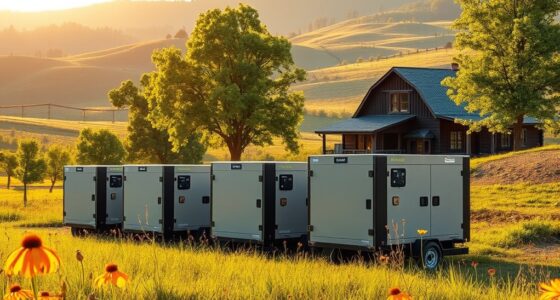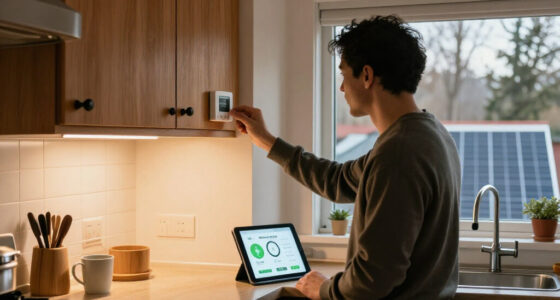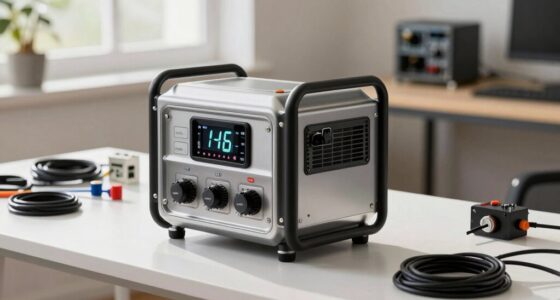
During outages, focus on keeping essential appliances like refrigerators and water pumps running to maintain food safety and water access. Limit use of electric stoves and ovens unless you have reliable alternative energy, and avoid overloading power sources. Use portable propane stoves for cooking and prioritize hygiene by running water heaters and maintaining cleanliness. Managing your power consumption carefully helps prevent overloads and keeps critical functions working longer. Discover more tips to guarantee your kitchen stays functional and safe.

Get backup power and energy gear delivered free with Prime
- Fast, free delivery on millions of items
- Prime Video, Amazon Music and more included
- Member-only deals all year
Key Takeaways
- Prioritize essential appliances like refrigerators and water pumps to prevent spoilage and maintain hygiene.
- Limit use of electric appliances; operate only one high-demand device at a time to avoid overloads.
- Use alternative cooking methods, such as propane stoves, to reduce strain on electrical power sources.
- Monitor and adhere to appliance safety guidelines to prevent malfunctions or hazards during outages.
- Conserve energy by limiting non-essential appliance use and maintaining equipment to ensure reliable operation.

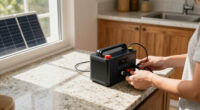
During an outage, knowing which kitchen appliances to use first can make a big difference in conserving power and maintaining essential functions. When the lights go out, your goal is to prioritize appliances that support your health, safety, and basic needs. This is especially important if you’re relying on alternative energy sources, like generators or solar-powered systems, which often have limited capacity. By understanding how to allocate your energy wisely, you can avoid overloading your system and ensure that critical appliances stay operational.
Start with appliances that help you preserve food and water. If you have a small portable refrigerator or cooler, keep it running to prevent food spoilage. If your main refrigerator is full, try to limit its use to essential items only, and avoid opening it frequently, which wastes energy. When using alternative energy sources, such as a generator, make sure to follow appliance safety guidelines. Overloading your generator can cause damage or safety hazards, so only connect appliances that are necessary. Also, be cautious with extension cords, ensuring they are rated for the power load to prevent electrical fires. Understanding power capacity is crucial for managing your energy during outages effectively.
Prioritize food and water preservation; use essential appliances safely and avoid overloading your generator during outages.
Next, focus on appliances that support your basic hygiene and health. A water pump, if you have a well, or a portable water heater, becomes critical for maintaining cleanliness and preventing illness. If your stove or oven relies on electric power and you have a gas stove, avoid using the electric appliances until power is restored to prevent accidents. Gas appliances should be operated carefully, with proper ventilation, and only if you’re confident in their safety. Remember, appliance safety is paramount; faulty or improperly used devices can pose serious risks during outages. Additionally, knowing safe appliance operation can help prevent accidents and extend the lifespan of your equipment. Proper maintenance and awareness of appliance limits can also reduce the risk of malfunctions during emergencies. Being aware of body piercing safety practices can serve as a reminder to keep your tools and equipment clean and hygienic, even in challenging situations.
Cooking is essential, but during an outage, you may need to adapt. If you have a portable or camp stove that runs on propane, it becomes invaluable for preparing hot meals. Electric cooktops or ovens should be a lower priority unless you have a reliable, safe alternative energy source. Keep in mind that using multiple appliances simultaneously can strain your power system, so use them judiciously. When in doubt, consult your appliance manuals or safety guidelines to avoid damage or hazards. Being aware of power consumption helps optimize your energy use and prolongs the availability of critical appliances. Also, knowing how to safely operate alternative cooking methods can be a lifesaver during extended outages.
Ultimately, your focus should be on maintaining safety and essential functions, especially when power is limited. Prioritize appliances that support food safety, water access, and hygiene, and always operate your equipment following safety protocols. Being strategic in how you use your appliances during outages, especially when relying on alternative energy, helps conserve power, protects your equipment, and ensures your household stays safe and functional until power is restored.
Frequently Asked Questions
How Long Can Perishable Foods Stay Safe Without Power?
Perishable foods typically stay safe for about 4 hours without power if the fridge door stays closed. To maximize food safety, follow storage tips like keeping the fridge and freezer doors closed as much as possible. For longer outages, consider using coolers with ice packs. Always check for signs of spoilage before consuming, and when in doubt, discard perishable items to prevent foodborne illnesses.
Are There Energy-Efficient Appliances to Use During Outages?
Yes, there are energy-efficient appliances you can use during outages, like portable solar-powered chargers and hand-crank devices. These appliances help conserve power and reduce energy consumption. To maximize efficiency, use power-saving techniques such as limiting appliance use to essential tasks, unplugging unused devices, and using manual tools like hand mixers or non-electric can openers. These steps help you manage energy better and keep essential appliances running longer during outages.
How Should I Dispose of Spoiled Food After an Outage?
After an outage, you should dispose of spoiled food promptly to guarantee food safety. Wrap the spoiled items securely and toss them in the trash, preferably in a sealed bag to prevent odors and pests. Follow storage tips by cleaning your fridge and freezer with disinfectant before restocking. Always check for signs of spoilage—off smells, discoloration, or slimy textures—and discard any questionable items to keep your home safe.
What Safety Precautions Should I Take With Alternative Cooking Methods?
Investigating cooking safety with alternative methods shows that you should always guarantee proper ventilation and keep a fire extinguisher nearby. Use outdoor grills or camping stoves outdoors to prevent carbon monoxide buildup. Never leave cooking devices unattended, and keep flammable materials away. Follow manufacturer instructions carefully, and verify that your equipment is in good condition to avoid accidents. Prioritize safety to enjoy cooking during outages without risking harm or fire hazards.
Can I Use a Generator Safely in the Kitchen?
You should never use a generator inside your kitchen due to serious safety concerns. Generator safety is vital because it produces dangerous carbon monoxide fumes that can quickly fill indoor spaces, leading to poisoning. To avoid kitchen hazards, always operate your generator outdoors, away from windows and vents, and use extension cords to power essential appliances safely. This helps prevent accidents and keeps your family safe during outages.
Conclusion
Remember, during outages, prioritizing kitchen loads guarantees your essentials stay fresh and safe. Focus on preserving perishable foods first—about 76% of household food waste occurs when power is lost, highlighting the importance of quick action. By carefully managing your fridge, freezer, and cooking appliances, you can minimize waste and keep your family safe. Staying organized and calm makes all the difference, turning a stressful situation into a manageable one.
Halloween Picks
halloween
As an affiliate, we earn on qualifying purchases.