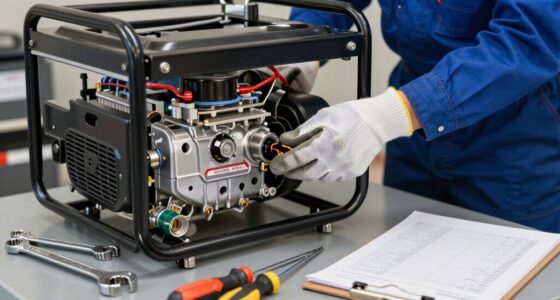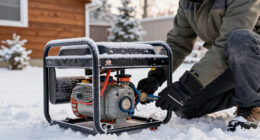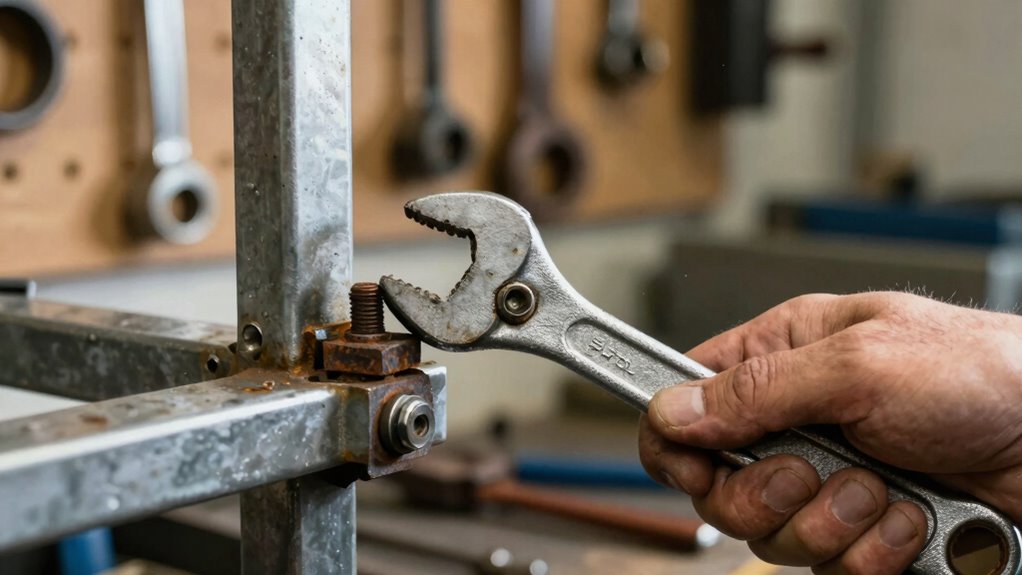

To check for loose fasteners and mounts, start by visually inspecting all bolts, nuts, screws, and brackets with a flashlight, especially in dark or tight spots. Look for signs of wear, corrosion, missing fasteners, or cracks. Then, gently tug or twist each fastener to test their tightness—if they shift or feel loose, they’re in need of tightening. Maintaining a systematic inspection routine helps guarantee safety and performance; keep going to learn more detailed tips.

Get backup power and energy gear delivered free with Prime
- Fast, free delivery on millions of items
- Prime Video, Amazon Music and more included
- Member-only deals all year
Key Takeaways
- Visually inspect mounting areas with a flashlight for signs of movement, corrosion, or damage on fasteners and mounts.
- Gently tug or twist fasteners to test for looseness or abnormal movement.
- Check for missing, broken, or visibly worn fasteners and mounting components.
- Use a torque wrench to verify fasteners meet specified tightness levels.
- Examine surrounding parts for signs of wear or damage that could affect mount stability.
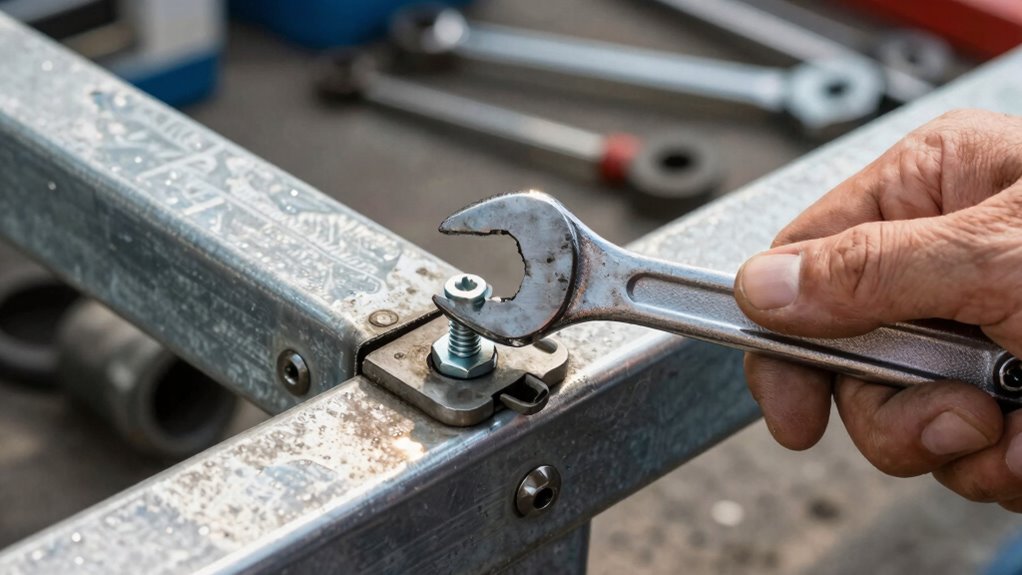
Have you ever noticed unusual rattling sounds or vibrations in your vehicle or equipment? If so, it’s a sign that something might be loose, and you need to check for loose fasteners and mounts. Regular inspections are vital because loose parts can cause damage or compromise safety. Start by visually inspecting the areas where components are mounted—look for any signs of movement, wear, or corrosion. Use a flashlight if needed to get a clear view, especially in tight or dark spots. During your inspection, pay close attention to bolts, nuts, screws, and brackets. If any fastener appears to be missing, broken, or out of place, it needs immediate attention.
Unusual rattling or vibrations may indicate loose fasteners or mounts needing immediate inspection.
When checking for loose fasteners, don’t just rely on visual cues. Give each one a gentle but firm tug or twist to see if it moves or shifts. Sometimes, fasteners may look tight but can be loose under slight pressure. Remember to check the mounts for any signs of cracking, bending, or wear, as damaged mounts can cause vibrations or instability. It’s also wise to inspect the surrounding components—any looseness in one part could affect others nearby. Additionally, understanding climate and impact factors can help you anticipate and address issues caused by environmental conditions that accelerate wear and corrosion. Recognizing signs of rust or corrosion early can prevent the weakening of fasteners over time. Incorporating regular maintenance checks into your routine can further extend the lifespan of your equipment. Being aware of fastener torque specifications is essential to ensure proper tightening and prevent issues later on. Using a torque wrench can help you achieve accurate tightness, especially in critical areas.
As you perform this task, always keep safety precautions in mind. Wear gloves and eye protection to avoid injuries from sharp edges or debris. Make sure your vehicle or equipment is turned off and secured before you start working on it. If you’re working on a vehicle, use jack stands or ramps to lift it safely if you need to access underneath. Never rely solely on a quick visual inspection—take your time and test each fastener carefully. Tighten any loose fasteners to the manufacturer’s specifications, but avoid overtightening, which can strip threads or damage components.
Incorporate inspection tips like using a torque wrench for precise tightening and checking for signs of rust or corrosion that may weaken fasteners over time. Keep an organized list of fasteners and mounts you’ve checked, so you don’t miss any areas during your inspection. Regularly repeating this process can help catch issues early, saving you from costly repairs or safety hazards later. By following these steps, you guarantee your vehicle or equipment remains safe and functions properly, giving you peace of mind on every ride or job.
Frequently Asked Questions
What Tools Are Best for Tightening Loose Fasteners?
You should use a torque wrench to tighten loose fasteners properly, ensuring they’re secured to the correct specifications. For added security, apply thread lockers to prevent future loosening. A torque wrench gives you precision, while thread lockers provide extra grip. Together, these tools help you tighten fasteners effectively, reducing the risk of them coming loose again and maintaining the safety and stability of your equipment.
How Often Should Fasteners Be Inspected?
You should inspect fasteners regularly, ideally every 3 to 6 months, depending on fastener materials and application conditions. Inspection intervals guarantee fasteners stay secure and prevent issues. For heavy-use or harsh environments, check more frequently. Use visual checks and tools like torque wrenches to verify tightness. Consistent inspection helps maintain safety and reliability, keeping fasteners in good condition and preventing costly repairs or failures.
Can Loose Fasteners Cause Equipment Failure?
Absolutely, loose fasteners can cause equipment failure. Think of it like a ship’s rigging—if bolts aren’t tight, vibration issues escalate, leading to material fatigue and eventual breakdown. Over time, this instability weakens components, risking costly downtime. Regular inspections catch these issues early, preventing minor problems from turning into major failures. So, guarantee fasteners stay secure to keep your equipment running smoothly and avoid unexpected failures.
Are There Specific Signs Indicating Fastener Loosening?
Yes, there are signs indicating fastener loosening. Vibration causes fasteners to gradually loosen, often resulting in unusual noises or movement. Corrosion effects can weaken fasteners over time, making them easier to loosen or break. Look for visible rust, corrosion, or discoloration around fasteners. If you notice any shifting, rattling, or uneven operation, it’s a clear sign to check the fasteners and tighten or replace them as needed.
How Do Environmental Conditions Affect Fastener Stability?
Think of fasteners like a ship’s anchor, holding steady amid changing tides. Environmental conditions, like corrosion impact from moisture and temperature effects, can weaken their grip over time. Excessive heat causes expansion, loosening fasteners, while cold contracts materials, potentially causing cracks. Humidity accelerates corrosion, compromising the metal. You must regularly inspect and tighten fasteners to guarantee they stay secure, especially in harsh environments where these factors are at play.
Conclusion
By regularly inspecting your fasteners and mounts, you guarantee safety, maintain performance, and prevent costly repairs. By checking for looseness, tightening when needed, and monitoring for signs of wear, you take control of your equipment’s longevity. By staying vigilant, staying proactive, and staying committed to maintenance, you keep everything secure, everything reliable, and everything running smoothly. Remember, a quick check today can save you from bigger problems tomorrow—so make it part of your routine.
Halloween Picks
halloween
As an affiliate, we earn on qualifying purchases.