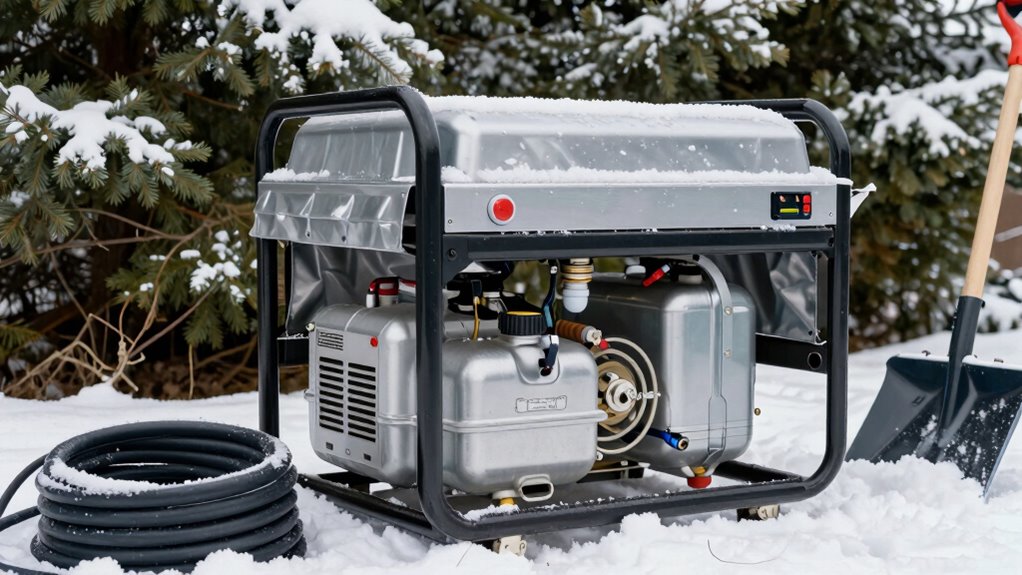

To prep your generator for ice storm season, start by performing regular maintenance—check oil, filters, and spark plugs, and run it to catch issues early. Store fuel properly in cool, dry containers with stabilizer, and make sure you have enough for the storm. Protect your generator from snow and moisture by sheltering it and keeping it clean. Test all controls and transfer switches to confirm they work smoothly. Keep these steps in mind, and you’ll be better prepared for whatever winter brings.

Get backup power and energy gear delivered free with Prime
- Fast, free delivery on millions of items
- Prime Video, Amazon Music and more included
- Member-only deals all year
Key Takeaways
- Perform thorough maintenance checks, including oil, filters, and spark plugs, before ice storm season.
- Store fuel in proper containers with stabilizer and ensure sufficient supply for extended outages.
- Test your generator and transfer switch to confirm reliable operation during power outages.
- Shelter the generator from snow, ice, and moisture to prevent environmental damage.
- Keep the generator clean and accessible for quick use during winter storms.
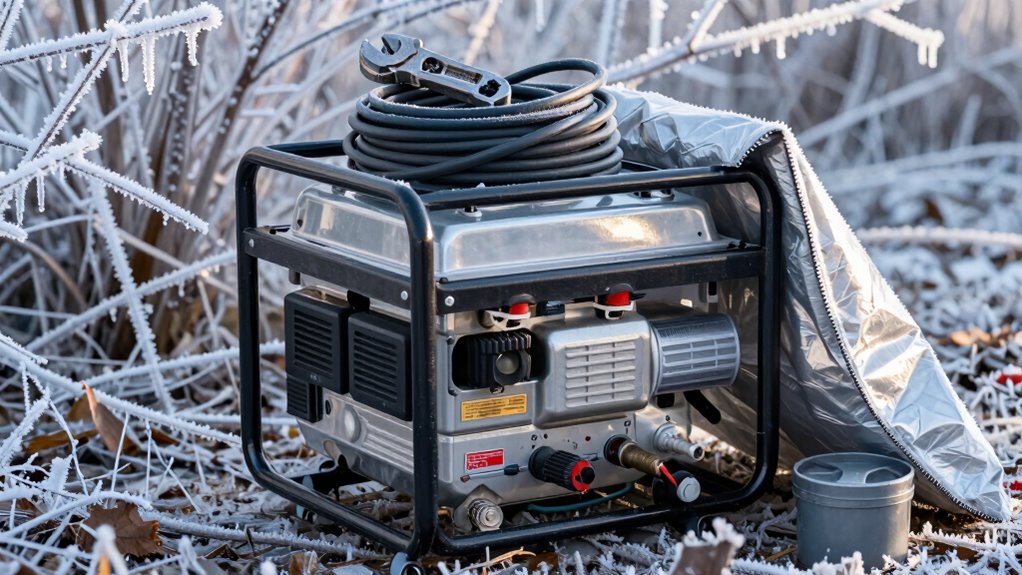
Ice storms can strike unexpectedly, causing power outages that leave you in the dark and cold. When this happens, a reliable generator becomes your lifeline, helping you stay warm, keep your food fresh, and run essential appliances. To make sure your generator is ready to perform when you need it most, you should start by reviewing your maintenance checklist. Regular maintenance isn’t just about keeping the unit running; it’s about guaranteeing it operates efficiently and safely during emergencies. A thorough check of oil levels, spark plugs, filters, and fuel lines can prevent breakdowns when the storm hits. Remember, a well-maintained generator also tends to be more fuel-efficient, which means you’ll get longer run times on each tank, saving you money and reducing the need for frequent refills.
Regular generator maintenance ensures safety, efficiency, and longer run times during unexpected power outages.
Next, consider the importance of fuel storage. During ice storm season, you want to have enough fuel stored safely and in proper containers. If your generator runs on gasoline, keep it in a cool, dry place, and consider adding fuel stabilizer to prevent it from degrading over time. This way, you won’t be caught off guard with stale fuel that could clog your engine or cause starting problems. If your generator uses propane or diesel, ensure your supply is sufficient and stored correctly. Proper fuel management not only enhances your generator’s fuel efficiency but also ensures it will start smoothly when the power goes out. Additionally, understanding the protocols for generator safety can help prevent accidents and ensure proper operation during outages.
Before the storm arrives, test your generator thoroughly. Start it up and let it run for a few minutes. Listen for unusual noises or vibrations and check that all controls work correctly. This test helps identify potential issues early, giving you time to address them before an outage. Also, ensure your transfer switch is functioning properly, so you can switch seamlessly from grid power to generator power without risking damage or safety hazards.
Finally, keep your generator sheltered from the elements but accessible for quick use. Protect it from snow, ice, and moisture, which can damage components or hinder performance. Regularly clean your generator and remove any accumulated debris or snow. By following these steps—checking your maintenance checklist, managing fuel efficiently, testing the unit, and protecting it—you’ll be better prepared for ice storms. When power lines go down and the cold settles in, your generator will be ready to keep your household running smoothly, providing peace of mind during harsh winter weather.
Frequently Asked Questions
How Often Should I Run My Generator During the Off-Season?
You should run your generator every 4 to 6 weeks during the off-season. This keeps the fuel stable and prevents it from degrading, ensuring it’s ready when you need it. During these runs, check the battery and perform maintenance to keep it charged and in good condition. Regular use also helps identify any issues early, so your generator remains reliable for ice storms or other emergencies.
Can I Use Any Type of Fuel in My Generator?
You can’t use any type of fuel in your generator; fuel compatibility depends on your generator’s design. Always check the manufacturer’s guidelines for compatible fuels, like gasoline, diesel, or propane. Using the wrong fuel can damage your generator and compromise safety. Regular generator maintenance, including using the correct fuel, ensures maximum performance during ice storms. Stick to recommended fuels to keep your generator reliable and extend its lifespan.
What Safety Precautions Should I Take When Operating During a Storm?
Operating your generator during a storm is like walking a tightrope—you need focus and caution. Always stay aware of emergency shutdown procedures if you notice any strange noises or smoke. Keep fuel safety in mind by storing fuel properly and avoiding spills. Never run your generator indoors or near windows to prevent carbon monoxide poisoning. Stay dry, maintain a safe distance, and never overload your unit to keep yourself safe during stormy weather.
How Do I Store My Generator Properly for Winter?
To store your generator properly for winter, start by stabilizing the fuel to prevent degradation and clogging. Next, disconnect and maintain the battery by cleaning terminals and keeping it charged in a cool, dry place. Store the generator in a sheltered, dry area, away from snow and ice. Regularly check fuel and battery condition throughout winter to guarantee it’s ready when you need it.
Is It Necessary to Have a Professional Inspect My Generator Annually?
Think of your generator like a trusted friend who needs regular checkups. Yes, it’s important to have a professional inspect your generator annually, especially during ice storm season. A maintenance checklist ensures it’s reliable when you need it most. Plus, proper inspections can impact your insurance considerations, potentially lowering premiums and protecting you financially. Don’t wait for trouble—schedule that professional inspection and keep your backup power ready!
Conclusion
By prepping your generator now, you’re building a sturdy shield against nature’s icy wrath. Think of it as your trusty winter warrior, ready to roar to life when the storm hits. With a little effort, you’ll keep the lights on and your home warm, no matter how frozen the world outside becomes. Stay vigilant and prepared, and you’ll weather the ice storm season like a seasoned sailor steering icy waters with confidence.
Halloween Picks
halloween
As an affiliate, we earn on qualifying purchases.