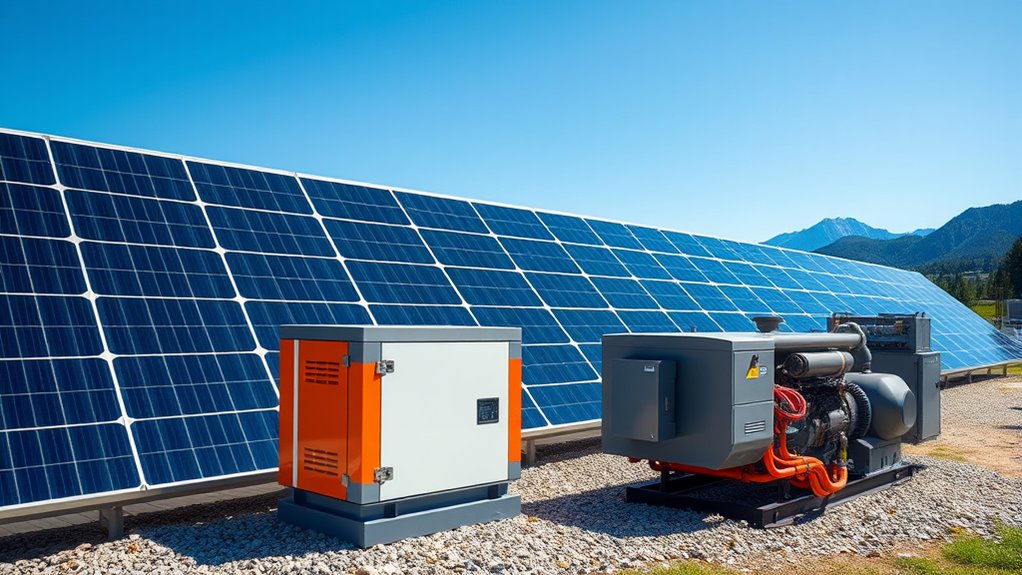

Integrating solar, battery storage, and generators helps you maintain a steady power supply, ensuring reliable energy even during cloudy days or outages. Solar panels provide free, renewable energy, which is stored in batteries for later use, reducing reliance on the grid and lowering costs. Generators act as backups for extended low-sun periods, creating a resilient system. To discover how these components work seamlessly together for maximum efficiency, explore the details below.
Key Takeaways
- Layered energy sources ensure continuous power supply during daylight, low solar production, or outages.
- Combining solar, batteries, and generators optimizes energy use, reduces costs, and enhances system resilience.
- Battery storage captures excess solar energy for later use, minimizing waste and reliance on the grid.
- Generators provide backup power during extended cloudy days or grid disruptions, ensuring operational stability.
- An integrated system supports environmental sustainability by lowering emissions and promoting renewable energy utilization.
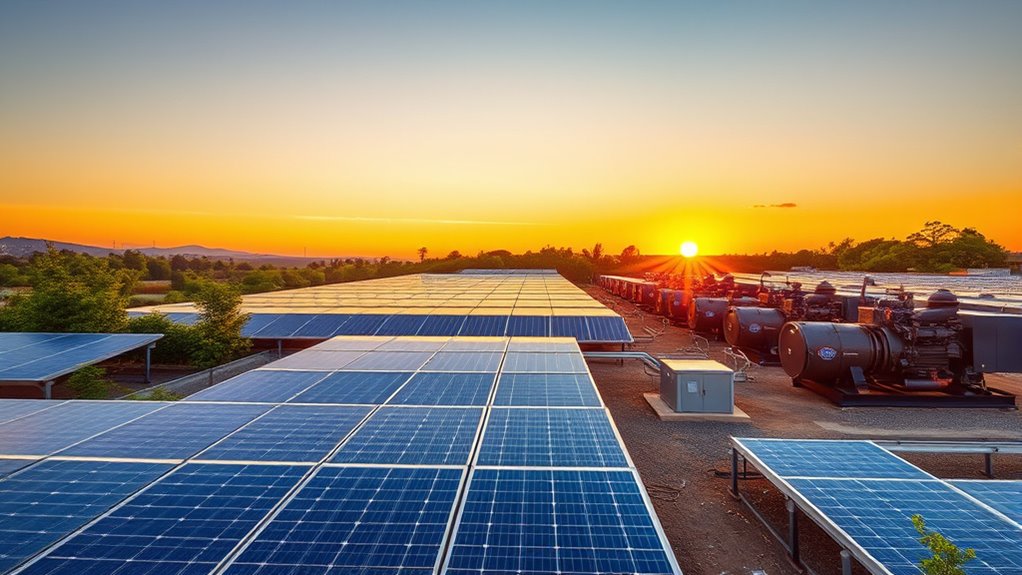
Integrating solar power, battery storage, and generators creates a reliable and efficient energy system for your home or business. This combination not only guarantees a steady power supply but also offers notable opportunities for cost-saving strategies and reducing your environmental impact. When you thoughtfully blend these energy sources, you can minimize reliance on the grid, lower your energy bills, and lessen your carbon footprint.
Integrating solar, batteries, and generators ensures reliable, eco-friendly energy savings and greater independence.
To maximize cost savings, you should consider how each component interacts within your system. Solar panels generate free, renewable energy during the day, considerably cutting your electricity costs. However, since sunlight isn’t available at night or during cloudy days, battery storage becomes essential. By storing excess solar energy, you can draw from your batteries when solar production dips, avoiding expensive grid electricity and decreasing your overall energy expenses. Incorporating a generator as a backup provides extra security during prolonged cloudy periods or power outages, ensuring your system remains resilient. This layered approach helps you optimize your energy use and reduce unnecessary expenses.
From an environmental perspective, integrating these sources supports a cleaner, greener lifestyle. Solar power produces no emissions, making it an eco-friendly choice. Battery storage allows you to use more of your generated solar energy rather than wasting it, enhancing the system’s efficiency and further decreasing reliance on fossil fuels. Generators, especially modern, eco-friendly models, can run on cleaner fuels or be designed to emit fewer pollutants. By balancing these sources, you profoundly lower your carbon footprint, contributing to a healthier planet. You’ll also reduce demand on the grid, which often relies heavily on fossil fuels, amplifying the positive environmental impact.
Operational efficiency is another advantage of integration. When solar output exceeds your immediate needs, the excess is stored in batteries rather than sent back to the grid or lost. During periods of high demand or low solar production, your batteries and generator kick in seamlessly, ensuring continuous power without interruption. This synergy minimizes energy waste and helps you get the most out of your investment. Plus, with proper management, you can schedule generator use during off-peak hours, further lowering costs and emissions. Incorporating mindfulness practices, such as planning energy use during optimal times, can enhance your system’s efficiency and sustainability.

Porch Shield Generator Cover for 5500-15000W, 38 x 28 x 30 inch, Black
- Compatible - More sizes for 5500w -15000w gas...
- Upgrade Material - Made of 600D polyester fabric...
- Tear Resistant & Waterproof - The high-level double...
As an affiliate, we earn on qualifying purchases.
Frequently Asked Questions
How Do I Determine the Right Size for Each Component?
To determine the right size for each component, start with sizing calculations based on your energy needs and usage patterns. Consider your peak power demands and backup requirements. Verify component compatibility by matching inverter capacity with solar panel output, and battery capacity with your storage needs. Consulting with a professional helps refine these calculations, ensuring you select appropriately sized components that work efficiently together, maximizing system performance and reliability.
What Are the Maintenance Requirements for Integrated Systems?
Your integrated system needs regular maintenance to stay reliable—think of it as the heartbeat of your energy setup. Check component durability by inspecting solar panels, batteries, and generators periodically, and keep everything clean and secure. You should also prioritize system redundancy, ensuring backup components are ready to kick in if one fails. Routine inspections, cleaning, and testing will prevent costly breakdowns and keep your system humming smoothly, rain or shine.
How Does Integration Impact Overall System Costs?
Integration can increase initial setup costs, but it enhances cost efficiency over time. By optimizing your system, you reduce energy waste and reliance on external power sources, lowering operational expenses. While upfront investments may be higher, the improved system efficiency and smarter energy management lead to long-term savings. Ultimately, integrating these components balances initial costs with ongoing benefits, making your energy system more cost-effective and reliable.
Can Existing Systems Be Upgraded to Include All Three?
Yes, you can upgrade your existing system to include all three components. Hybrid configurations are designed for energy compatibility, allowing seamless integration of solar, batteries, and generators. You’ll need to assess your current setup, choose compatible equipment, and possibly update your control systems. This upgrade enhances reliability, efficiency, and energy independence, making your system more resilient and versatile for various energy needs.
What Safety Considerations Are Involved in System Integration?
When integrating solar, battery storage, and generators, you need to prioritize fire safety and proper electrical grounding. Make certain all components are installed according to safety codes to prevent electrical fires and shocks. Regularly inspect connections and grounding systems to avoid faults. Use fire-resistant materials where necessary, and train personnel on emergency procedures. Proper safety measures protect both your system and your property from potential hazards.
Porch Shield Generator Cover for 5000-10000W, 32 x 24 x 24 inch, Black
- Compatible - More sizes for 5000w -10000w gas...
- Upgrade Material - Made of 600D polyester fabric...
- Tear Resistant & Waterproof - The high-level double...
As an affiliate, we earn on qualifying purchases.
Conclusion
Just as the phoenix rises from its ashes, integrating solar, batteries, and generators empowers you to face any challenge. This harmony creates a resilient, self-sufficient energy system that withstands storms and outages. By embracing this integration, you’re not just powering your home — you’re forging a legacy of sustainability and strength. Remember, it’s not just about energy; it’s about awakening your potential to adapt and thrive, even in the darkest of times.

Portable Solar Generator 300W Portable Power Station with 60W Solar Panel
- Portable Generator with 60W Solar Panel Included: with a big battery pack,...
- Multiple Charging outlets for camping gear with SOS Flashlight: with 2* 300W Max AC...
- Multiple Charging Optional, Solar Panel Charger 60W Included: ZeroKor portable power bank generator...
As an affiliate, we earn on qualifying purchases.

Jackery Explorer 300 Portable Power Station,292Wh
- Ultra-Lightweight: At only 7.5 lbs, the...
- Versatile Power for 6 Devices: Equipped with 2 AC outlets,...
- Built to Last: Upgraded with premium LiFePO4 chemistry,...
As an affiliate, we earn on qualifying purchases.