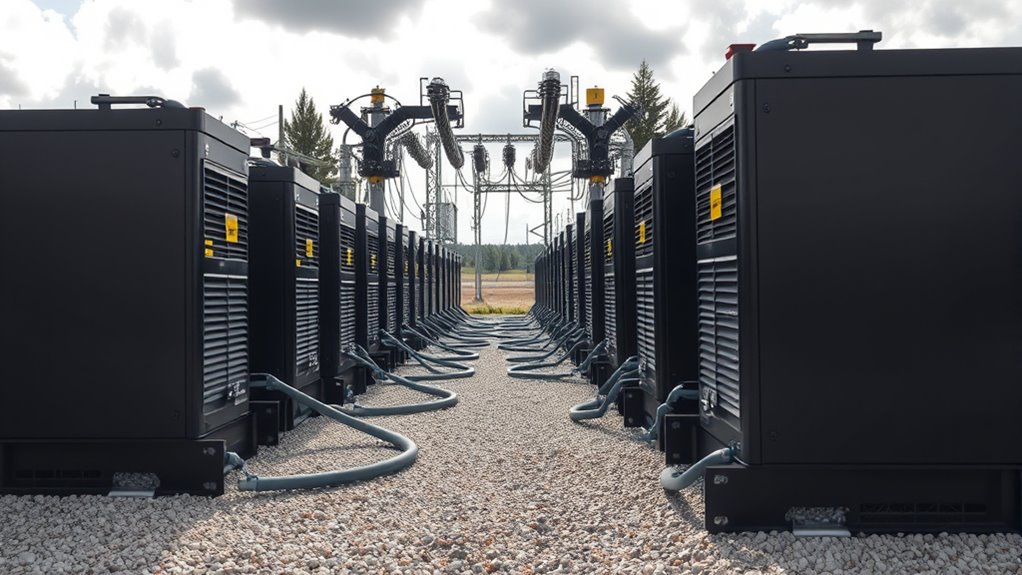

To guarantee safety and code compliance, you should follow manufacturer specs and local regulations for minimum distances when placing your generator. Keep it away from fuel sources, ventilation intakes, and occupied spaces to prevent fire hazards and carbon monoxide buildup. Maintain clear access for maintenance and repairs, and select a stable, level site. Proper placement minimizes hazards, noise, and environmental risks. If you continue exploring, you’ll learn more about specific guidelines and best practices for safe generator positioning.
Open a free Amazon Business account
Business pricing, bulk buying and tax-exempt orders.
As an affiliate, we earn on qualifying purchases.
Key Takeaways
- Follow manufacturer guidelines and local codes for minimum clearance distances from fuel sources and vents.
- Ensure generator placement allows safe access for maintenance and emergency repairs.
- Maintain adequate distances to prevent fire hazards and ensure proper exhaust dispersion.
- Position generator on stable, level ground to support weight and facilitate safe operation.
- Consider noise, fumes, and environmental factors when choosing a location to reduce impact on occupied areas.
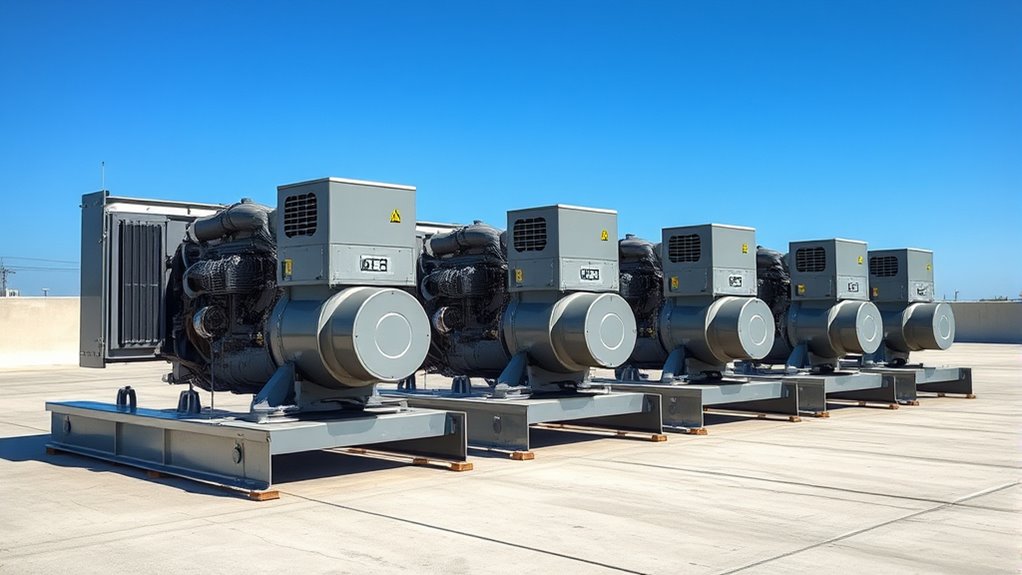
Proper generator placement is crucial for guaranteeing safety, efficiency, and compliance with local codes. When planning where to position your generator, you need to evaluate the power load it will handle and how easily you can access it on-site. Your generator’s location directly impacts its ability to meet your power demands without overloading or risking damage. It also influences how quickly you can perform maintenance or respond to emergencies, so accessibility should be a top priority.
Start by analyzing the power load requirements of your entire system. Larger loads demand a more robust setup, which means you should place the generator in a spot where it can safely handle the maximum expected load. If your power needs are high, avoid placing the generator too close to living or working areas to prevent noise and exhaust fumes from becoming a nuisance. Conversely, a smaller generator might be positioned closer to the building if noise and emissions are manageable. Always follow manufacturer specifications and local codes for minimum distances based on power load, as these guidelines are designed to keep everyone safe and ensure proper operation.
Evaluate your power load to determine safe generator placement and avoid nuisances from noise and fumes.
Site accessibility is another critical factor. You want your generator placed where you can easily reach it for routine inspections, fueling, or repairs. Think about how you’ll bring in equipment or supplies—ensure pathways are clear and wide enough for maintenance personnel and tools. Avoid placing the generator in tight, hard-to-reach spots that could delay critical repairs or maintenance. Proper placement also involves considering the terrain and ensuring the ground is stable and level to support the weight of the generator. Additionally, understanding juice extraction techniques can help inform decisions about handling fuel supplies and ensuring safe storage nearby.
Proximity to fuel sources and exhaust dispersal are also vital. Keep the generator at a safe distance from fuel tanks, buildings, and ventilation intakes to prevent fire hazards or carbon monoxide buildup. Many codes specify minimum distances for these considerations, often depending on the size and type of generator you use. It’s essential to follow these rules to safeguard your property and personnel.
In addition to safety and operational efficiency, local codes often dictate specific distances based on generator size, site conditions, and environmental factors. Failing to adhere to these regulations can result in fines or the need for costly modifications later. Take the time to review your local electrical and building codes and work with professionals to determine the ideal placement. This way, you’ll guarantee your generator operates efficiently, safely, and in compliance with all relevant standards while keeping accessibility straightforward for maintenance and emergencies.
Frequently Asked Questions
How Do Local Building Codes Impact Generator Placement?
Local building codes greatly impact where you can place your generator. You must follow zoning restrictions that dictate acceptable locations, make certain your generator complies with property boundaries and land use rules. Additionally, noise ordinances may limit how close you can install it, especially near neighbors or quiet zones. By adhering to these codes, you avoid penalties and ensure safe, legal operation of your generator.
Are There Specific Safety Clearance Requirements for Outdoor Generators?
Imagine you’re installing an outdoor generator, and safety clearance is vital. Yes, there are specific requirements. For example, maintaining ventilation is essential to prevent dangerous buildup of fumes, and you should keep it far enough from windows and doors to minimize generator noise and guarantee proper airflow. Typically, local codes specify a minimum clearance—often at least 3 feet—to keep everyone safe, so check your local regulations for exact distances.
How Does Generator Size Influence Placement Distance?
Your generator size directly impacts placement distance because larger models produce more heat and exhaust, requiring you to keep them farther from your home or other structures. Smaller generators can be positioned closer, but you should still follow safety guidelines. Always consider manufacturer recommendations and local codes. Proper placement ensures safety and ideal operation, so adjust the distance based on your generator’s size to prevent hazards and guarantee efficient performance.
What Are Common Penalties for Non-Compliance With Placement Codes?
You risk devastating penalties if you ignore generator zoning and noise restrictions. Violations can lead to hefty fines, forced relocations, or even shutdowns that halt your business completely. Local authorities enforce these codes strictly, so non-compliance might also mean costly inspections or legal battles. Don’t underestimate the importance of proper generator placement—following codes guarantees you stay compliant, avoid penalties, and keep your operations running smoothly without unnecessary disruptions.
Can Generator Placement Affect Property Insurance Policies?
Yes, your generator placement can impact your property insurance policies. Improper placement or poor generator maintenance increases risks like fire or damage, which insurers consider. Additionally, fuel storage safety is vital; improper storage can lead to leaks or explosions, raising premiums or causing claim denials. Make certain your generator is correctly placed, well-maintained, and fuel is stored safely to avoid insurance issues and keep your coverage intact.
Conclusion
Just like finding the perfect spot for a campfire guarantees warmth and safety, placing your generator at the right distance keeps your home running smoothly. Remember, a small misstep can turn a cozy setup into a smoky mess. By following the code highlights, you’re building a solid foundation—like planting a sturdy tree that stands tall through storms. When you prioritize proper placement, you’re not just following rules; you’re creating peace of mind for every power outage.
NFL season / tailgating Picks
team gear
As an affiliate, we earn on qualifying purchases.