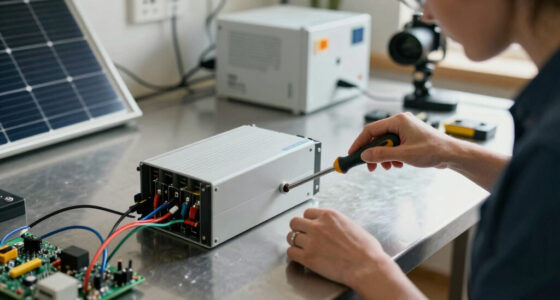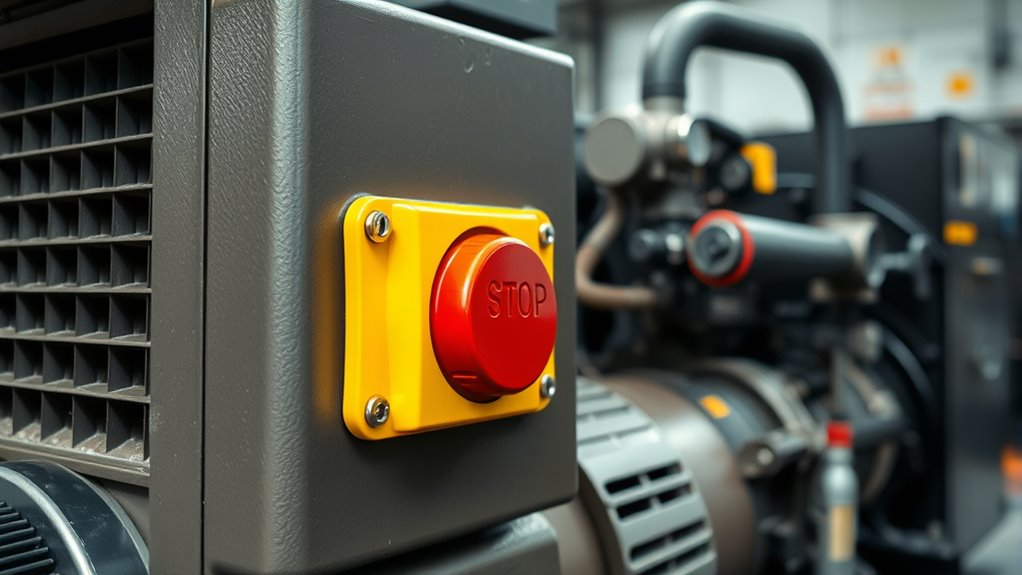

To meet remote emergency stop requirements for generators, you need accessible, clearly marked controls located at strategic points like operator stations, maintenance areas, and near entryways. Use reliable wiring or wireless systems that are durable and resistant to environmental conditions. Guarantee these controls are simple to activate with indicators confirming a shutdown. Regular testing and personnel training strengthen safety protocols. Keeping these systems dependable helps you respond quickly in emergencies—continue exploring to learn more about ideal setup and compliance.

Get backup power and energy gear delivered free with Prime
- Fast, free delivery on millions of items
- Prime Video, Amazon Music and more included
- Member-only deals all year
Key Takeaways
- Remote E-stop devices should be strategically placed at accessible, well-lit locations to ensure quick generator shutdown during emergencies.
- Use reliable, durable wiring or wireless systems with clear indicators to confirm successful generator stop.
- Install multiple redundant E-stop buttons at operator stations, entry points, and maintenance areas for comprehensive coverage.
- Regularly inspect and test remote control systems to verify their functionality and adherence to safety standards.
- Train personnel on proper remote E-stop procedures, emphasizing quick response and familiarity with all control locations.
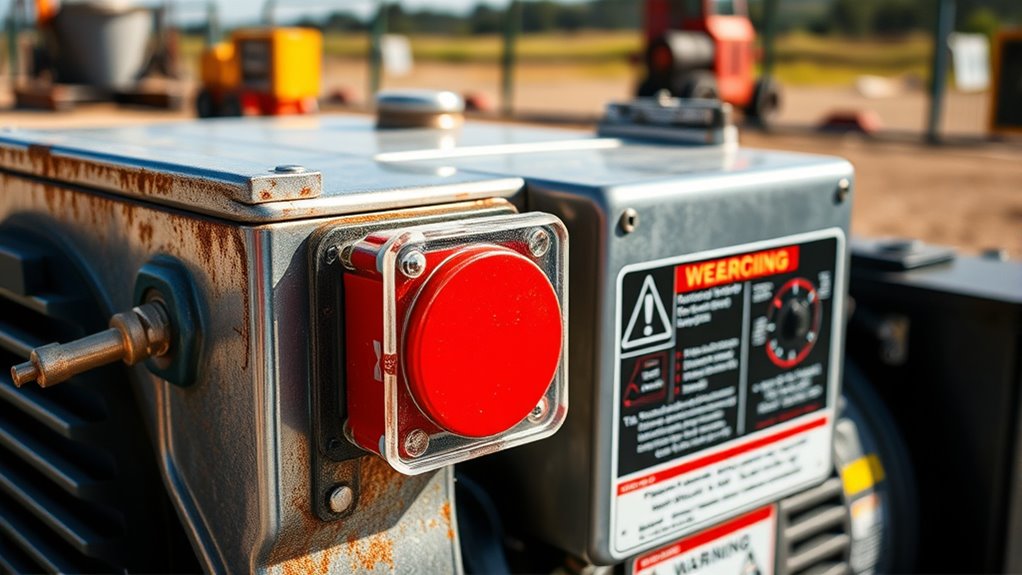
Implementing remote emergency stop (E-stop) requirements for generators is essential for ensuring safety and quick response during critical situations. When considering generator placement, you need to guarantee it’s located in a position that allows immediate access to the emergency stop controls. Proper placement isn’t just about convenience; it’s about safety. You want the generator to be accessible enough that, in an emergency, anyone nearby can quickly reach the E-stop without obstacles or delays. This means avoiding locations that are hard to access or obstructed by equipment, walls, or other barriers. Ideally, the generator should be placed in a well-lit, open area that minimizes the risk of accidental activation while enabling rapid shutdown if needed.
Ensure generator placement allows immediate, obstacle-free access to emergency stop controls for quick safety response
Remote control accessibility plays a pivotal role in emergency response. The ability to trigger the E-stop from a safe distance can prevent personnel from entering hazardous zones or approaching potentially dangerous machinery. When designing your setup, ensure remote control devices are within easy reach and clearly marked. They should be connected to the generator with reliable, durable wiring or wireless communication systems that operate under various environmental conditions. The remote stop should be simple to activate—ideally with a single button or switch—so that in an emergency, there’s no confusion or hesitation. Additionally, the control system should include visual or auditory indicators confirming the shutdown, so you can be confident that the generator has indeed stopped.
Furthermore, incorporating multiple remote control points can enhance safety. For instance, having E-stop buttons at strategic locations—such as near operator stations, maintenance areas, or entry points—ensures that personnel can activate the shutdown quickly, regardless of where they are in relation to the generator. This redundancy minimizes response time and reduces the risk of accidents or equipment damage. It’s also wise to integrate these controls into safety protocols and train personnel regularly on their proper use. This way, everyone knows exactly how and when to activate the remote emergency stop, helping you maintain a safe working environment.
In the end, the key is to combine thoughtful generator placement with accessible remote control systems. By doing so, you create a safety net that ensures fast, efficient shutdowns during emergencies, protecting lives and equipment alike. Regular inspections and testing of your remote E-stop setup help maintain reliability, giving you peace of mind that, when needed most, your generator can be stopped swiftly and safely. Additionally, understanding remote control accessibility and its role in emergency response can help optimize safety measures and compliance with safety standards.
Frequently Asked Questions
What Are the Costs Associated With Installing Remote Emergency Stop Systems?
The costs for installing remote emergency stop systems vary based on your generator’s size and complexity. You should conduct a cost analysis that includes equipment, installation procedures, and any necessary wiring or controls. Typically, expenses range from a few hundred to a few thousand dollars. To get an accurate estimate, consider consulting professionals who can assess your setup and guarantee the system meets safety standards efficiently and cost-effectively.
How Do Remote Emergency Stop Systems Integrate With Existing Generator Controls?
Imagine you’re upgrading a generator in a manufacturing plant. You integrate remote emergency stop systems by linking them with your existing controls through remote control integration. This setup guarantees quick shutdowns during emergencies. You also synchronize safety protocols, so the remote stop triggers all necessary safety measures. This seamless integration enhances safety, allowing you to respond swiftly without disrupting regular operations.
Are There Specific Industry Standards for Remote Emergency Stop Devices?
Yes, there are specific industry standards for remote emergency stop devices. You should guarantee your system complies with certifications like UL, IEC, or ANSI, which verify safety and reliability. Following these safety protocols helps protect personnel and equipment. By adhering to these standards, you guarantee that your remote emergency stop device meets the necessary safety requirements, providing quick and reliable shutdown capabilities during emergencies.
What Maintenance Is Required for Remote Emergency Stop Systems?
You should perform regular remote testing of your emergency stop system to guarantee it functions correctly under all conditions. Additionally, inspect hardware components like switches, wiring, and control panels for signs of wear, corrosion, or damage. Keep the system clean and free of debris, and test the system periodically to confirm it activates promptly. Proper maintenance helps ensure your remote emergency stop remains reliable and ready to protect you when needed.
How Quickly Can a Remote Emergency Stop Deactivate a Generator?
You can expect a remote emergency stop to deactivate a generator within seconds, guaranteeing quick response during emergencies. This rapid shutdown enhances generator safety and minimizes potential damage or hazards. The system’s design prioritizes swift emergency response, allowing you to act immediately when safety is compromised. Proper maintenance and testing ensure the remote emergency stop functions reliably, safeguarding personnel and equipment during critical situations.
Conclusion
Ensuring remote emergency stop capabilities for generators isn’t just a safety feature—it’s a necessity. Studies show that properly equipped emergency stops can reduce accident response times by up to 50%, preventing potential injuries and damage. By adhering to these requirements, you safeguard your team and equipment, while also complying with safety standards. Don’t overlook the importance of quick, accessible shutdown options—they’re your first line of defense in emergencies. Stay proactive, and prioritize safety in every generator setup.
Halloween Picks
halloween
As an affiliate, we earn on qualifying purchases.