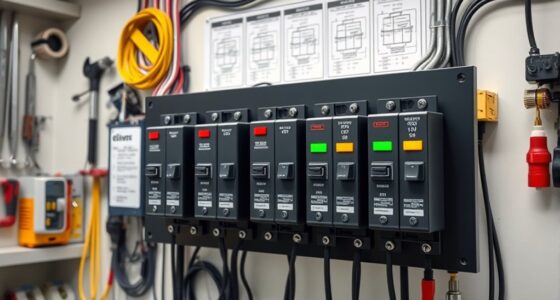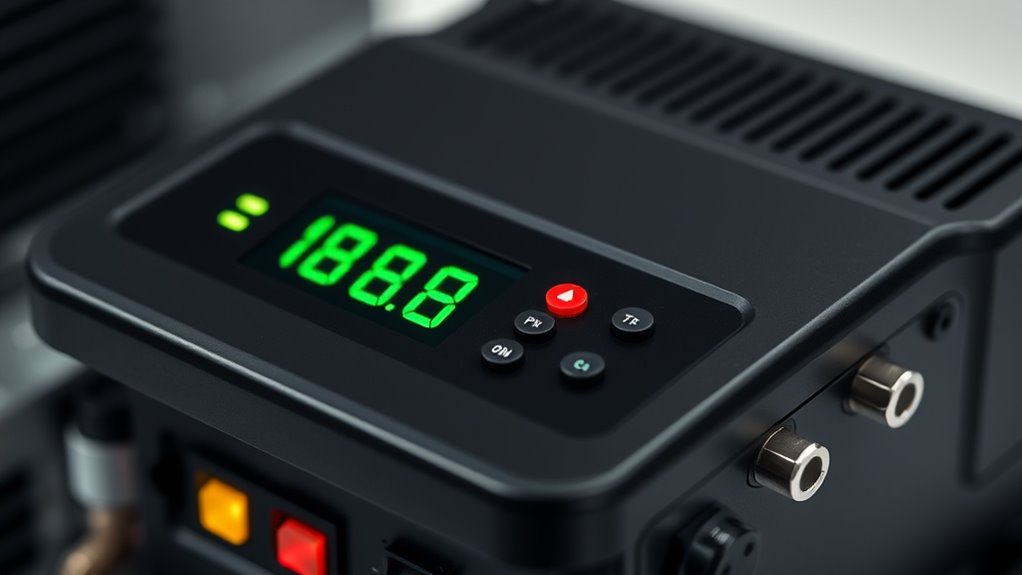

Microprocessor-based transfer switch controllers automatically handle switching between main power and backup generators, ensuring smooth and safe crossings. They monitor voltage, frequency, and phase in real-time to synchronize sources precisely, preventing damage and outages. These controllers optimize load management, monitor system health, and provide alerts for faults. They also support remote control and diagnostics for proactive maintenance. If you want to understand how these intelligent systems enhance reliability, there’s much more to discover.

Get backup power and energy gear delivered free with Prime
- Fast, free delivery on millions of items
- Prime Video, Amazon Music and more included
- Member-only deals all year
Key Takeaways
- Automates power transfer between main grid and backup generator, ensuring seamless and reliable switchovers.
- Uses real-time microprocessor monitoring to synchronize voltage, frequency, and phase during source transitions.
- Manages load demands intelligently to prevent overloads and optimize generator performance.
- Incorporates diagnostic features and remote control capabilities for proactive system maintenance.
- Enhances system safety and efficiency through digital alerts, notifications, and fault detection.

Transfer switch controllers are essential devices that automatically manage the transfer of power between a primary source, like the grid, and a secondary source, such as a generator. When you rely on these controllers, you benefit from their intelligent capabilities, making your power system more reliable and efficient. Microprocessor-based transfer switch controllers take this a step further by utilizing sophisticated digital technology to handle complex tasks with precision. One of their key features is automatic synchronization, which ensures that the generator’s output matches the voltage, frequency, and phase of the main power source before switching occurs. This synchronization prevents power surges or outages that could damage connected equipment or cause system instability. With automatic synchronization, you don’t need to manually adjust generator settings or worry about misalignment during transfers. The controller’s microprocessor continuously monitors the power parameters and adjusts the generator’s output in real-time, providing a seamless transition between sources. Additionally, these controllers incorporate digital sound synthesis techniques to generate alert tones and system notifications, enhancing user awareness of status updates and faults.
Load management is another critical aspect that these controllers handle effectively. They assess the load demand on your electrical system and decide when to switch to backup power, ensuring that essential circuits stay energized without overloading the generator. This intelligent load management optimizes fuel consumption and prolongs the lifespan of your generator by preventing unnecessary cycling or excessive strain. In practical terms, when the main power fails or dips below a set threshold, the microprocessor-based controller kicks in, smoothly transferring the load to the generator while maintaining proper synchronization. Once the main power is restored, the controller manages the transfer back to the grid, again ensuring automatic synchronization to avoid power quality issues.
Beyond automatic synchronization and load management, these controllers often feature advanced diagnostics and communication capabilities. You can monitor system status, receive alerts, and even remotely control the transfer process through integrated interfaces or network connections. This level of control allows you to anticipate problems and perform maintenance proactively, reducing downtime. Additionally, microprocessor-based controllers adapt easily to different system configurations, making them suitable for a variety of applications, from residential backup systems to large industrial setups. Their ability to intelligently coordinate power sources not only enhances reliability but also improves overall system efficiency, giving you peace of mind knowing that your power transfer process is handled seamlessly and safely.
Frequently Asked Questions
What Are the Main Advantages of Microprocessor-Based Transfer Switch Controllers?
You benefit from microprocessor-based transfer switch controllers because they offer smart diagnostics, making it easier to identify and troubleshoot issues quickly. They also enable remote monitoring, so you can keep an eye on system performance and receive alerts without being onsite. This technology enhances reliability and efficiency, reduces downtime, and simplifies maintenance, giving you greater control and peace of mind during power transfers.
How Do These Controllers Handle Power Failure Scenarios?
Ever wonder how these controllers keep your power steady during failures? They detect faults quickly through advanced fault detection algorithms and activate circuit protection measures instantly. This guarantees seamless switching from the main to backup power without interruption. By continuously monitoring system status, they prevent damage and maintain reliability, giving you confidence that your power supply remains stable even during unexpected outages.
Can They Integrate With Modern Building Automation Systems?
Yes, you can integrate microprocessor-based transfer switch controllers with modern building automation systems. They connect seamlessly to smart grid and energy management systems, enabling centralized control and monitoring. This integration allows you to optimize power distribution, improve efficiency, and respond quickly to power fluctuations. By leveraging these controllers, you enhance your building’s overall energy management, ensuring reliable power supply and smarter energy utilization.
What Are the Maintenance Requirements for These Controllers?
You need to perform routine calibration to guarantee your microprocessor-based transfer switch controllers operate accurately. Regularly check and update the firmware to fix bugs and enhance performance. Keep an eye on system logs and alarms for any issues, and clean the controllers to prevent dust buildup. Scheduled maintenance like these helps maintain reliability, extend lifespan, and ensure seamless transfer switch operation, minimizing downtime and potential failures.
How Do They Differ From Traditional Mechanical Transfer Switch Controllers?
You’ll find that microprocessor-based transfer switch controllers differ from traditional mechanical ones because they rely on digital technology instead of analog mechanisms. Unlike manual operation, these controllers automatically handle switching, reducing human error and increasing reliability. They also offer advanced features like remote monitoring and diagnostics, which mechanical controllers lack. This makes maintenance easier and more efficient, as you can quickly identify issues without physically inspecting the system constantly.
Conclusion
By choosing microprocessor-based transfer switch controllers, you gain reliable, intelligent power management. For example, imagine a data center that quickly switches to backup power during outages, preventing downtime. These controllers ensure seamless shifts, reducing risks and maintaining operations smoothly. When you invest in this technology, you’re equipping your facility with a smart, responsive system that adapts to real-time conditions, keeping your critical loads protected and your business running without interruption.
Fall Picks
fall essentials
As an affiliate, we earn on qualifying purchases.