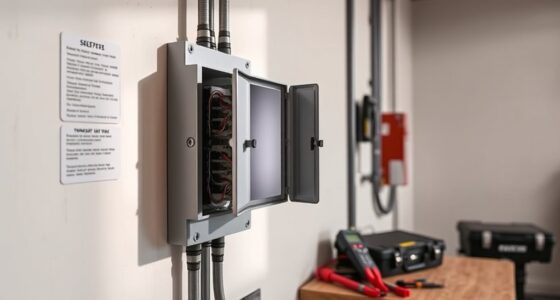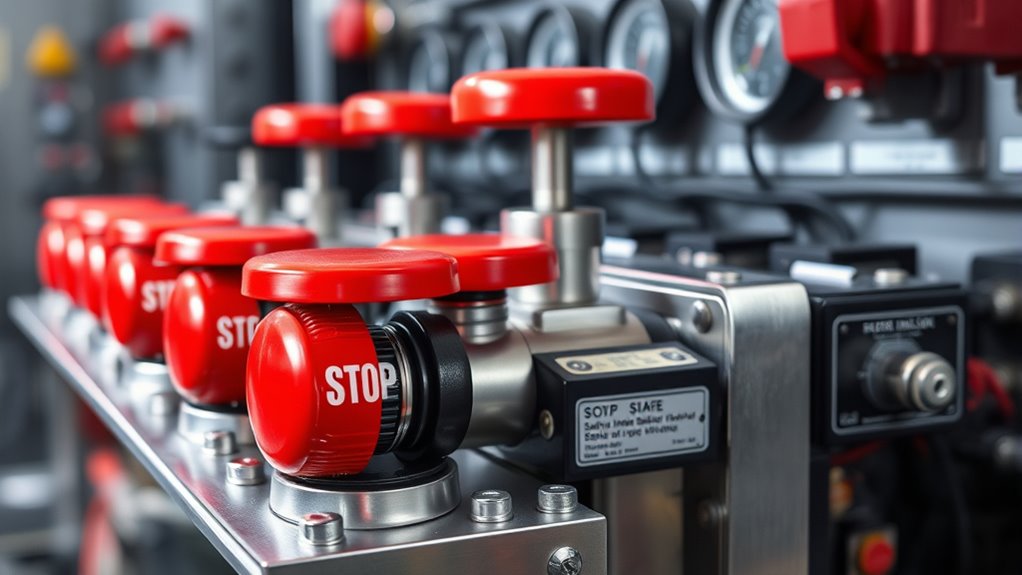

Emergency stop buttons and safety interlocks are crucial for protecting you in industrial settings. They are designed to be easily accessible, robust, and clearly marked so you can activate them quickly during emergencies. Proper placement and regular maintenance ensure they’re reliable when needed most. Compliance with safety standards guarantees your environment stays safer and your equipment stays protected. To learn more about how these features work together to enhance safety, keep exploring these essential components.

Get backup power and energy gear delivered free with Prime
- Fast, free delivery on millions of items
- Prime Video, Amazon Music and more included
- Member-only deals all year
Key Takeaways
- Proper placement and visibility of emergency stop buttons enable quick activation during emergencies, enhancing safety response times.
- Safety interlocks prevent machinery operation under unsafe conditions, reducing accident risks and ensuring compliance with safety standards.
- Emergency stop buttons should be durable, clearly marked, and easily accessible by all personnel in the vicinity.
- Regulatory standards from OSHA, ANSI, and ISO govern the design, placement, and operation of safety features to ensure legal compliance.
- Integrating safety features during initial machine design and performing regular maintenance ensures reliable protection and reduces liability.
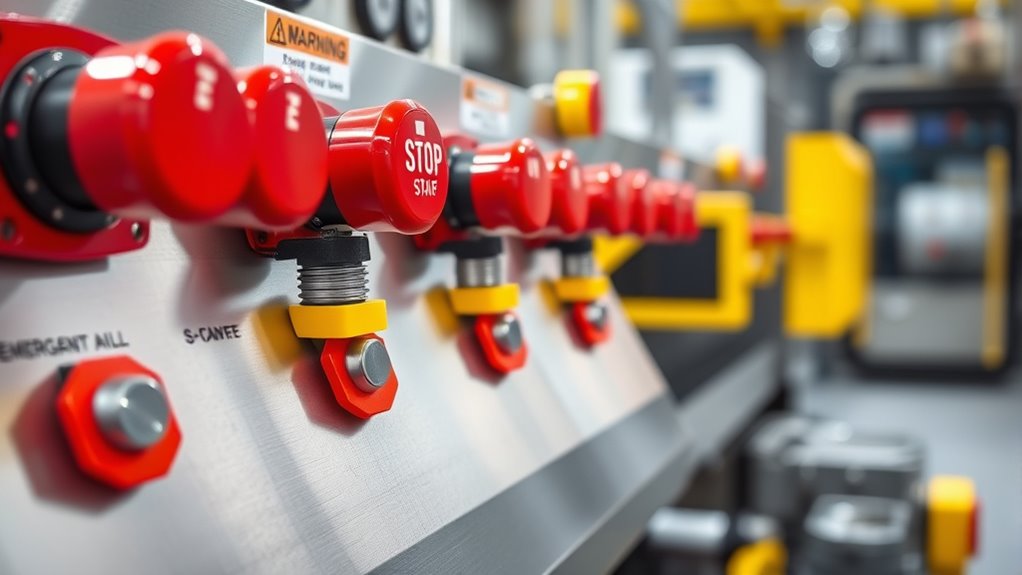
Emergency stop buttons and safety interlocks are essential safety features that help prevent accidents and protect workers in industrial environments. When you’re designing machinery, paying close attention to these safety components is vital. Machine design must incorporate easily accessible emergency stop buttons that can be quickly activated in case of an emergency. These buttons need to be strategically placed so that anyone operating or nearby can reach them without hesitation. Ensuring that they are robust, clearly marked, and simple to operate minimizes response time during critical moments. Alongside these, safety interlocks act as safeguards that prevent machinery from starting or continuing operation under unsafe conditions. Together, these features form a fundamental part of the overall safety system, reducing the risk of injury and equipment damage. Proper placement of emergency stop buttons is crucial for ensuring quick access during emergencies.
Regulatory standards play a significant role in shaping how you implement emergency stop buttons and safety interlocks. Different industries and regions have specific codes that dictate the minimum requirements for these safety features. For example, standards set by organizations such as OSHA, ANSI, or ISO provide detailed guidelines on the placement, size, and operation of emergency stops. Compliance with these standards isn’t just about legal obligation; it enhances safety and demonstrates your commitment to protecting workers. When designing your machinery, you need to confirm that emergency stop buttons are within easy reach, often marked with international symbols, and that safety interlocks are properly integrated to enforce safe operation procedures. Ignoring these standards can lead to serious consequences, including fines, shutdowns, or, worse, accidents that could have been prevented.
In your machine design process, integrating emergency stop buttons and safety interlocks from the outset simplifies compliance with regulatory standards. You should consider ergonomic factors, ensuring controls are intuitive and accessible from all relevant positions. It’s also important to regularly test and maintain these safety features to verify they function correctly when needed. Incorporate fail-safe mechanisms so that if a safety component fails, it doesn’t compromise overall safety. By doing so, you create a safer environment for workers and reduce liability risks for your organization. Ultimately, understanding and implementing the right design features in line with regulatory standards not only protects lives but also enhances operational efficiency, as calm, confident responses to emergencies depend on having reliable safety measures in place.
Frequently Asked Questions
How Do Emergency Stop Buttons Differ From Safety Interlocks?
Emergency stop buttons differ from safety interlocks because they are designed for immediate shutdown, often located at accessible spots for quick action. When pressed, they directly cut power or halt operations. Safety interlock mechanisms, on the other hand, prevent equipment from starting or continuing unless certain conditions are met, ensuring safety during normal operation. Both are vital but serve distinct roles in safeguarding personnel and machinery.
What Industries Most Commonly Use Emergency Stop Systems?
You’ll find emergency stop systems most commonly in manufacturing, mining, and medical industries. These industries prioritize machine safety and regulatory compliance, ensuring swift shutdowns during emergencies. By incorporating emergency stop buttons, they protect workers from potential hazards and meet safety standards. Implementing these systems prevents accidents, promotes safety, and keeps operations compliant, making them essential for industries where quick responses can prevent injuries and save lives.
Are There Legal Standards Governing Emergency Stop Button Placement?
Yes, there are legal standards governing emergency stop button placement. You must guarantee legal compliance by following regulatory standards set by agencies like OSHA and ANSI. These standards specify that emergency stop buttons should be easily accessible, clearly visible, and positioned within reach of operators to quickly halt machinery during emergencies. Regularly check that your placement adheres to these guidelines to maintain safety and avoid legal penalties.
Can Emergency Stop Buttons Be Reset Remotely?
You can reset emergency stop buttons remotely, but it’s often governed by safety standards. For example, in a manufacturing plant, remote reset systems use emergency communication protocols to ensure only authorized personnel can reset equipment after an emergency. This setup improves safety and response time. However, strict controls and safety assessments are necessary to prevent accidental resets, making it essential to follow local laws and industry best practices.
What Maintenance Is Required for Safety Interlocks?
You need to perform regular interlock testing to ensure safety interlocks function correctly and prevent equipment from operating under unsafe conditions. Preventive maintenance involves inspecting, cleaning, and lubricating the interlock mechanisms, checking for wear or damage, and verifying electrical connections. Schedule these tasks routinely, follow manufacturer guidelines, and document your inspections to maintain peak safety performance and compliance, reducing the risk of system failures or accidents.
Conclusion
Think of emergency stop buttons and safety interlocks as the sturdy shields guarding your workspace’s heartbeat. They are the anchors that keep chaos at bay, standing firm like lighthouse beacons guiding you safely away from danger. When you respect their power, you’re holding a key to a safer environment—an unbreakable chain that links safety to your daily routine. Remember, these symbols of protection aren’t just tools; they’re the foundation of your peace of mind.
Fall Picks
fall essentials
As an affiliate, we earn on qualifying purchases.