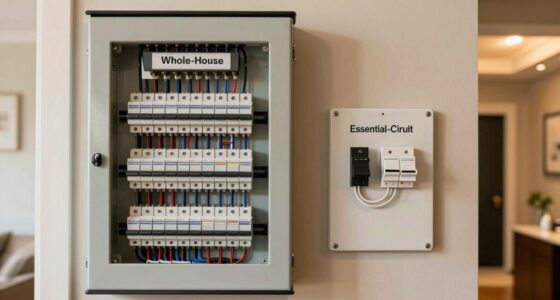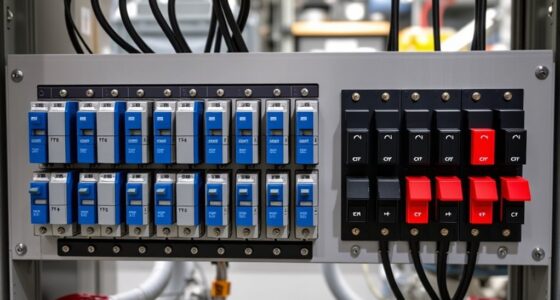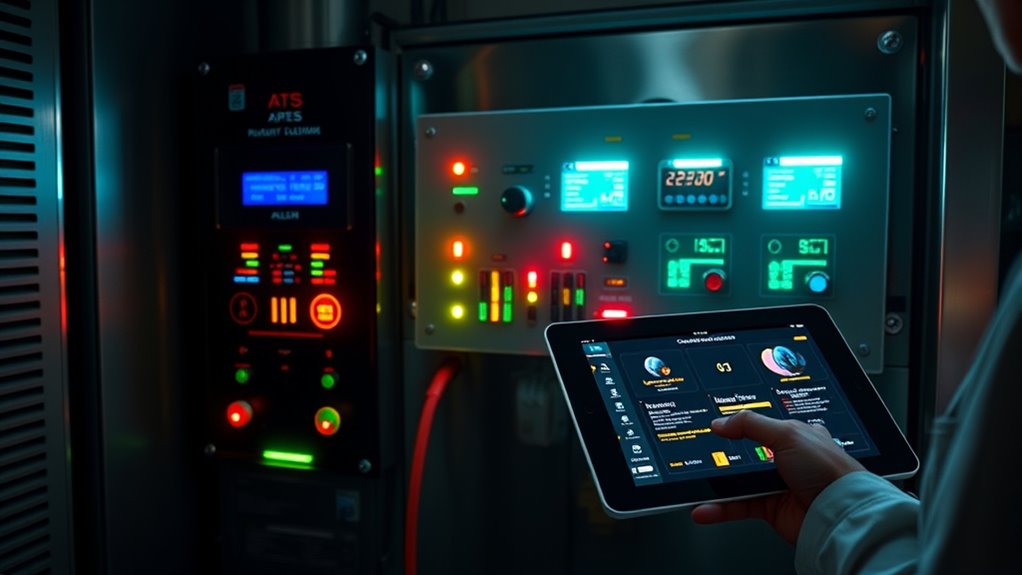

ATS remote monitoring and alarm features let you keep a close eye on your backup power system’s health and performance. You can track battery status, charge levels, and detect issues before failures happen. The system offers flexible communication options like Ethernet, Wi-Fi, or GSM, ensuring reliable alerts even in tough environments. It delivers real-time notifications via SMS, email, or apps so you can respond quickly. Continue exploring to discover how these features keep your system safe and operational.

Get backup power and energy gear delivered free with Prime
- Fast, free delivery on millions of items
- Prime Video, Amazon Music and more included
- Member-only deals all year
Key Takeaways
- Supports multiple communication protocols (Ethernet, Wi-Fi, GSM, LTE) for reliable data transmission and flexible connectivity options.
- Provides real-time monitoring of battery health, charge levels, and system status with instant alerts and notifications.
- Enables proactive maintenance through continuous system alerts, reducing downtime and preventing equipment damage.
- Ensures system resilience by maintaining communication and alert delivery despite signal interference or outages.
- Facilitates quick response actions such as shutdowns or maintenance scheduling to enhance equipment safety and performance.
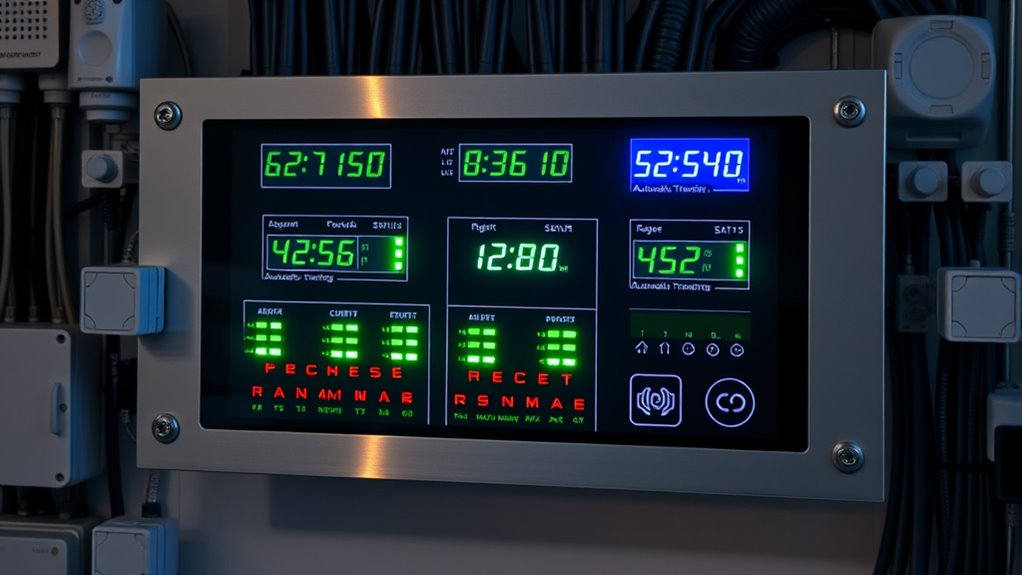
In today’s increasingly connected world, ATS remote monitoring and alarm features provide an essential layer of security and control. These systems let you oversee your equipment, guaranteeing peak performance and quick response to issues. One vital aspect of these features is effective battery management. Proper battery management guarantees your system remains operational even during power fluctuations or outages. You can monitor battery health, charge levels, and overall capacity remotely, giving you peace of mind that your setup won’t fail unexpectedly. If a battery starts to weaken or deplete faster than usual, the system can send alerts, allowing you to replace or service it before a total failure occurs. This proactive approach minimizes downtime and prevents costly repairs or damage to connected equipment.
Equally important is understanding and implementing robust communication protocols. These protocols serve as the language that your remote monitoring system uses to communicate with sensors, alarms, and control units. When choosing a system, prioritize those that support multiple communication protocols such as Ethernet, Wi-Fi, GSM, or LTE. This flexibility guarantees reliable data transmission regardless of your setup or location. For example, if Wi-Fi connectivity drops, the system can switch to cellular communication to maintain continuous monitoring. Additionally, secure communication protocols protect your data from unauthorized access, maintaining confidentiality and integrity.
Your remote monitoring system should be capable of collecting real-time data from various sensors and translating it into actionable insights. Using advanced communication protocols, it consolidates information from different sources and delivers alerts promptly. For instance, if your system detects an abnormal voltage or temperature, it can immediately notify you via SMS, email, or app notification. This instant communication allows you to take swift action, such as shutting down equipment or scheduling maintenance, thereby preventing damage or safety hazards.
Furthermore, good battery management and communication protocols work together to create a resilient monitoring system. If, for example, a sensor’s battery is running low, the system can alert you before it stops functioning properly, maintaining the integrity of your monitoring network. Similarly, robust communication protocols ensure that alerts are transmitted reliably, even in challenging environments with potential interference or signal loss.
A comprehensive understanding of entertainment and parks resources can also help in planning maintenance and operational schedules, ensuring your ATS system aligns with seasonal variations and peak periods for optimal performance.
In essence, mastering these elements means you’re better equipped to maintain system uptime, maximize performance, and respond quickly to any issues. Proper battery management ensures continuous operation, while reliable communication protocols keep you connected and informed at all times. Together, they form the backbone of an effective ATS remote monitoring and alarm system, giving you greater control and confidence in your equipment’s safety and performance.
Frequently Asked Questions
How Secure Is the Remote Monitoring Data?
Your remote monitoring data is highly secure, thanks to encrypted transmission that safeguards your information during transfer. Access controls ensure only authorized personnel can view or manage the data, adding an extra layer of security. By combining these measures, your data stays protected from unauthorized access and cyber threats. Rest assured, your information remains safe with these robust security features in place, giving you peace of mind.
Can the System Integrate With Existing Security Infrastructure?
Yes, the system can integrate with your existing security infrastructure. It offers seamless security integration, ensuring compatibility with a variety of security devices and systems. This infrastructure compatibility allows you to expand your security setup without significant disruptions. You’ll find it easy to connect and manage, giving you centralized control and real-time monitoring. This integration enhances your overall security, making your system more efficient and responsive to any threats.
What Are the Troubleshooting Steps for False Alarms?
Imagine your alarm system as a vigilant guardian. When false alarms occur, start by checking sensor calibration, ensuring each sensor is correctly aligned and clean. Next, review settings to prevent false alarms, like adjusting sensitivity. Regularly maintain and test sensors to catch any issues early. These steps effectively prevent false alarms, keeping your system reliable and reducing unnecessary disruptions.
Is There a Mobile App for Remote Access?
Yes, there is a mobile app that provides remote access to your ATS system. You can easily monitor and control your equipment from anywhere using your smartphone or tablet. The app offers real-time alerts, status updates, and remote troubleshooting options, ensuring you stay connected and in control at all times. Download the app from your device’s app store and set up your account to start managing your system remotely.
How Often Are System Firmware Updates Released?
You’ll be pleased to know that firmware updates are released approximately every three to six months, ensuring your system stays current. These updates often include important security protocol enhancements, protecting your equipment from emerging threats. Regular firmware updates are vital for optimizing performance, fixing bugs, and maintaining security. By staying up-to-date, you help safeguard your system and guarantee it functions smoothly and reliably over time.
Conclusion
With ATS remote monitoring and alarm features, you hold the key to a vigilant fortress, always watching over your equipment like an unwavering guardian. These tools act as your digital sentinels, alerting you instantly and keeping potential threats at bay. Embrace this innovative shield, and turn your monitoring system into a reliable partner that never sleeps. With ATS, you’re not just keeping watch—you’re commanding a powerful, ever-present safety net that’s ready to spring into action whenever needed.
Fall Picks
fall essentials
As an affiliate, we earn on qualifying purchases.