Choosing between manual and automatic transfer switches depends on your need for control, convenience, compatibility, and budget. If you prefer hands-on operation and lower costs, a manual switch might suit you better. However, if you want seamless, unattended power transfer during outages, an automatic switch offers peace of mind. Considering your generator type and lifestyle can help you decide. Keep going for more details to find the best fit for your power needs.

Get backup power and energy gear delivered free with Prime
- Fast, free delivery on millions of items
- Prime Video, Amazon Music and more included
- Member-only deals all year
Key Takeaways
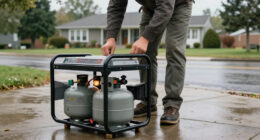
- Manual switches are simpler, more affordable, and easier to install, suitable for basic needs and older generators.
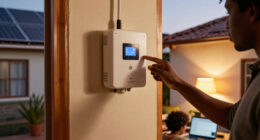
- Automatic switches provide seamless, hands-free power transfer, ideal for continuous, unattended operation during outages.
- Manual switches offer greater compatibility across various generator types and require less complex setup.
- Automatic switches involve higher upfront costs and installation complexity but enhance convenience and safety.
- The choice depends on lifestyle, budget, and whether immediate, automated power transfer or manual control is preferred.

When choosing a transfer switch for your backup power system, understanding the differences between manual and automatic options is fundamental. Your decision hinges on factors like generator compatibility and installation complexity, which directly influence how smoothly your system operates during a power outage. Manual transfer switches require you to physically switch the power source, giving you direct control but also demanding more involvement during emergencies. Automatic transfer switches, on the other hand, detect power failures and switch to backup power instantly, providing seamless operation without your intervention.
Generator compatibility is a crucial aspect to consider. Not all transfer switches work with every generator type. Manual switches tend to be more versatile in terms of compatibility because they’re simpler devices that can connect to a wider range of generators. Automatic switches often have specific requirements and may need compatible transfer switch models designed for particular generator brands or sizes. If you have a unique or older generator, a manual switch might be easier to integrate, whereas newer, more sophisticated systems are often designed with automatic switches in mind.
Generator compatibility varies; manual switches are more adaptable, while automatic switches may require specific models for certain generators.
Installation complexity is another important factor. Manual transfer switches are generally easier to install since they are straightforward devices that connect directly to your electrical panel. They typically involve less wiring and fewer components, which can reduce installation time and costs. Conversely, automatic transfer switches are more complex, involving advanced wiring, sensors, and control modules that monitor power status continuously. Installing an automatic switch usually requires professional expertise to ensure it’s correctly integrated with your existing electrical system, which can increase upfront costs but offers the convenience of automatic operation.
Your choice also depends on your lifestyle and how critical uninterrupted power is to you. If you prefer a hands-on approach and want to control when your generator kicks in, a manual switch might suit your needs better. It’s reliable, easy to install, and compatible with most generators. However, if you want your backup system to operate seamlessly without your involvement — especially during night hours or when you’re away — an automatic transfer switch provides peace of mind by instantly switching power sources without any delay. Additionally, understanding transfer switch types and their features can help you make an informed decision that aligns with your power needs and safety considerations.
Frequently Asked Questions
What Is the Typical Lifespan of Each Transfer Switch Type?
You can expect manual transfer switches to last around 20 to 25 years, thanks to their simple design and durable components. Automatic transfer switches generally have a slightly shorter lifespan of about 15 to 20 years because of their more complex electronics. Proper maintenance can extend switch durability and component longevity, ensuring reliable performance over their intended lifespan. Regular inspections help prevent issues and maximize your switch’s longevity.
Are Manual Transfer Switches Suitable for Residential Use?
You might think manual transfer switches aren’t suitable for home use, but they actually enhance generator safety and switch compatibility when managed properly. They offer reliable control, allowing you to safely switch between power sources during outages. While automatic switches are more convenient, manual ones give you more control and are often more affordable. Just make certain you follow safety guidelines to prevent electrical hazards and ensure proper operation.
How Do Maintenance Requirements Differ Between the Two Types?
You’ll find that manual transfer switches generally require less maintenance complexity, but you need to manually operate them during outages, which can lead to higher downtime frequency if not maintained properly. Automatic transfer switches need more regular inspections and testing to guarantee reliable operation, but they minimize downtime by switching power seamlessly. Overall, automatic switches tend to involve more upkeep, while manual ones require less frequent attention but more manual effort.
Can Automatic Switches Be Integrated With Smart Home Systems?
Did you know over 30% of homes now feature smart home automation? Automatic switches can indeed be integrated with smart home systems, enhancing your home’s automation compatibility. You can control and monitor your transfer switch remotely, ensuring seamless power management during outages. This integration allows for smarter, more efficient energy use, giving you peace of mind and greater convenience through automation, all while maintaining reliable power transfer.
What Are the Initial Installation Costs for Manual Versus Automatic Switches?
You’ll find that manual transfer switches typically have lower initial costs, making them a budget-friendly choice, but they require more installation effort due to their simpler design. Automatic switches usually come with higher upfront costs because of their advanced features and installation complexity. The cost comparison depends on your setup, but automatic switches may save you money in the long run through added convenience and quicker power restoration.
Conclusion
So, which transfer switch is truly right for you? The choice isn’t as clear-cut as it seems. Both manual and automatic switches have their merits, but the decision could hinge on what’s just beyond your current understanding. Will you prioritize simplicity or sophistication? The answer might surprise you. Ultimately, the right switch could be closer than you think — waiting quietly to make all the difference when it matters most. Are you ready to make that choice?
Halloween Picks
halloween
As an affiliate, we earn on qualifying purchases.