To guarantee your lightning and surge protection systems work effectively, regularly schedule inspections, testing, and documentation updates. Use proper grounding and bonding techniques, and keep surge protection devices current and compatible with your system. Avoid DIY repairs or tampering, and always provide clear access to components for quick maintenance. Protect external equipment from environmental damage and train staff on safe operation. Following these tips helps prevent failures—keep exploring to find more essential maintenance practices.

Get backup power and energy gear delivered free with Prime
- Fast, free delivery on millions of items
- Prime Video, Amazon Music and more included
- Member-only deals all year
Key Takeaways
- Regularly inspect and test surge protection devices to ensure they are functioning properly and replace them before capacity diminishes.
- Maintain clear access pathways and organize wiring to facilitate quick maintenance and prevent damage or wear.
- Verify grounding and bonding are solid, low-resistance, and follow current standards to effectively dissipate surge energy.
- Keep documentation updated with system modifications, inspections, and repairs for accurate tracking and compliance.
- Use weatherproof enclosures and environmental safeguards to protect surge components from moisture, dust, and temperature extremes.
Schedule Regular Inspection and Testing of Your Systems
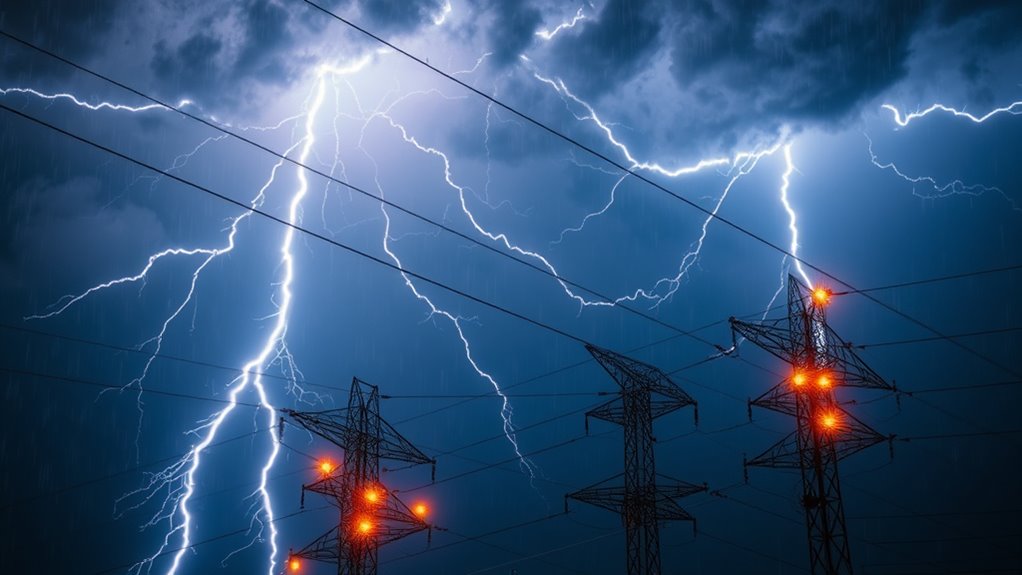
Regular inspection and testing of your lightning and surge protection systems are essential to guarantee they function correctly when needed. You should routinely evaluate your grounding techniques to ensure they provide a reliable path to dissipate excess energy. Conduct surge device testing to confirm that surge protectors are still effective and haven’t degraded over time. These tests help identify worn or damaged components before a storm occurs, preventing costly equipment failures. Regularly inspecting connections, verifying proper grounding, and testing surge devices keep your system in ideal condition. Additionally, staying informed about automation in business can help you understand how technological advancements might impact your system’s integration and maintenance. Don’t wait until a surge strikes—schedule inspections at least annually or after any severe weather event. Staying proactive ensures your protection systems operate seamlessly when you need them most.
Use Proper Grounding and Bonding Techniques
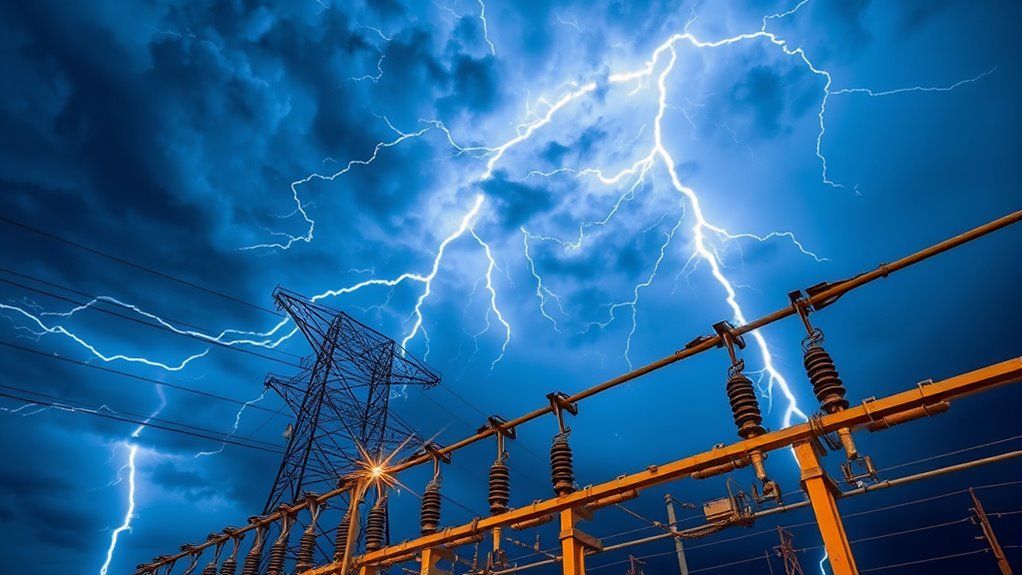
You need to guarantee your grounding connections are solid and reliable to protect your system from surges. Using correct bonding practices helps prevent potential differences that can cause damage or pose safety risks. Regularly inspecting your ground systems keeps them effective and ready to handle lightning strikes or power surges. Ensuring your grounding system is properly maintained is essential for safety and system longevity.
Ensure Effective Grounding Connections
To make certain effective grounding connections, it’s essential to use proper grounding and bonding techniques that create a low-resistance path to the earth. Follow established bonding standards to ensure all components are securely connected, reducing the risk of potential differences during a surge. Use high-quality grounding techniques, such as thick copper conductors and corrosion-resistant terminals, to maintain a reliable connection over time. Check that grounding rods are properly driven into the ground, and connections are tight and free of debris. Consistently inspect and test your grounding system to confirm it meets current standards. Proper grounding and bonding techniques minimize voltage buildup and protect your equipment from lightning strikes and surges, ensuring a safer, more resilient electrical system.
Use Correct Bonding Practices
Proper bonding practices guarantee that all electrical components are securely connected, creating a continuous low-resistance path to ground. To achieve this, follow bonding best practices by using appropriately sized conductors, tight connections, and corrosion-resistant materials. Proper grounding techniques ensure that lightning strikes and power surges are safely diverted away from sensitive equipment. Always bond metallic parts and electrical systems together to prevent potential differences that can cause damage or pose safety risks. Avoid loose connections or improper conductors, as these can increase resistance and reduce system effectiveness. Consistently applying correct bonding techniques helps maintain system integrity during electrical disturbances. Remember, effective bonding minimizes the risk of surges and enhances overall safety, making your electrical system more resilient against lightning and power fluctuations. Additionally, understanding AI-driven security systems can provide insights into advanced threat mitigation during electrical events.
Regularly Inspect Ground Systems
Regularly inspecting ground systems is essential to guarantee they remain effective in diverting lightning and surges safely away from your equipment. Understanding grounding history helps you appreciate how proper grounding techniques have evolved, ensuring your system meets current standards. Many surge myths suggest that once installed, ground systems don’t need regular checks, but this isn’t true. Corrosion, loose connections, or damage can compromise your grounding effectiveness over time. By routinely inspecting your grounding and bonding setups, you catch issues early and maintain ideal surge protection. Proper grounding ensures lightning strikes and power surges are safely diverted, reducing risks to your system. Staying proactive with inspections keeps your grounding system reliable, helping you avoid costly damage and downtime caused by overlooked grounding faults. Additionally, implementing data-driven strategies can help monitor system performance and identify potential issues before they escalate.
Keep Surge Protection Devices (SPDs) Up to Date

Keeping your Surge Protection Devices (SPDs) up to date is essential to guarantee they effectively guard your electrical systems against lightning and power surges. Regular updates ensure surge device placement aligns with current surge protection standards, maximizing safety. To stay current:
- Check manufacturer recommendations for replacement timelines.
- Verify surge protection standards are met with the latest devices.
- Replace older SPDs before their surge capacity diminishes.
- Schedule professional inspections to confirm proper surge device placement.
- Regularly review surge protection standards to ensure your devices remain compliant and effective.
Avoid Tampering or DIY Repairs on Protection Equipment
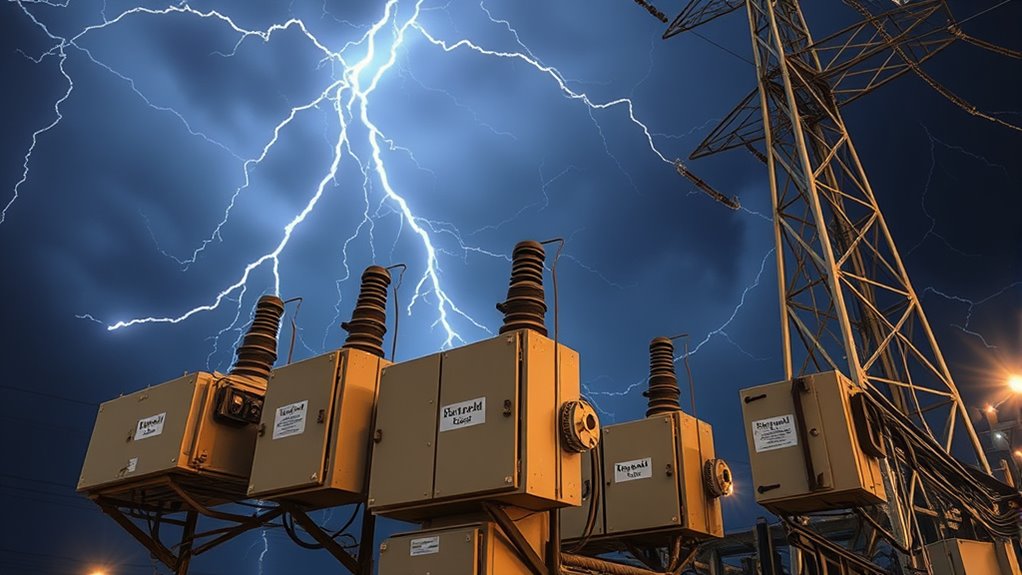
Since surge protection equipment is designed to handle high-voltage events, attempting a DIY repair or unauthorized tampering can be dangerous and weaken its performance. You might think you’re fixing a problem, but you could unintentionally cause more damage or create safety risks. Protect yourself and your equipment by avoiding DIY repairs. Remember, only trained professionals should handle these components. Additionally, improper handling can compromise the safety features of the system, increasing the risk of injury or damage.
Maintain Clear Access to All Surge Protection Components

Make certain pathways to surge protection components stay clear at all times. Regularly inspect these components to spot any obstructions or signs of wear. Keeping access easy ensures quick maintenance and helps prevent damage during storms. Additionally, ensuring that easy access and maintenance is prioritized can extend the lifespan of your surge protection system.
Keep Pathways Unobstructed
Ensuring clear pathways to surge protection components is essential for effective maintenance and quick troubleshooting. When your pathways are unobstructed, you can quickly access grounding techniques and identify issues without delay. To keep pathways clear:
- Keep work areas free of clutter, tools, and debris.
- Ensure wiring and cables are neatly organized, avoiding tangling or pinching.
- Regularly check that access points remain unobstructed for easy inspection.
- Maintain proper pathway clearance around surge protectors to prevent accidental damage.
- Proper cable management can enhance safety and ease of access during inspections.
Regularly Inspect Components
Regular inspections of surge protection components are essential for maintaining system reliability. During these checks, verify all components are clearly labeled according to your system documentation. Proper labeling helps you quickly identify surge protectors, disconnects, and grounding points, reducing the risk of accidental damage or incorrect servicing. Keep access pathways unobstructed so you can easily reach each component without delay. Regularly confirming physical condition and connections prevents unnoticed wear or corrosion that could compromise protection. Additionally, update your system documentation after inspections to reflect any changes or repairs made. Maintaining clear access and accurate labeling ensures you can perform timely maintenance and troubleshooting, ultimately enhancing the effectiveness of your surge protection system and safeguarding your equipment from lightning and power surges. Understanding optimal angles for pinball machines can also help in ensuring your gaming setup is safely and efficiently positioned.
Document Maintenance Activities and System Changes

Maintaining accurate and up-to-date documentation is essential for effective lightning and surge protection systems. Proper records help you track system performance, grounding techniques, and any modifications. Follow these steps to guarantee your documentation stays reliable: 1. Record all maintenance activities, including inspections, repairs, and component replacements, following established documentation standards. 2. Document system changes clearly, noting the date, reason, and details of each modification. 3. Keep updated diagrams and schematics to reflect current grounding techniques and system configuration. 4. Review and revise documentation regularly to ensure consistency and accuracy, helping you quickly troubleshoot and maintain surge protection measures effectively. Additionally, incorporating predictive analytics can help identify potential system issues before they arise, ensuring your documentation remains proactive and comprehensive.
Verify Compatibility Before Installing New Surge Devices
Before installing new surge protection devices, you need to verify their compatibility with your existing system components. Equipment compatibility ensures the surge device will work effectively without causing damage or interference. Start by checking the specifications of the surge device and compare them to your system’s voltage, current ratings, and wiring configurations. Surge device verification involves confirming that the device matches your system’s surge capacity and is suitable for the type of equipment you’re protecting. Incompatibility can lead to inadequate protection or equipment failure. Be sure to review manufacturer guidelines and consult system documentation. Proper verification helps avoid potential issues, ensures seamless integration, and maintains your system’s reliability during surges or lightning strikes. Always prioritize compatibility to maximize your surge protection investment.
Protect External and Critical Equipment From Environmental Damage

External and critical equipment are vulnerable to environmental factors like moisture, dust, and temperature fluctuations, which can cause damage or reduce operational lifespan. To safeguard against these issues and lightning risk, you should:
Protect critical equipment from moisture, dust, and temperature extremes with weatherproof enclosures and protective measures.
- Install weatherproof enclosures that seal out moisture and dust.
- Use UV-resistant covers to protect outdoor equipment from sun damage.
- Position equipment in shaded, sheltered areas to prevent temperature extremes.
- Regularly inspect and clean equipment to remove debris and verify protective measures.
These steps help prevent environmental damage and mitigate lightning risk, ensuring your equipment remains functional and reliable. Addressing environmental factors proactively reduces downtime and costly repairs, safeguarding your critical systems from nature’s unpredictable effects.
Train Staff and Users on System Limitations and Proper Use
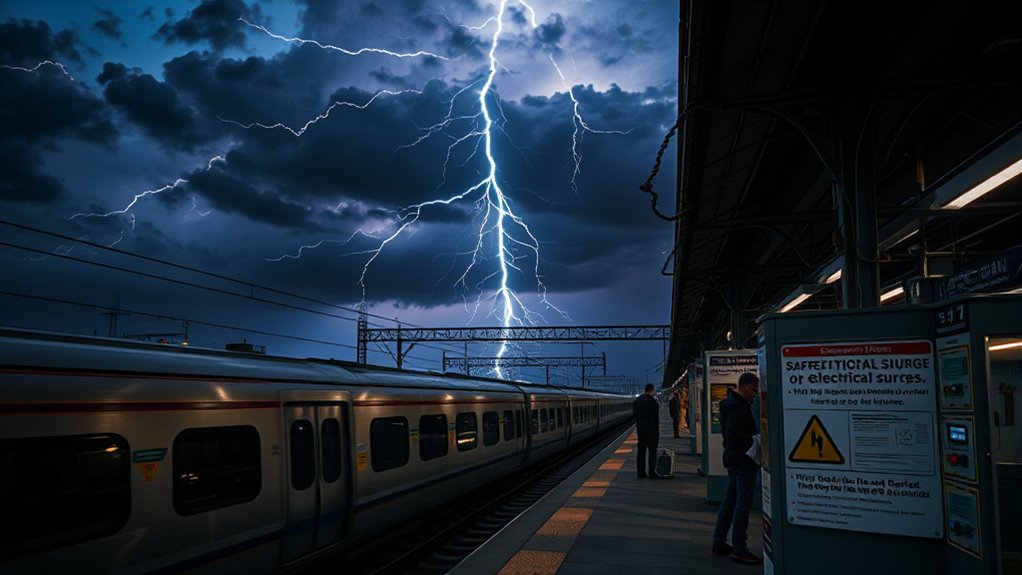
You need to guarantee staff and users understand how to operate the system safely and effectively. Clear usage guidelines and regular training help prevent misuse and damage during lightning or surge events. Emphasizing safety protocols keeps everyone aware of potential risks and proper responses.
Clear Usage Guidelines
Clear usage guidelines are essential to make certain that staff and users understand the system’s limitations and operate it safely. Proper instructions prevent misuse and protect equipment from lightning strikes and surges. To guarantee effective guidelines, you should:
- Teach grounding techniques to minimize electrical hazards.
- Emphasize the importance of surge device calibration to maintain surge protection.
- Clearly define limits on system operation during storm conditions.
- Provide step-by-step procedures for shutting down equipment safely during surges.
Conduct Regular Training
Why is ongoing training essential for maintaining lightning and surge protection? When your staff understands system limitations and proper use, they can better manage voltage regulation and maintain excellent power quality. Regular training helps them recognize potential issues, such as improper grounding or equipment misuse, which can compromise surge protection devices. Well-trained personnel also stay updated on new protocols or equipment upgrades, reducing the risk of accidental damage during storms or power fluctuations. Clear knowledge ensures they’re prepared to respond appropriately, minimizing downtime and costly repairs. By emphasizing ongoing education, you empower your team to keep lightning and surge protection systems functioning effectively, ensuring consistent power quality and safeguarding your infrastructure from unexpected surges or voltage spikes.
Emphasize Safety Protocols
Understanding system limitations and proper use is essential for maintaining effective lightning and surge protection. When staff and users know the risks, you reduce fire hazards and electrical shock incidents. To guarantee safety:
- Train everyone to recognize signs of system overload or damage.
- Emphasize the importance of not bypassing surge protection devices.
- Educate on safely disconnecting equipment during storms.
- Reinforce the need to report any unusual system behavior immediately.
Respond Promptly to Any Signs of System Degradation
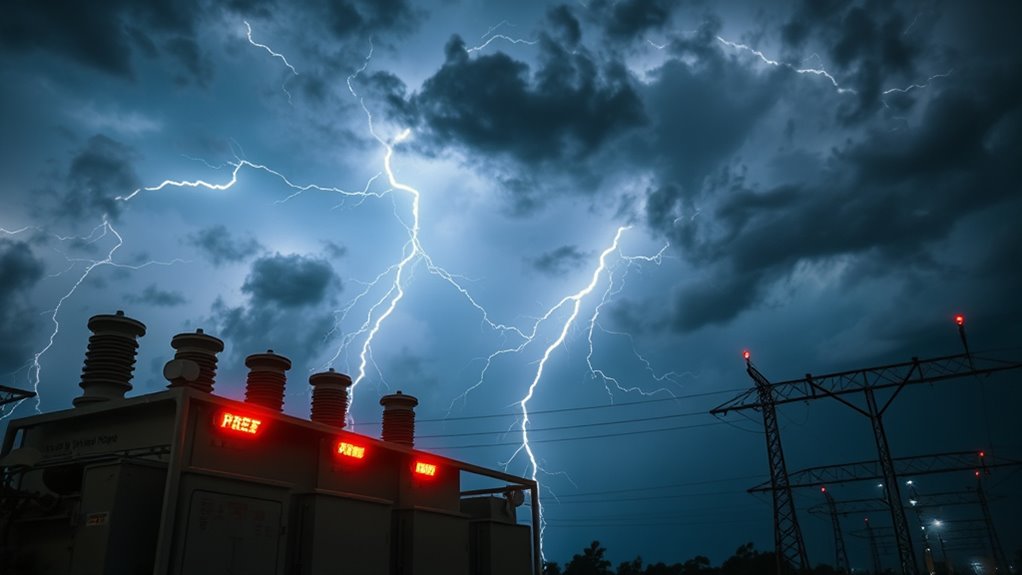
When you notice any signs of system degradation, such as unusual surges, inconsistent operation, or warning alarms, it’s essential to act immediately. Your first step should be to evaluate grounding techniques to ensure proper dissipation of electrical energy. A solid ground connection reduces the risk of damage and enhances surge response, helping to safeguard your system. If you detect a surge, disconnect affected equipment and use surge protection devices to minimize further harm. Regularly inspecting grounding points and surge protectors keeps your system resilient against lightning strikes and power fluctuations. Prompt action not only prevents costly repairs but also maintains system reliability and safety. Always prioritize quick response to any anomaly to keep your system running smoothly and protected.
Frequently Asked Questions
How Often Should Surge Protection Devices Be Replaced?
You should replace surge protection devices every 3 to 5 years to guarantee peak surge device lifespan and protection. Over time, their ability to absorb surges diminishes, making them less effective. Regularly check for signs of wear or damage, and follow manufacturer recommendations for replacement frequency. This proactive approach helps prevent damage to your electronic equipment and maintains the surge protection’s reliability and safety.
What Are Common Signs of Surge Damage?
Surge damage indicators often appear as flickering lights, tripped circuit breakers, or devices that suddenly stop working. Your electrical system alerts you with unusual buzzing sounds or burning smells near outlets. Think of these signs as warning flags waving wildly—ignoring them risks further damage. When you notice these cues, act quickly to inspect and replace surge protection devices, preventing minor sparks from igniting major electrical fires.
Can DIY Repairs Compromise System Safety?
DIY repairs can definitely compromise system safety if you ignore safety protocols or underestimate DIY hazards. Without proper training, you risk electrical shocks, fires, or further damage to your system. Always follow safety protocols, wear protective gear, and turn off power before working on electrical components. If you’re unsure or uncomfortable, it’s best to hire a professional. Prioritizing safety keeps you and your system protected.
How Does Environmental Weather Affect Surge Protection?
Imagine a heavy thunderstorm strikes your area. Environmental weather, like lightning, drastically impacts surge protection, making storm preparedness essential. Severe storms increase the risk of power surges that can damage equipment. Regular weather monitoring helps you anticipate surges and make certain your surge protectors are functioning properly. By staying alert to weather patterns, you can take proactive steps, like unplugging devices or installing additional surge protection, safeguarding your systems effectively.
What Training Is Recommended for Staff on Lightning Safety?
You should implement thorough staff training programs focused on lightning safety protocols. Make sure your team understands how to recognize lightning risks and respond appropriately during thunderstorms. Regularly update training to include the latest safety guidelines and procedures. By actively educating staff, you ensure everyone knows how to stay safe, protect equipment, and minimize damage during lightning events, fostering a safer environment for all.
Conclusion
By following these maintenance tips, you’ll guarantee your lightning and surge protection systems stay reliable. For example, neglecting regular inspections could lead to unnoticed damage, resulting in costly outages. Imagine a data center that ignored upgrading its surge protectors; when a thunderstorm struck, it suffered extensive equipment failure. Staying proactive—testing systems, updating devices, and training staff—can prevent such costly incidents, keeping your critical systems safe and operational no matter what nature throws your way.
Halloween Picks
halloween
As an affiliate, we earn on qualifying purchases.