TL;DR
A solar backup power system uses a battery, inverter, and isolation equipment to power selected household loads during an outage; solar panels alone usually shut down when the grid fails. Choose the system by checking both battery capacity in kilowatt-hours and inverter power in kilowatts, then confirm that the equipment can recharge from solar while safely disconnected from the grid.
A sunny roof can go quiet the moment the grid fails. In a typical grid-tied setup, the inverter shuts down during an outage, so your panels stop feeding the house even if the sun is blazing.

Get backup power and energy gear delivered free with Prime
- Fast, free delivery on millions of items
- Prime Video, Amazon Music and more included
- Member-only deals all year
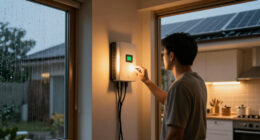
A solar backup power system adds the equipment needed to keep electricity flowing safely: usually a battery, an inverter, and a way to disconnect your home from the grid. That can mean a lit kitchen, a cold refrigerator, and working Wi-Fi while the street outside is dark.
This guide explains what these systems can run, how to estimate battery needs, and which installation and operating details deserve your attention. You’ll learn why “whole-home backup” depends on more than battery size, and how to ask an installer for a plan that fits your actual outages and appliances.
Grid-tied solar panels usually shut down in an outage unless approved equipment lets the system operate safely while disconnected from the grid.
Battery capacity in kWh estimates energy over time; inverter power in kW limits simultaneous loads and motor startup.
List essential circuits and estimate their running and startup needs before choosing battery size.
Solar can recharge a battery during an outage only when the system supports islanded operation, and output varies with weather and season.
Ask a licensed installer to confirm permits, code requirements, backup circuits, battery placement, warranty terms, and any generator compatibility.
Learn what keeps your lights on when the grid fails
A solar backup power system combines solar panels, a battery, an inverter, and control equipment to provide electricity when the grid goes down. Its controls safely isolate the home from utility lines, then direct stored or newly generated power to the circuits the system supports.
That isolation matters because ordinary grid-tied panels usually shut off during an outage. The shutdown protects utility workers who may be repairing lines; panels alone do not normally keep sending power into a disconnected home. A battery system with approved backup equipment can operate in island mode, meaning the house runs separately from the grid.
Imagine a storm knocks out power at 7 p.m. Your battery might keep the refrigerator, a few lights, phone chargers, and the internet router running. If your system also supports solar charging while islanded, the panels may refill the battery the next day, depending on sunshine, shade, and household use.
A power system combines several parts, and each part affects the result. The battery stores energy, the inverter converts it into household current, and a transfer switch or gateway handles the safe changeover. A setup designed only for lower-priority circuits won’t automatically power every outlet in your home.
Products Worth Considering

TCL F8D Series 75-Inch 4K QLED Smart Fire TV, 144Hz, HDR (75F8D, 2026)

Google Nest Learning Thermostat (3rd Generation) with 2 Temperature Sensors, Stainless Steel

Dyson Cyclone V10 Origin Cordless Vacuum
As an affiliate, we earn on qualifying purchases.
Match battery size and inverter power to the appliances you need
To choose a solar backup power system, check battery capacity in kilowatt-hours (kWh) and inverter power in kilowatts (kW) together. Capacity describes how much energy you can use over time; inverter power limits how many appliances can run at once and whether the system can handle brief startup surges.
These are separate limits. Think of battery energy as water in a tank and inverter power as the width of the pipe. A large tank can last a long time, but a narrow pipe still cannot deliver enough flow to start a powerful motor. Refrigerators, pumps, and some air conditioners can briefly draw more power when they start than when they run.
| Load | Why it matters | Planning question |
|---|---|---|
| LED lights and phone charging | Usually modest household loads | How many rooms need light? |
| Refrigerator and internet router | Need reliable power across many hours | Can the inverter handle startup draw? |
| Air conditioning or electric heating | Can use substantial power and energy | Can your battery and inverter support it? |
| Oven or EV charger | May consume a large share of available output | Will you pause other heavy loads? |
For example, a family may decide to back up the refrigerator, router, several lights, and a medical device, while leaving the oven and EV charger off during an outage. That practical choice can stretch stored energy and avoid buying capacity for appliances they can live without for a day.
Estimate how long your battery can carry the essentials
Your backup duration depends on usable battery energy, household power draw, conversion losses, and solar recharge. There is no fixed number of hours that applies to every home, even when two neighbors install batteries with the same advertised capacity.
Start with the equipment you consider essential. A refrigerator cycles on and off, so its energy use over a full day differs from its momentary power draw. Lights and a router may draw less, but they stay on for hours. Your installer can help turn appliance labels and usage patterns into a realistic estimate.
- List essential circuits. Include the refrigerator, selected lights, internet equipment, and any health or safety equipment you rely on.
- Check running and startup power. Ask whether motor-driven equipment, such as a refrigerator or well pump, needs extra surge capacity.
- Estimate daily energy. Compare the loads’ expected use with the battery’s usable kWh, allowing for system losses.
- Plan for a cloudy day. Decide which loads you would reduce if solar output falls or an outage lasts longer than expected.
Say your household wants a refrigerator, router, and a few lamps overnight. That may be a workable target for a modest system, while adding electric heating could change the estimate sharply. The useful question is not “How long does this battery last?” but “How long can it run these specific loads under our likely conditions?”
Check whether your panels can recharge the battery during an outage
Solar panels can recharge a backup battery during an outage only if the system is designed to operate while isolated from the grid. The inverter, battery controls, and backup equipment must work together in island mode; a standard grid-tied array may shut down even in bright daylight.
When the system supports outage charging, the sun becomes a daily refill rather than a guaranteed supply. Cloud cover, winter daylight, roof shade, snow, and household demand all affect how much energy reaches the battery. A gray afternoon in December can produce far less electricity than a clear summer day.
Consider a household that loses power after a windy night. If its battery powers the refrigerator and router, the panels may replenish some of that energy the next morning. But if the family also runs an electric oven and a space heater, demand may outpace solar production and the battery may keep draining.
Ask an installer to explain how the system behaves across several days without utility power. Find out whether it can restart after the battery runs low, how it prioritizes loads, and whether it can accept a generator. Some hybrid systems support generator input, but compatibility depends on the inverter and controls. Treat the system’s low-sun operating plan as part of the design, not a footnote.
Choose between essential-circuit backup and whole-home coverage
Essential-circuit backup keeps selected loads running, while whole-home backup aims to support a broader share of your electrical panel. The right choice depends on your service equipment, inverter output, battery capacity, and what you expect to use at the same time.
A selected-circuit design can be a sensible fit if you mainly want lights, refrigeration, communications, and a few outlets. During a summer outage, for example, you might keep the kitchen refrigerator and router powered but switch off the clothes dryer and central air conditioning. That tradeoff can make stored energy last longer.
Whole-home backup can offer more flexibility, but it does not mean every high-power appliance can run simultaneously. An electric range, heat pump, air conditioner, and EV charger may exceed the available inverter power or drain the battery quickly. The system may need load controls that prevent certain appliances from running together.
- Essential circuits: often easier to size around a short, clear list of priorities.
- Whole-home coverage: offers broader access, but needs careful checks of peak demand and battery energy.
- Expandable designs: may let you add batteries later, if the equipment and installation support expansion.
Ask for the backed-up circuit list in writing and walk through a normal outage scenario with the installer. If your well pump or medical equipment is a priority, name it early so the design accounts for its power needs and startup behavior.
Plan a safe installation and a useful outage routine
A safe solar backup installation needs permitted electrical work, code-compliant equipment, correct clearances, and utility coordination where required. A qualified, licensed professional can inspect your panel, assess loads, and confirm the transfer equipment will isolate the home correctly.
Battery location matters as much as the wiring. Installers must follow the product’s fire-clearance and placement rules, local building and electrical codes, and any utility requirements. Do not open electrical equipment or modify wiring yourself; if you need to inspect a system, follow the manufacturer’s guidance and keep away from energized parts.
After installation, learn the controls before the next storm. A battery may have a reserve setting that holds charge for outages, and an energy program or virtual power plant may draw from the battery under agreed conditions. Availability and terms vary by location, so confirm how participation affects the charge you want to keep for your home.
Write a simple outage plan: know which circuits are backed up, which appliances to pause, how to check battery status, and whom to call if an alert appears. For instance, a household might set aside a reserve, charge phones early, and avoid running laundry until the grid returns. Review the warranty’s term, capacity or energy-throughput limits, and service coverage with your installer.
Weigh resilience, cost, and the value of keeping power
The value of a solar backup system comes from reliable power during outages and, in some homes, how the battery works with local electricity rates. Total cost varies with battery size, inverter and transfer equipment, installation complexity, panel upgrades, incentives, and location, so a current local quote is more useful than a generic price tag.
Suppose a family in an area with frequent winter outages wants to keep a refrigerator, internet connection, and a home office running. They may value the ability to work and preserve food more than the chance of a quick financial payback. A household that rarely loses power and has low electricity rates may reach a different conclusion.
Some utilities and energy programs offer virtual power plant participation, where enrolled home batteries can support the grid in exchange for compensation or other benefits. The terms vary, and participation may affect how much charge remains reserved for an outage. Ask how dispatch works, what payment is guaranteed, and whether you can set a minimum reserve.
Compare quotes using the same assumptions: backed-up circuits, usable battery capacity, inverter output, outage charging capability, warranty coverage, and electrical work included. That makes it easier to see whether a lower quote relies on less backup capacity or omits panel upgrades. Treat financial savings as dependent on local rates and incentives, and judge resilience by the loads you can actually keep running.
Frequently Asked Questions
Will my solar panels work during a power outage?
Usually not on their own. Standard grid-tied inverters shut down when the grid fails to protect utility workers and equipment. Your system needs approved isolation and backup equipment to operate safely while disconnected.
Do I need a battery for solar backup?
Most home solar backup setups use a battery or another backup source, such as a compatible generator. Panels alone usually cannot provide dependable outage power because a standard grid-tied inverter shuts down when the grid is unavailable.
What can a home battery run?
That depends on its inverter power and usable capacity, plus the appliances’ running and startup needs. Lights, phones, a refrigerator, and internet equipment may fit an essentials plan; electric heating, air conditioning, ovens, and EV chargers can demand much more.
How long will a solar backup battery last?
There is no single runtime: compare the battery’s usable kWh with the loads’ energy use, then account for conversion losses and any solar recharge. A refrigerator and a few lights use a different amount from a home running electric heat.
Can solar recharge a battery during an outage?
Yes, if the system supports islanded operation. Weather, season, roof shade, and household demand affect the available charging power. Ask your installer how the system behaves through a cloudy, multi-day outage.
Can one battery power an entire house?
Sometimes, but whole-home backup depends on the inverter, transfer equipment, panel, battery capacity, and load controls. Many systems back up selected circuits, and even a whole-home setup may require you to avoid running several high-power appliances together.
Conclusion
Start with the loads you need most, then size the battery and inverter around those real demands. Ask a licensed installer to confirm safe isolation, permits, local code requirements, and whether your panels can recharge the battery during an outage.
A good backup plan feels less like buying a giant battery and more like packing the right kit for a storm: the refrigerator hums, the router blinks, and the essentials keep going.